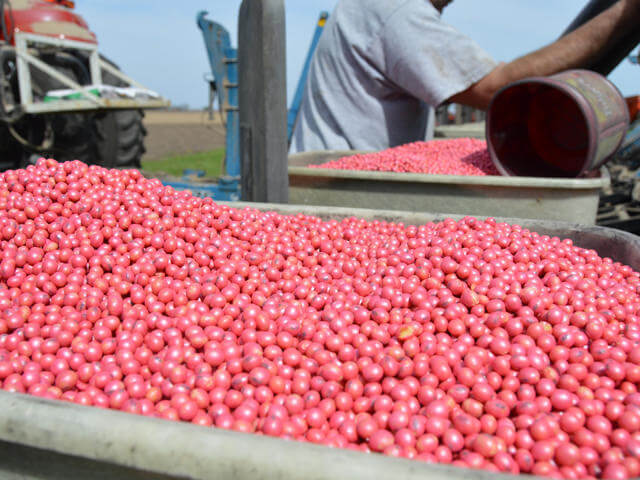
“I feel I wasted my time working for over 20 years as an electrical engineer in Johannesburg,” said Khambi Frans Malele as he stood and told more than 30 people assembled in a small, make-shift tent in South Africa his story of becoming a successful farmer.
His audience was a delegation of Nigerians eager to learn how farmers had benefitted from the use of biotechnology in South Africa, which has become the frontrunner for genetically modified (GM) crops on the continent. Government officials from South Africa’s Gauteng Province, business representatives and other farmers were also in attendance.
As Nigeria prepares to commercialize its first GM crops this year, the African Agricultural Technology Foundation (AATF) organized the tour, in collaboration with South Africa-based AfricaBio, to give delegates a chance to meet small-scale farmers who are using agricultural biotechnology to improve their livelihoods.
…
“I was lucky I started with the Bt cotton because I didn’t have to bother with the drought and worms,” [said Malele].
Insect-resistant Bt cotton was the first GM crop grown in South Africa in 1997. Now herbicide-tolerant cotton and varieties that provide both herbicide tolerance and insect resistance are also grown. Statistics show that virtually no conventional cotton is grown in South Africa. The herbicide-tolerant/insect-resistant cotton accounts for more than 95 percent of the cotton planted.
[Kevin] Esvelt is a biologist at MIT and the first person to formulate a technology known as a CRISPR gene drive, a gene editing application that represents humanity’s single best chance to eradicate malaria.
…
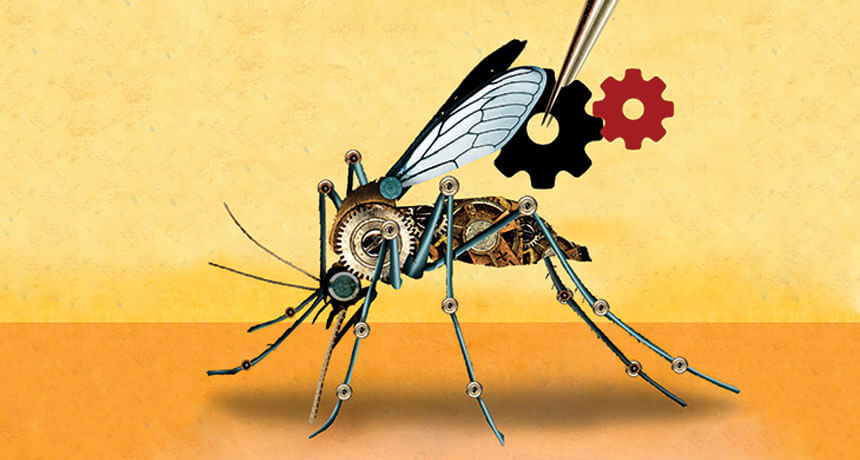
[T]he idea is to change the three species of mosquito most responsible for its transmission — Anopheles gambiae, Anopheles coluzzii, and Anopheles arabiensis — so that all their offspring would be male, effectively leading to the species’ extinction. Or you could just add a gene making them resistant to the malaria parasite, preventing its transmission to humans.
…
That might sound disturbing from an ecological perspective, but mosquitoes don’t make up a significant portion of any known predator’s diet; there’s just not a lot of meat there. “So far there’s no evidence really that seems to show that Anopheles gambiae is a key species in the ecosystem,” [says researcher] Jonathan Kayondo.
…
Is it sometimes necessary, even morally required, to release into the wild a technology that’s never been tested in the wild, because the cost of not doing so is just too high?
Recall that between 438,000 and 720,000 people die of malaria every year. So starting from the moment we have deployable gene drive technologies that could wipe out the disease, every day we wait kills between 1,200 and 2,000 people.
[S]cientists have reported a new approach that eliminated all evidence of advanced-stage breast cancer in a 49-year-old woman who had run out of treatment options. The patient’s “complete durable cancer regression” followed a single infusion of her own immune cells.
…
More than three years later, the patient, Judy Perkins, is not only alive, but seemingly cancer-free.
…
Existing immunotherapy drugs have shown little or no effectiveness against the kinds of solid tumors that account for 90% of cancer deaths, including those of the breast, prostate and colon. This new approach could change that.
…
It relies on immune system cells known as tumor-infiltrating lymphocytes, or TILs. The ones used on Perkins were picked because they could home in on four mutant proteins that were present in all of her cancer cells. An exhaustive search of her blood and a sample of her tumor turned up only 11 of these super-capable immune cells, so the scientists spent four months growing billions of copies in the lab.
…
[T]he TILs survived, replicated themselves, and refused to let up on Perkins’ cancer, wherever they found it. Over the course of five months, they broke down and carried off the two large tumors growing on her chest wall, along with four tennis-ball-sized tumors lodged in her liver.
Since pesticides and herbicides are routinely in the news, lately because of the “Glyphosate Wars,” (2) I thought it might be interesting to examine a review article that [Bruce] Ames and colleagues wrote nearly three decades ago in Proceedings of the National Academy of Sciences (PNAS). If you are dwelling under the illusion that you can prance into Whole Foods and overpay for a bunch organic stuff without pesticides, this article will disabuse you of that fallacy. If you don’t want to consume pesticides, then you better stop eating, because you are consuming them with each bite. Plenty of them. According to Ames:
99.99% (by weight) of the pesticides consumed by the American public are made by the plants themselves as a defense mechanism.
Synthetic and natural pesticides are equally likely to be carcinogenic.
…
The divide between “natural” and “artificial” chemicals is meaningless – something many Americans do not know. The origin of a chemical is irrelevant. Your body cannot tell what is natural or synthetic – only the properties of the chemical matter.
…
It is hard to blame consumers; the organic food industry and Internet quacks have done a masterful job in creating a narrative that maintains that we are all being poisoned by tiny quantities of thousands of man-made chemicals, and the way to avoid this is to buy so-called “natural” products because they don’t contain chemicals. But the narrative is dead wrong. Great marketing. Terrible science.
At a time when there is a massive controversy over genetically modified crops, a farmers’ organisation in Maharashtra is making a strong pitch for GM seeds.
For about 15 days now, farmers across Maharashtra have been getting social media forwards urging them to give a missed call if they wish to fight for the availability of the GM seed technology.
The posts being circulated by Shetkari Sanghatana, a farmers’ organisation, say “Bheek nako, GM biyana dya” (don’t give us your alms, give us GM seeds instead).
The organisation is also organising conferences for farmers on this issue.
The Shetkari Sanghatana, founded by former Rajya Sabha member and farmers’ leader Sharad Joshi, has always been in favour of GM technology.
However, with the state government now cracking down on farmers using unapproved variants of GM cotton, the organisation has raised its pitch on the need to make latest seed technology commercially available to farmers.
…
“We have been getting about 100-150 missed calls on a daily basis supporting the cause,” said Shetkari Sanghatana leader Ajit Narde.
…
[At their conference] Shetkari Sanghatana gave the stage to farmers who have used Bt Cotton in farming to share their experience with the GM crop. As per the organisation’s estimates, about 700 farmers from across 10 districts in Maharashtra attended the technology conference.
In waking life, [quickly] forgetting recent experiences would surely land you in a doctor’s office. With dreams, however, forgetting is normal. Why?
…
Researchers have found one of the last regions to go to sleep is the hippocampus, a curved structure that sits inside each brain hemisphere and is critical for moving information from short-term memory into long-term memory.
If the hippocampus is the last to go to sleep, it could very well be the last to wake up, [said Thomas Andrillon, a neuroscientist at Monash University in Melbourne, Australia.] “So, you could have this window where you wake up with a dream in your short-term memory, but since the hippocampus is not fully awake yet, your brain is not able to keep that memory.”
…
If you are intent on improving your dream recall, there are a few tricks to try. Robert Stickgold, an associate professor of psychiatry at Harvard Medical School, suggests drinking water before bed, because it will make you wake up at night to use the bathroom. These “middle-of-the-night awakenings are frequently accompanied by dream recall,” Stickgold told The New York Times.
…
Upon waking up, hang on to that fragile dream memory: Keep your eyes closed, stay still and replay the dream memory, until your hippocampus catches up and properly stores the memory.
Do you remember your dreams from last night? In how much detail? Were they related to anything you experienced during the prior day?
Some people have gone so far as to say that most people don’t dream in color. This is mostly antiscience nonsense — Of course, to answer this conjecture requires interrogating sleep subjects immediately upon waking. This causes the memories to be reconstructive — and whether they ‘remember’ dreaming in color is biased by their perceptions of how they think they should have dreamed (dreamt is also acceptable, though a bit archaic). Incidentally, when dreamers were awakened and told to quickly point to color charts to select which colors most closely match those in their dreams, they often choose pastels.
But why do we dream?
New research suggests that dreaming is a physiological and biochemical way to de-clutter our brains over night, as well as allow for creative problem-solving from generalizations we make from daily experiences. However, instead of one type of sleep being ‘better’ than another, the research team combined a couple of current working hypotheses and now suggest that REM and non-REM work together synergistically to accomplish this organization and solution-finding.
As explained in an article published in the Atlantic:
Almost a century later after Loewi’s fateful snoozes, many experiments have shown that sleep promotes creative problem-solving. Now, Penny Lewis from Cardiff University and two of her colleagues have collated and combined those discoveries into a new theory that explains why sleep and creativity are linked. Specifically, their idea explains how the two main phases of sleep—REM and non-REM—work together to help us find unrecognized links between what we already know, and discover out-of-the-box solutions to vexing problems.
In 1977, psychiatrists Hobson & McCarley proposed that we don’t actually even dream in a coherent manner that matches our perception; but rather when we’re sleeping, our brains’ patterns of neuronal firing are interpreted immediately upon waking as having had visual, kinesthetic, and auditory content. This neurobiological model proposed that dreaming is the result of random impulses originating from the brain stem. These impulses would then progress as a global occurrence across the brain. And that we hear, feel, and see in our dreams? Our brain’s way of signal processing all of the electrical noise that cascades through all of these brain regions via our neurons while we sleep. This is referred to as the Activation-Synthesis Model of dreaming.
As Hobson put it non-poetically: “The brain is so inexorably bent upon the quest for meaning that it attributes and even creates meaning when there is little or none in the data it is asked to process.” That sounds about right. In fact, when people are shown random patterns of information, they more often than not “find” patterns. Same with the sleeping brain.
Here’s how sleep works
As soon as we drift off to sleep, we enter a period of non-REM (NREM) sleep. There are 4 stages to NREM, and humans tend to spend most of their NREM time in Stage II. Staccato punctuations of ‘sleep spindles’ which represent neuronal discharge spikes occur during Stage II sleep. The last 2 stages, III and IV, are called ‘slow-wave sleep.’ These tend to be periods of the deepest sleep.
Then after a period of time, our sleep architecture changes again to what is called rapid eye movement (REM) sleep, which is a much more cognitively-active and less deep type of sleep. Interestingly, it has been noted that most of the saccadic eye movements during REM sleep are horizontal (left-right scanning) as opposed to vertical, but there is a bit of research indicating that eye patterns may be tracking dream content (i.e., if the dreamer is imagining an airplane traveling across their sightline from left to right, it’s possible that they are physically tracking in this way with their eyes as well). A counterpoint to this hypothesis has also been investigated.
Taken as a whole, when a sleeping person is connected to an electroencephalogram (EEG), an interesting pattern emerges:
The architecture of sleep. Though there are person-to-person differences, the general structure of sleep is remarkably similar across people. It’s common to have 4 or 5 REM sequences per night. Working from the top, the first line is brain activity during wakeful activity, then NREM stage 1, NREM stage 2/3, NREM stage 4, and finally brain activity during REM.
During REM sleep, the neurotransmitter acetylcholine is flooded through the brain. This neurotransmitter is essential during waking hours for attention and arousal, so its presence in such high levels during REM sleep is very counterintuitive and also why REM is sometimes referred to as “paradoxical sleep.” In REM, our brains’ electrical activity is similar to that when we’re fully awake. All of the cognitive processing that’s occurring isn’t from stimuli (as when we’re awake), but from neurochemical fluctuations and electrical activity across neurons.
Many brain regions are involved, including the hippocampus (for memory storage and retrieval among other things) and the amygdala, which are thought to assist in combining experiential content (learned and experienced during waking hours, then revisited during sleep) and emotional context (by having the amygdala participate in interpreting all of the brain activity), respectively. The sensory cortex is also highly active during sleep, including visual, auditory, and kinesthetic (to a lesser degree) areas. By synthesizing the inputs from the various brain regions, we have content-rich dreaming experiences. Interestingly, and perhaps related to the problem-solving or -avoiding nature of dreams, negative emotional content is much more common in dreams than positive emotions are.
We dream in non-REM and REM phases of sleep, though recent evidence points to the fact that increased activity in the posterior cortex of the brain is associated with increased incidence of dreaming.
So there you have it. The brain is an incorrigible processor, whether we like it or not. The dreams that you have may help you revisit moments from the past to ascribe meaning, context, and problem-solving. While there isn’t necessarily any magic to the ideations that occur in dreaming, it’s important that I note that because of various pattern-differences between the functioning of the awake brain and the sleeping brain, novel ideas and thoughts that may not even be accessible to you when you’re awake may be possible when sleeping. Your typical wakeful structuring of thoughts conducted by the executive functions of the brain, including linear thinking, don’t apply the same way during sleep (because areas of the prefrontal cortex become less active). It’s likely that many of these dreaming abstractions would be irrational or unhelpful in reality, but sometimes lateral breakthrough thinking can occur while dreaming to help us in our waking lives.
Ben Locwin is a behavioral neuroscientist and astrophysicist with a masters in business, and a researcher on the genetics of human disease. BIO. Follow him on Twitter @BenLocwin.
Editing cells’ genomes with CRISPR-Cas9 might increase the risk that the altered cells, intended to treat disease, will trigger cancer, two studies published on Monday warn — a potential game-changer for the companies developing CRISPR-based therapies.
In the studies, published in Nature Medicine, scientists found that cells whose genomes are successfully edited by CRISPR-Cas9 have the potential to seed tumors inside a patient. That could make some CRISPR’d cells ticking time bombs, according to researchers from Sweden’s Karolinska Institute and, separately, Novartis.
CRISPR has already dodged two potentially fatal bullets — a 2017 claim that it causes sky-high numbers of off-target effects was retracted in March, and a report of human immunity to Cas9 was largely shrugged off as solvable. But experts are taking the cancer-risk finding seriously.
…
Another leading CRISPR scientist, who asked not to be named because of involvement with genome-editing companies, called the new data “pretty striking,” and raised concerns that a potential fatal flaw in some uses of CRISPR had “been missed.”
On the other hand, the Novartis paper has been available in preliminary form since last summer, and CRISPR experts “haven’t freaked out,” said Erik Sontheimer of the University of Massachusetts Medical School, whose CRISPR research centers on novel enzymes and off-target effects. “This is something that bears paying attention to, but I don’t think it’s a deal-breaker” for CRISPR therapies.
The food start-up’s success is undeniable — and a noticeable affront to Big Meat — but Impossible Foods’ hasty rise has also made the $400 million Silicon Valley darling an unexpected set of enemies: consumer groups and environmentalists who exposed FDA letters questioning the safety of the burger’s “magic ingredient,” then started demanding more proof that Impossible’s alt-meat is the harmless, vegan product it claims.
…
Given their novel situation, Impossible asked the FDA to review the burger’s safety, despite being under no obligation to do so. That was in 2015, and it went badly: The agency responded with a letter saying that Impossible’s data “do not establish the safety of SLH for consumption, nor do they point to a general recognition of safety.” Impossible Foods took a mulligan, sending 1,000-plus pages of new test data that the company argued better demonstrate SLH’s safety. The FDA gave itself until the end of April to reply, but just extended that deadline by another 90 days.
That alarmed Friends of the Earth, ETC Group, and other staunch anti-GMOers.
…
Impossible … blames anti-GMO crusaders and a sensationalist press for these attacks. The company says that it openly discusses genetic modification with anyone who’ll listen, disclosed the animal testing voluntarily, sought the FDA’s approval when it wasn’t required, and that a panel of independent safety experts has given the green light to the veggie burgers — twice.
While lacking the costuming of Comic-Con or revelry of SantaCon, [CRISPRCon’s] second annual geek-out dealt with a concept weightier than superheroes or public drunkenness: How should society deal with a technology that can literally reshape the world?
…
If you get a bunch of people in a room to talk about gene editing, there’s one topic guaranteed to come up: designer babies.
“That’s something we’re far away from,” said Feng Zhang, a scientist at the Broad Institute and a CRISPR pioneer. “Decades. Maybe longer.”
…
“People say it’s wrong to modify the genome of a baby because they can’t consent to it,” said Anna Everette of the New York Academy of Sciences. “But the counterpoint is that they didn’t consent to being conceived.”
…
Among CRISPR’s many dazzling applications is the promise of rewiring animals to eradicate infectious disease or save an endangered species. It sounds great on paper — edit a mouse, tinker with a tree, save a community — but the realities of culture make it infinitely more complicated.
…
To [Antonio Cosme] following through on [the promise to give control to communities] would require the powers that be in academia to step down from their ivory towers, accept some humility, and relinquish control to people without terminal degrees — something scientists have been loath to do in the past.
Organic matter has been found on Mars in soil samples taken from 3 billion-year-old mudstone in the Gale crater by the Curiosity rover, NASA announced Thursday [June 7]. The rover has also detected methane in the Martian atmosphere.
The search for life outside Earth focuses on the building blocks of life as we know it, which includes organic compounds and molecules — although these can exist without life. Organic matter can be one of several things: a record detailing ancient life, a food source for life or something that exists in the place of life.
No matter its purpose, these work as “chemical clues” for researchers about Mars.
…
The new findings are also detailed in two studies published Thursday in the journal Science. Together, the researchers believe these findings to be “breakthroughs in astrobiology.”
…
But Curiosity’s data are providing a clearer and more conclusive picture of the conditions and processes on Mars — and what it may have been like on the Red Planet billions of years ago, when conditions were more suitable for life.
“With these new findings, Mars is telling us to stay the course and keep searching for evidence of life,” said Thomas Zurbuchen, associate administrator for the Science Mission Directorate at NASA Headquarters. “I’m confident that our ongoing and planned missions will unlock even more breathtaking discoveries on the Red Planet.”
Some politicians spoke “loudly” against glyphosate, the world’s most commonly used weedkiller, before their elections but came back to reality later on, EU Commissioner for Health and Food Safety Vytenis Andriukaitis told EURACTIV.com in an interview.
Some politicians spoke loudly before the election proposing to immediately ban glyphosate, but after the election, they were “welcomed to reality”, Andriukaitis said.
Referring to the European Commission’s approach on glyphosate and neonicotinoids, he said it was a “crystal clear example of the Commission’s consistency” when it comes to science.
“The Commission will follow the scientific evidence and legal obligations and I have the same proposal for the member states.”
Although it’s associated with nasty cigarettes, the tobacco plant is also a potential source of vaccines, biofuel and antibiotics. Now, a chemical from the plant is also being used as a bug repellent for crops, which could replace eco-unfriendly insecticides.
…
Led by Prof. Thomas Brück, a team from the Technical University of Munich isolated the sections of the tobacco plant genome responsible for the formation of CBTol molecules, and then incorporated those into the genome of genetically-modified E. coli bacteria. When fed with wheat bran (obtained as a byproduct from grain mills), those bacteria subsequently produced CBTol.
Using that chemical, the scientists created a biodegradable, non-toxic and environmentally-friendly repellent that can be sprayed directly onto crops of all types. In lab tests, aphids passed over plants that were treated with the spray, going instead for untreated plants. And as a side benefit, the repellent also kills several types of gram-positive bacteria that are harmful to humans.
…
A paper on the research was recently published in the journal Green Chemistry.
The company behind [spinal muscular atrophy drug] AveXis, is seeing the most dramatic results in children who are treated in the first month or two of life.
That means identifying patients as soon as possible—ideally at birth. Finding them early could mean the difference between life and death. But as AveXis and other biotech companies race to bring transformative gene therapies to market, states have been slow to adopt screening tests for genetic diseases that are, increasingly, treatable.
Newborn screening tests in the US cover a minimum of 34 disorders, and many states have opted to add more. Yet most don’t look for spinal muscular atrophy (commonly abbreviated as SMA), even though it’s the leading genetic cause of infant death.
…
Other gene therapies may also work better in children before a genetic defect has time to irreparably damage the body. For example, Bluebird Bio is developing one that halted a deadly brain disorder called cerebral adrenoleukodystrophy (ALD), also known as Lorenzo’s Oil disease, in 15 out of 17 children. In a statement provided to MIT Technology Review, the company said outcomes are better when patients are treated before symptoms appear.
On February 8, a national committee that oversees newborn testing voted to recommend that SMA be added to the recommended universal screening panel.
Not the end of the seed company, mind you, but the end of its name. The scientists, marketers, and lawyers who work there will keep doing their jobs, they’ll just be employed by Bayer, the big German chemical and pharmaceuticals company that’s slowly swallowing Monsanto.
But we’re losing so much more than just a name. Without Monsanto, who will we blame for the death of bees, the unprofitability of small farms, and the insidious spread of mystery diseases which you probably don’t even realize you have? The natural answer is, of course, Bayer, but outrage is rarely transferable– it sticks to the brand.
…
It’s probably a good thing we won’t have Monsanto to kick around anymore. Much of the animus against Monsanto stems from a sense that corporations are changing food and farming in ways that we don’t understand. The thing is, those corporations have taken the lead in innovation because our government hasn’t been all that interested in funding public-sector research in agriculture.
…
Perhaps now, instead of searching for an easy villain, we might consider searching for the root causes of our problems and fixing them.
At the center of all this is GEDmatch—a free genealogy website run by just two men who live 1,000 miles apart, an engineer in his 60s who lives in Texas and a 79-year-old retired businessman turned professional guardian in Florida. The site is—or was—a side project for them.
“I never expected anything like this,” says Curtis Rogers, who started GEDmatch along with John Olson. Rogers, who lives in Florida, had no idea investigators were using GEDmatch to find criminals until he saw the news about the Golden State Killer.
…
Some users concerned about privacy did delete their data from GEDmatch, Rogers says. But he’s gotten an “awful lot” of emails thanking him, too. One in particular haunted him. He says a woman wrote that her father was a serial killer, and she wanted her data out there to give the families of his victim’s closure.
…
Over time, GEDmatch has become the go-to destination for serious genetic genealogists. People have found distant family members on the site, adoptees have found their biological parents, donor-conceived kids have found their sperm donors. It’s no wonder the police came calling, too.
The fate of two neonicotinoid seed treatments, applied to almost all of the canola and corn seeds in Canada and a portion of the soybean seeds, will be decided this summer.
For the last 18 months Health Canada has been studying neonicotinoid insecticides and assessing the risk to aquatic insects. The two products are clothianidin, a Bayer product, and thiamethoxam, which is manufactured by Syngenta.
Health Canada will release its findings, on whether the insecticides are safe for aquatic insects or not, in a couple of months.
“The results of these reviews are expected to be released, for consultation, in late summer of 2018,” said Scott Kirby, director general of environmental assessment with the Pest Management Regulatory Agency, a division of Health Canada.
…
The PMRA decision on the two neonicotinoids, commonly known as neonics, could potentially alter how Canadian farmers protect their crops from insect pests. Most producers like using the seed treatments because the products reduce the need for foliar insecticides.
…
“Because bees use nectar and pollen as their primary sources of food, bees may be exposed to harmful levels of this insecticide when they visit certain flowers,” [said Kirby].
Read full, original post: Decision looming for neonics
Imagine if we could rewire our brains so that tastes we usually crave became unpleasant—or even nullify responses to taste completely. New research from a group led by neuroscientist Charles Zuker of Columbia University’s Zuckerman Institute suggests this may be possible. The research shows the brain is hardwired to generate responses to specific tastes, and the resulting feelings of pleasure or revulsion separate out from the qualities of tastes that allow us to identify them. Knowledge of this circuitry might eventually allow scientists to “switch off” a craving for sweets by altering or blocking these responses.
…
Directly stimulating these neurons using light-sensitive proteins activated via fiber-optic cables—a technique called optogenetics—causes mice to behave as though they are experiencing specific tastes. “Simply activate a few hundred cells in the bitter cortex and the animal not only thinks it’s tasting bitter but executes all the associated behaviors, including gagging, cleaning its mouth and so forth,” Zuker says.
…
This is fundamental research with no immediate clinical relevance, but it could ultimately have implications for researchers looking to treat people with severe obesity problems by blocking certain responses to certain tastes. There may even be implications for understanding eating disorders because food’s valence may be connected to the guilt experienced in conditions like anorexia.
Scientific advances in biotechnology, such as genome editing and synthetic biology, hold enormous potential to improve human and animal health, animal welfare, and food security. And researchers and companies based in the United States helped pioneer these technologies. They position the U.S. as a global leader of this rapidly growing and highly promising field.
To advance this progress, it’s key that the FDA adopt a regulatory approach to these technologies that’s as innovative and nimble as the opportunities that we’re tasked with evaluating.
FDA is committed to helping ensure the safety of biotechnology products, while also facilitating innovation by applying a risk-based regulatory approach that provides developers with regulatory clarity and predictability and maintains public confidence in our regulatory system.
And we’re taking some new steps to advance these goals. We know that products enabled by new techniques of biotechnology have the potential to significantly enhance public health.
…
Similar and equally beneficial applications of genome editing are currently being explored in food crops. These include our ability to develop disease-resistant plants and plants with increased resistance to environmental stress. Such advances can have many advantages to consumers, including better yields, more product variety, and healthier nutrient profiles.
Editor’s note: Scott Gottlieb, M.D., is Commissioner of the FDA and Anna Abram is Deputy Commissioner for Policy, Planning, Legislation and Analysis