Why it was no surprise that controversial CRISPR babies happened in China

china
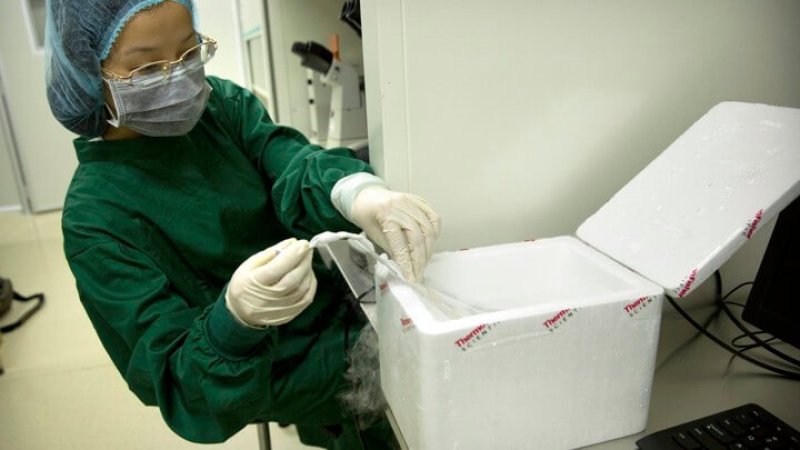
Image credit: Mark Schiefelbein/Associated Press

The headline-making births last November of the world’s first gene-edited babies (twin girls) was unsurprising in one way: The scientist involved was from China. As part of its effort to dominate scientific spheres including biotechnology, China has taken the lead in testing uses of Crispr… . Now China is confronting accusations that its regulatory system is overlooking the ethical considerations and medical risks.

China wants to be a leader in the defining technologies of the 21st century and has poured billions into funding research. As a participant chosen for its prestigious Thousand Talents scheme — a plan to lure back talented Chinese from overseas — [scientist He Jiankui] would have received at least a starting bonus of about $143,000 for his research, with the possibility of additional research grants of roughly $700,000. … According to the database clinicaltrials.gov, China has 12 human trials involving the Crispr method. One of these is active, with eight in the recruiting stage. In the U.S., there are eight Crispr-related trials, six of which are recruiting and none of which are active.

The country’s biotech companies and universities have worked hard to counter suspicions that their endeavors are rife with fraud and minimally supervised experimentation. The Genetics Society of China, the Chinese Society for Cell Biology and other groups were quick to condemn He’s gene-editing work, calling it a serious ethical violation.

Read full, original post: Why China Is the Brave New World of Editing Human DNA

{{ reviewsTotal }}{{ options.labels.singularReviewCountLabel }}
{{ reviewsTotal }}{{ options.labels.pluralReviewCountLabel }}
{{ options.labels.newReviewButton }}
{{ userData.canReview.message }}

Related Articles

Infographic: Global regulatory and health research agencies on whether glyphosate causes cancer

Infographic: Global regulatory and health research agencies on whether glyphosate causes cancer

Does glyphosate—the world's most heavily-used herbicide—pose serious harm to humans? Is it carcinogenic? Those issues are of both legal and ...

Most Popular

Screenshot-2026-04-13-at-1.39.26-PM
Viewpoint: ‘Safer for children?’ Stonyfield yogurt under fire for deceptive organic marketing
Screenshot-2026-04-22-at-10.46.29-AM
Viewpoint: How to counter science disinformation? Science journalist offers 12 practical tips
ChatGPT-Image-May-7-2026-12_32_36-PM
Viewpoint: The state of U.S. vaccine policy? Dismal nationally, but some states are stepping up.
ChatGPT-Image-May-7-2026-12_16_37-PM-2
Viewpoint: Are cancer rates ‘skyrocketing’ as RFK, Jr. and MAHA claim? The evidence says mostly the opposite
ChatGPT-Image-May-12-2026-08_39_41-PM
GLP podcast: Big Pharma, Big Ag, Big Food—health harming industries or life-saving innovators?
Screenshot-2026-04-23-at-11.00.36-AM
Regulators' dilemma: Thalidomide, Metformin, and the cost of getting drug approvals wrong
Picture1-14
When superbugs threaten vulnerable children: Can AI help solve antibiotic resistance?
Picture1-1
Cooling the planet with balloons: Could a geoengineering gamble slow global warming?
ChatGPT-Image-May-7-2026-01_23_27-PM-2
Viewpoint: Will AI democratize personalized cancer treatment or fuel medical misinformation?
bigstock opioids on chalkboard with rol
GLP podcast: 'Safe injection sites': enabling drug addiction or saving lives?
Defense_Secretary_Ash_Carter_tours_the_Microsoft_Cybercrime_Center_in_Seattle_March_3_2016
How criminals are using AI to target social media users and steal their money and confidential data
the magic of mRNA
Viewpoint: Anti-vax fake ‘turbo cancer’ claims threaten cancer treatment breakthroughs
glp menu logo outlined

Get news on human & agricultural genetics and biotechnology delivered to your inbox.