How the brain maps out ideas and memories

brain

As the philosopher Immanuel Kant put it, the concept of space serves as the organizing principle by which we perceive and interpret the world, even in abstract ways. “Our language is riddled with spatial metaphors for reasoning, and for memory in general,” said [neuroscientist] Kim Stachenfeld.

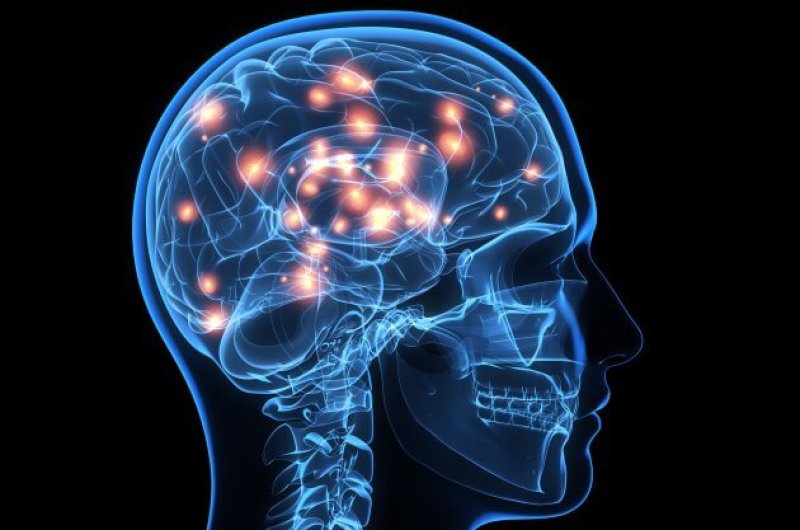
[F]or at least two of our faculties, memory and navigation, those metaphors may have a physical basis in the brain. A small seahorse-shaped structure, the hippocampus, is essential to both those functions, and evidence has started to suggest that the same coding scheme — a grid-based form of representation — may underlie them. Recent insights have prompted some researchers to propose that this same coding scheme can help us navigate other kinds of information.

[I]n one recently published paper, [neuroscientist Thomas Wolber] and his colleagues examined how the spatial navigation grid code changes in elderly people. They found that the signal became less stable, with the grid fluctuating between orientations — and that people with less stable grids were also much less adept at keeping track of their relative location when blindfolded and led along a circuitous course. Wolbers suggests that if the grid code is used to process many kinds of information and memories, it’s possible that a pathology that destabilizes the spatial grid system might have a more general effect on the stability of memory and other areas of cognition.

Read full, original post: The Brain Maps Out Ideas and Memories Like Spaces

{{ reviewsTotal }}{{ options.labels.singularReviewCountLabel }}
{{ reviewsTotal }}{{ options.labels.pluralReviewCountLabel }}
{{ options.labels.newReviewButton }}
{{ userData.canReview.message }}

Related Articles

Infographic: Global regulatory and health research agencies on whether glyphosate causes cancer

Infographic: Global regulatory and health research agencies on whether glyphosate causes cancer

Does glyphosate—the world's most heavily-used herbicide—pose serious harm to humans? Is it carcinogenic? Those issues are of both legal and ...

Most Popular

ChatGPT-Image-Mar-10-2026-01_39_01-PM
Viewpoint—“Miracle molecule” debunked: Why acemannan supplements don’t work
ChatGPT-Image-Jun-25-2026-12_23_17-PM
No, Bill Gates did not secretly engineer ticks to promote veganism
ChatGPT-Image-Jun-30-2026-10_27_31-AM
Viewpoint: Europe clears the way for gene-edited crops — but fear-driven restrictions still slow their full potential
ChatGPT-Image-Jul-1-2026-03_33_49-PM
‘Alternative’ cancer treatments that could kill you
DtAieAIkCZy-uchn-oqg
Viewpoint: In the science misinformed grifter game plan, the organic-food-is-healthier myth might be the worst.
ChatGPT-Image-Jul-7-2026-03_07_17-PM
Kennedy blocks preventive health care panel that reviews treatments for HIV, diabetes, and cancer from meeting — for fourth time
Screenshot 2026-07-08 at 10.13
What happens when a pro-life congresswoman needs an abortion?
d a ca e c c beb x
Facts & Fallacies podcast: The 'woke' crusade against anthropology? Dr. Elizabeth Weiss
ChatGPT-Image-Jul-1-2026-12_37_08-PM
Viewpoint: Trump poised to politicize all U.S.-supported science research
ChatGPT-Image-Jul-7-2026-12_01_35-PM
Viewpoint: 21 worthless wellness trends inspired by RFK, Jr.’s ill-informed MAHA followers that can harm or even kill you.
ChatGPT-Image-Jun-15-2026-01_04_14-PM
Viewpoint: How politicized science became a political religion 

Sorry. No data so far.

glp menu logo outlined

Get news on human & agricultural genetics and biotechnology delivered to your inbox.