Crop diversity worldwide is growing, but wheat, maize (corn), soy, and rice cover almost 50% of farmland worldwide

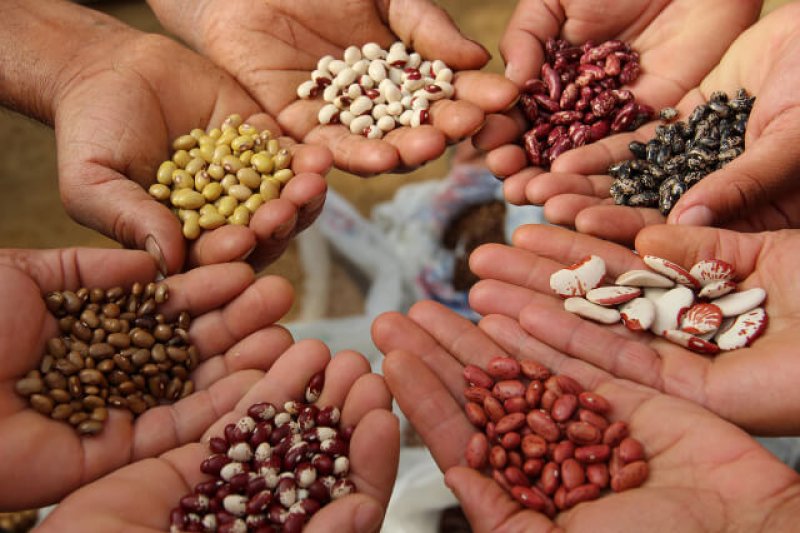
seeds
Credit: Krishi Jagran

Global agriculture is increasingly dominated by just a handful of crops with limited genetic richness, says a group of researchers writing in PLOS One.

The research shows that despite an uptick in the diversity of crops grown across the planet over the last 60 years, the largest share of our crops worldwide is now made up of just a few types of plants. As an example, [four] of these particularly dominant crops–wheat, maize, soya, and rice–now take up almost 50% of the farmland on earth.

The researchers….combined data on 161 plant groups, across 22 subcontinental regions, taken from the six decades between 1961 and 2014. The period they examined kicked off with very little change in crop diversity between 1960 and the late 1970s, but then a period of rapid diversification in the 1980s as agriculture industrialized.

This period reflected a rapid surge in the number of crops being grown around the planet, though there were some large regional differences. For instance, in Central America farmers added 30 new crop species to their repertoire between 1961 and 2014, compared to Polynesia’s one.

Read full, original article: Global crops are growing more diverse, but just a few still dominate our food system


{{ reviewsTotal }}{{ options.labels.singularReviewCountLabel }}
{{ reviewsTotal }}{{ options.labels.pluralReviewCountLabel }}
{{ options.labels.newReviewButton }}
{{ userData.canReview.message }}

Related Articles

Infographic: Global regulatory and health research agencies on whether glyphosate causes cancer

Infographic: Global regulatory and health research agencies on whether glyphosate causes cancer

Does glyphosate—the world's most heavily-used herbicide—pose serious harm to humans? Is it carcinogenic? Those issues are of both legal and ...

Most Popular

Picture1
The FDA couldn’t find a vaccine safety crisis, so it buried its own research
Screenshot-2026-04-22-at-12.21.32-PM
Viewpoint: Why the retracted Monsanto glyphosate study doesn’t change the science—the world’s most popular herbicide is safe 
ChatGPT-Image-May-7-2026-12_32_36-PM
Viewpoint: The state of U.S. vaccine policy? Dismal nationally, but some states are stepping up.
Screenshot-2026-05-19-at-11.23.34-AM
West-originated vaccine disinformation sparks murders of health care workers across Africa
placebo
Viewpoint — Alternative medicine and the placebo effect: Selling a reassuring illusion of health
_20250221_nib_rfk_trump
Viewpoint: 'Crisis of public trust': Autism support community shocked RFK continues to peddle false claims about the danger of vaccines
Screenshot-2026-04-13-at-1.39.26-PM
Viewpoint: ‘Safer for children?’ Stonyfield yogurt under fire for deceptive organic marketing
ChatGPT-Image-May-18-2026-01_45_05-PM-2
Newest hantavirus conspiracy: Online disinformation turns outbreak into latest ivermectin grift
ChatGPT-Image-May-18-2026-12_06_18-PM-2
Defying death: The immortality movement goes mainstream
Screenshot-2026-04-22-at-10.46.29-AM
Viewpoint: How to counter science disinformation? Science journalist offers 12 practical tips
glp menu logo outlined

Get news on human & agricultural genetics and biotechnology delivered to your inbox.