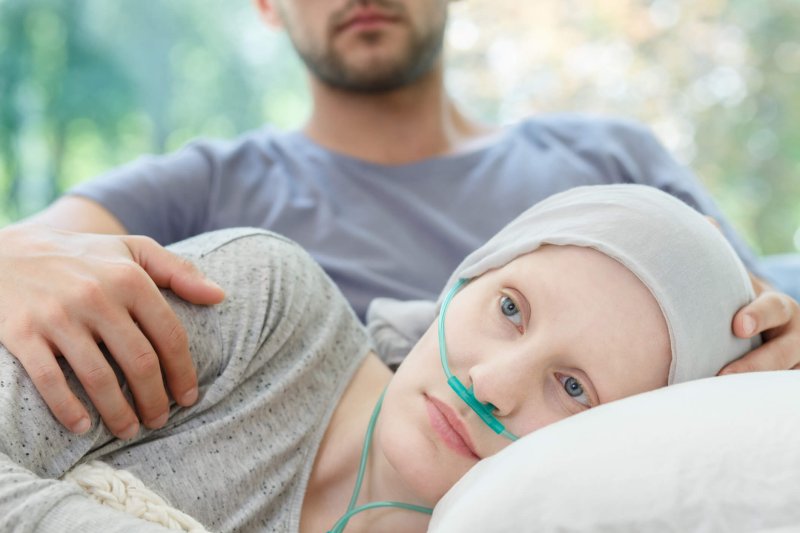
Is it easier to get cancer than previously thought?

cancer drug costs
[C]ancer might arise more easily than previously thought. By doing experiments on both yeast cells and on human cells in culture, my colleagues and I have been able to show that just a single mutated gene suffices to accelerate cancer. The experiments mimic an early event during cancer development—the acquisition of genetic instability—which is characterized by a faster accumulation of mutations, and by genomic changes which can themselves disrupt cancer tumor suppressor genes or activate oncogenes.

So far it has been difficult to identify when and where genetic instability arises, either because tumor samples represent a late stage of cancer development and thus carry many different mutations.

This new work started from a provocative question posed to me by my mentor, Andrew Murray: “If we let cells choose, how do stable cells evolve into cancer cells?”

This contradicts the prevailing thinking in the field, which, as I noted, states that two inactivating mutations are required for cancer onset. And since a heterozygous mutation in a single gene suffices to trigger genetic instability, and we predict that human cells have 300 such genes, it is very probable that cells turn on the ability to mutate faster.

Read full, original post: A New Idea about How Cancer Begins

{{ reviewsTotal }}{{ options.labels.singularReviewCountLabel }}
{{ reviewsTotal }}{{ options.labels.pluralReviewCountLabel }}
{{ options.labels.newReviewButton }}
{{ userData.canReview.message }}

Related Articles

Infographic: Global regulatory and health research agencies on whether glyphosate causes cancer

Infographic: Global regulatory and health research agencies on whether glyphosate causes cancer

Does glyphosate—the world's most heavily-used herbicide—pose serious harm to humans? Is it carcinogenic? Those issues are of both legal and ...

Most Popular

Screenshot-2026-03-13-at-12.14.04-PM
The FDA wants to make many popular prescription drugs OTC—a great idea. Here’s why it’s unlikely to happen
Screenshot 2026-05-06 at 2.56
Singularity crisis ahead? Can super babies save us from rogue AI geniuses?
Screenshot-2026-05-04-at-12.54.32-PM
How Utah became the country’s supplement capital  — and a haven for unregulated, ineffective and fake products
Screenshot-2026-04-20-at-2.26.27-PM
Viewpoint — Food-fear world: The latest activist scientists campaign: Cancer-causing additives
Screenshot-PM-24
Viewpoint: The herbicide glyphosate isn’t perfect. Banning it would be far worse.
images
The never-ending GMO debate: Pros and cons
Screenshot-2026-05-01-at-11.56.24-AM
‘Science moves forward when people are willing to think differently’: Memories of DNA maverick Craig Venter
Screenshot-2026-04-30-at-2.19.37-PM
5 myths about summer dehydration that could damage your health — or even kill you
Screenshot-2026-04-03-at-11.15.51-AM
Paraben panic: How a flawed study, media hype, and chemophobia convinced the public of the danger of one of the safest classes of preservatives
79d03212-2508-45d0-b427-8e9743ff6432
Viewpoint: The Casey Means hustle—Wellness woo opportunism dressed up as medical wisdom
glp menu logo outlined

Get news on human & agricultural genetics and biotechnology delivered to your inbox.