Steep prices push lab-grown meat makers to pitch products as ‘humane luxuries’

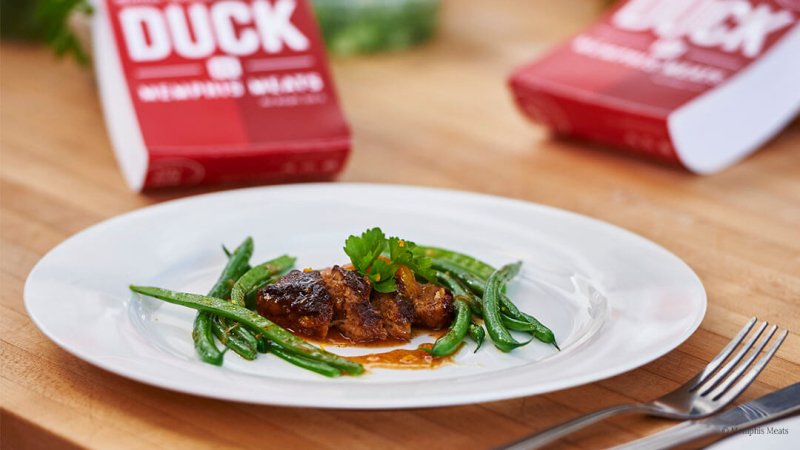
grilled duck mephis meats
Grilled duck made from animal cells. Image: Memphis Meats
[M]akers of cultured meat, such as Memphis Meats, New Age Meats and Aleph Farms, face several barriers to bringing their food to consumers. First, it’s not yet clear whether customers will eat—much less pay for—meat that’s grown from cells rather than reared on a farm. Second, cultured meat is vastly more expensive than conventional meat to produce. It costs Finless [Foods] slightly less than $4,000 to make a pound of tuna—about 20% the price of gold. Prices for conventional tuna vary, but Browne Trading, a Portland, Maine-based fish supplier, buys line-caught bluefin for $8 to $12 a pound and sells it to restaurants for $19 a pound.

To overcome high costs and customer reluctance, Finless and some other producers have adopted a counterintuitive strategy: They are copying the most exclusive, expensive types of traditional meat, positioning their products as innovative, humane luxuries worth the steep price tags. They want to be to dinner what Tesla Inc. is to cars.

“We don’t want to go for low-range, low-cost, low-price product,” said Didier Toubia, chief executive of Aleph, an Israeli startup that uses biomedical engineering techniques to combine muscle, fat, blood vessel and other types of cells to replicate beef.

Read full, original article: Lab-Grown Meat Is Coming, but the Price Is Hard to Stomach (Behind Paywall)

{{ reviewsTotal }}{{ options.labels.singularReviewCountLabel }}
{{ reviewsTotal }}{{ options.labels.pluralReviewCountLabel }}
{{ options.labels.newReviewButton }}
{{ userData.canReview.message }}

Related Articles

Infographic: Global regulatory and health research agencies on whether glyphosate causes cancer

Infographic: Global regulatory and health research agencies on whether glyphosate causes cancer

Does glyphosate—the world's most heavily-used herbicide—pose serious harm to humans? Is it carcinogenic? Those issues are of both legal and ...

Most Popular

S
As vaccine rejectionism spreads, measles may be taking a more dangerous turn
Screenshot-2026-05-01-at-1.29.41-PM
Viewpoint: What happens when whole grains meet modern food manufacturing? Labels don’t tell the whole story.
Screenshot 2026-05-06 at 2.56
Singularity crisis ahead? Can super babies save us from rogue AI geniuses?
Screenshot-2026-03-13-at-12.14.04-PM
The FDA wants to make many popular prescription drugs OTC—a great idea. Here’s why it’s unlikely to happen
Screenshot-2026-05-06-at-2.07.43-PM
Manufacturing a conspiracy: The timeline of how  the White House embraced the fringe claim that scientists are being mysteriously murdered
Screenshot-2026-04-20-at-2.26.27-PM
Viewpoint — Food-fear world: The latest activist scientists campaign: Cancer-causing additives
Screenshot-2026-05-01-at-11.56.24-AM
‘Science moves forward when people are willing to think differently’: Memories of DNA maverick Craig Venter
Screenshot-2026-04-03-at-11.15.51-AM
Paraben panic: How a flawed study, media hype, and chemophobia convinced the public of the danger of one of the safest classes of preservatives
images
The never-ending GMO debate: Pros and cons
Screenshot-2026-04-30-at-2.19.37-PM
5 myths about summer dehydration that could damage your health — or even kill you
Screenshot-2026-04-12-135256
Bixonimania: The fake disease scam that AI swallowed whole
glp menu logo outlined

Get news on human & agricultural genetics and biotechnology delivered to your inbox.