Will warming planet, population boom push skeptical consumers to embrace GMO, CRISPR crops?

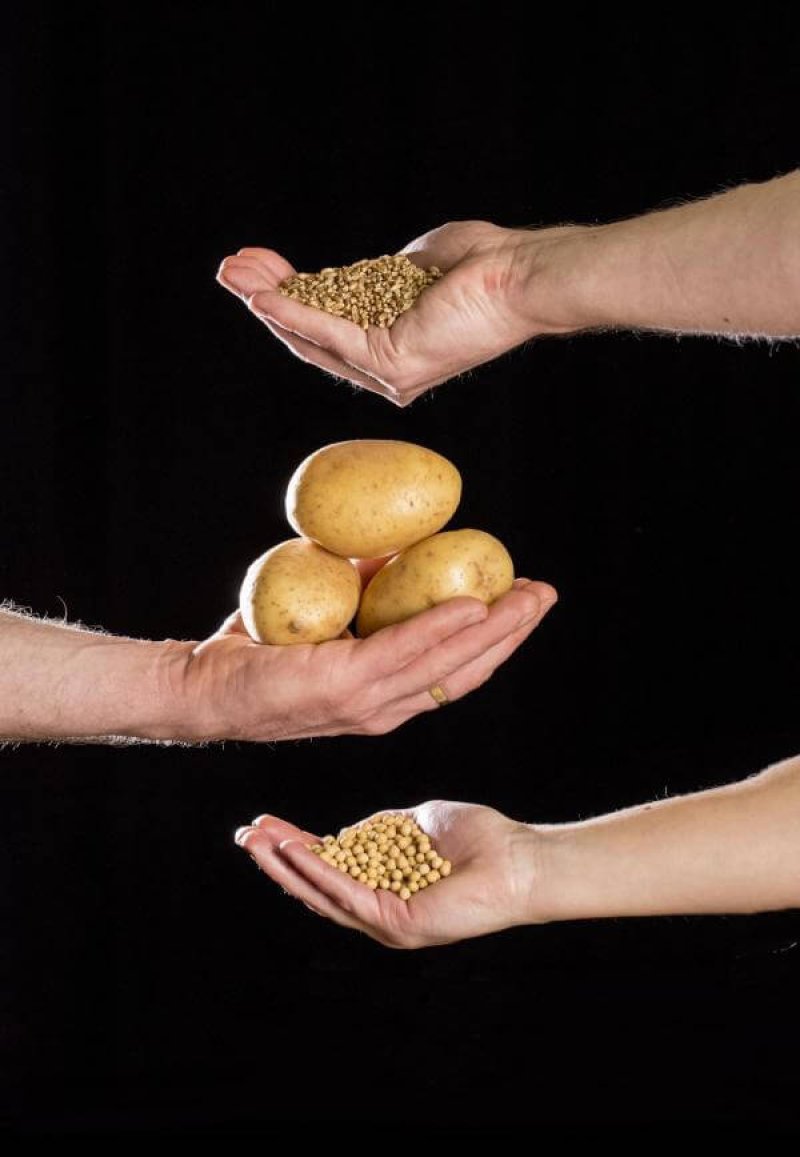
wheat potatoes and soybeans
Scientists advance disease resistance in three of world's most economically important crops. Image: John Innes Centre

As part of an agricultural charm offensive by the US government, a group of British journalists was invited into the Wisconsin laboratory where in 1998 Monsanto developed …. Roundup Ready soybean. The development has allowed the spread of “no-till” farming, which is thought …. to reduce run-off of fertilizers and pesticides.

Monsanto no longer owns the lab. Two years ago it handed the lot over to the University of Wisconsin-Madison …. The university used the resource to set up its Crop Innovation Center, whose charming and affable associate director, Michael Petersen, showed us around.

“The UK has always been a challenge, since the early days,” he says. “They have always taken a conservative route. Most other countries are going the way of the United States.”

People say “it’s a GMO, so it’s bad. But stereotyping anything as bad is wrong,” he says.

Mr Petersen predicts that necessity will be the mother of adoption, when it comes to GM foods. “Climate change and population pressure will reach a point where we have to put our sensitivities aside,” he says.

Already some modifications introduced …. such as producing drought-resistant corn – are a response to climate change.

Read full, original article: Would you eat genetically modified food?

{{ reviewsTotal }}{{ options.labels.singularReviewCountLabel }}
{{ reviewsTotal }}{{ options.labels.pluralReviewCountLabel }}
{{ options.labels.newReviewButton }}
{{ userData.canReview.message }}

Related Articles

Infographic: Global regulatory and health research agencies on whether glyphosate causes cancer

Infographic: Global regulatory and health research agencies on whether glyphosate causes cancer

Does glyphosate—the world's most heavily-used herbicide—pose serious harm to humans? Is it carcinogenic? Those issues are of both legal and ...

Most Popular

Screenshot-2026-03-13-at-12.14.04-PM
The FDA wants to make many popular prescription drugs OTC—a great idea. Here’s why it’s unlikely to happen
Screenshot 2026-05-06 at 2.56
Singularity crisis ahead? Can super babies save us from rogue AI geniuses?
Screenshot-2026-05-04-at-12.54.32-PM
How Utah became the country’s supplement capital  — and a haven for unregulated, ineffective and fake products
Screenshot-2026-04-20-at-2.26.27-PM
Viewpoint — Food-fear world: The latest activist scientists campaign: Cancer-causing additives
Screenshot-PM-24
Viewpoint: The herbicide glyphosate isn’t perfect. Banning it would be far worse.
images
The never-ending GMO debate: Pros and cons
Screenshot-2026-05-01-at-11.56.24-AM
‘Science moves forward when people are willing to think differently’: Memories of DNA maverick Craig Venter
Screenshot-2026-04-03-at-11.15.51-AM
Paraben panic: How a flawed study, media hype, and chemophobia convinced the public of the danger of one of the safest classes of preservatives
Screenshot-2026-04-30-at-2.19.37-PM
5 myths about summer dehydration that could damage your health — or even kill you
79d03212-2508-45d0-b427-8e9743ff6432
Viewpoint: The Casey Means hustle—Wellness woo opportunism dressed up as medical wisdom
ChatGPT-Image-May-1-2026-02_20_13-PM
How RFK, Jr.’s false vaccine claims are holding up $600 million to fight diseases in poor countries
glp menu logo outlined

Get news on human & agricultural genetics and biotechnology delivered to your inbox.