Some farmers earn more money defending GMOs on YouTube than they do growing food

Impacts of Cloud Computing in Japans Social Media

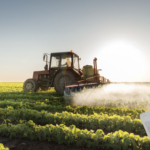
It’s a sign of the times when farmers make more money advocating for the industry on social media than actually farming.

Zach Johnson, who grows corn and soybeans in Minnesota, is known in YouTube circles as MN Millennial Farmer. It’s a role, he says, that’s provided him and his wife, Becky, about five times more in earnings than he can make on the family farm in the last year.

Johnson, 34, became a video blogger three years ago to advocate for growers and the technology they use. Now, he and Becky have about 300,000 subscribers and 50 million views under their belts. Their experience reflects both the depressed state of the rural economy and growing consumer interest in how food is produced.

“Yes, we use GMOs, we use pesticides, drain tiles and irrigation and there are real reasons why we use those things,” Johnson said in an interview. He describes his role as bringing balance to a discussion often dominated by critics of modern farming practices.

The Johnsons aren’t alone online. In rural communities across the U.S., YouTube, a unit of Google, is the most popular social media with 59% of people using it, according to a Pew Research Center survey in 2018.

Reach full, original article: Farmers Earn More From YouTube Than Their Crops

{{ reviewsTotal }}{{ options.labels.singularReviewCountLabel }}
{{ reviewsTotal }}{{ options.labels.pluralReviewCountLabel }}
{{ options.labels.newReviewButton }}
{{ userData.canReview.message }}

Related Articles

Infographic: Global regulatory and health research agencies on whether glyphosate causes cancer

Infographic: Global regulatory and health research agencies on whether glyphosate causes cancer

Does glyphosate—the world's most heavily-used herbicide—pose serious harm to humans? Is it carcinogenic? Those issues are of both legal and ...

Most Popular

Screenshot-2026-04-22-at-12.21.32-PM
Viewpoint: Why the retracted Monsanto glyphosate study doesn’t change the science—the world’s most popular herbicide is safe 
Picture1
The FDA couldn’t find a vaccine safety crisis, so it buried its own research
ChatGPT-Image-May-1-2026-11_42_59-AM-2
Viewpoint: NAD is the wellness grifters latest evidence-lite longevity fad. At least the mice are impressed.
global warming
‘Implausible’: Top climate scientists reject worst-case scenario—soaring temperatures and fast-rising sea levels
Screenshot-2026-05-21-at-12.15.17-PM
UK gene-editing milestone: Livestock barley that increases ruminant value and reduces methane emissions is first-approved CRISPR crop
vax-misinformation-main
Facts & Fallacies Podcast: Limit free speech to blunt social media misinfo?
ChatGPT-Image-Apr-16-2026-02_56_53-PM
Financial incentives, over diagnosis, and weak oversight: Autism claims are driving up Medicare costs
Screenshot-2026-05-21-at-3.15.53-PM
Chiropractors may no longer be modern-day snake oil salesmen, but the benefits of their therapy are limited–at best
ChatGPT-Image-May-12-2026-11_27_01-AM-2
AI likely to improve health care, research shows—but not for blacks and ethnic minorities
Screenshot-2026-05-20-at-5.11.17-PM
Viewpoint: No, sugar doesn’t ‘feed’ cancer — common cancer myths, debunked

Sorry. No data so far.

glp menu logo outlined

Get news on human & agricultural genetics and biotechnology delivered to your inbox.