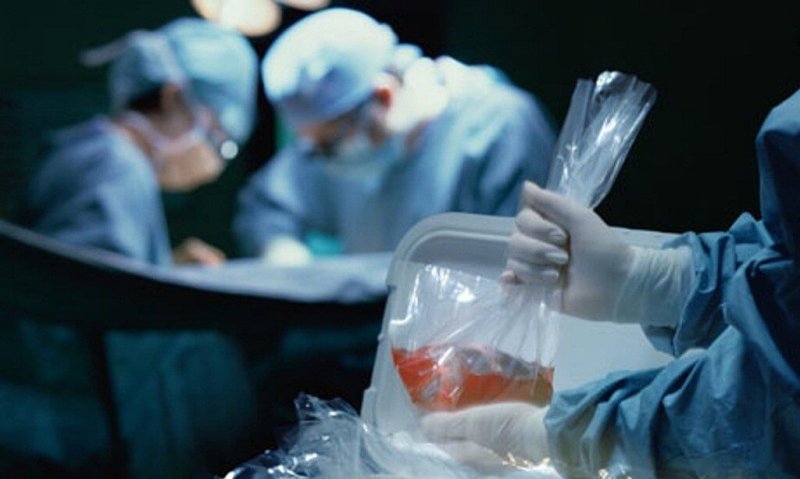
Human-animal chimeric embryos in Japan: Growing human pancreas in a rat, suitable for transplant

human organ transplant

The Japanese government is granting its support to a scientist working to create animal embryos that contain human cells, and to then subsequently transplant them into surrogate animals. The decision reverses one made earlier this year, which banned the procedure.

Scientist Hiromitsu Nakauchi wants to create a human pancreas in rodents like rats and mice, and the Japanese government, specifically its education and science ministry, has issued new guidelines.

The procedure would create human-animal chimeric embryos. Scientists created a pig/human chimeric embryo in 2017 and a sheep/human hybrid in 2018. If everything went to plan, Nakauchi would grow a human pancreas suitable for transplant.

An experiment like Nakauchi’s has never been attempted in Japan, and according to the Asahi Shimbun, the new guidelines only allow the research “on the precondition that researchers take appropriate steps to prevent the birth of an ambiguous creature that could be part human.”

But Nakauchi says that wouldn’t happen.

“The number of human cells grown in the bodies of sheep is extremely small, like one in thousands or one in tens of thousands,” he said. “At that level, an animal with a human face will never be born.”

Read full, original post: I Guess You Can Grow a Human Pancreas In a Rat Now

{{ reviewsTotal }}{{ options.labels.singularReviewCountLabel }}
{{ reviewsTotal }}{{ options.labels.pluralReviewCountLabel }}
{{ options.labels.newReviewButton }}
{{ userData.canReview.message }}

Related Articles

Infographic: Global regulatory and health research agencies on whether glyphosate causes cancer

Infographic: Global regulatory and health research agencies on whether glyphosate causes cancer

Does glyphosate—the world's most heavily-used herbicide—pose serious harm to humans? Is it carcinogenic? Those issues are of both legal and ...

Most Popular

Screenshot-2026-05-01-at-1.29.41-PM
Viewpoint: What happens when whole grains meet modern food manufacturing? Labels don’t tell the whole story.
S
As vaccine rejectionism spreads, measles may be taking a more dangerous turn
ChatGPT-Image-Mar-27-2026-11_47_30-AM-2
FDA’s expedited drug reviews are hailed in some quarters but other approval practices are problematic
Screenshot 2026-05-06 at 2.56
Singularity crisis ahead? Can super babies save us from rogue AI geniuses?
Farmers can talk to plants
Farmers are a major source of misinformation—about farming
Screenshot-2026-04-20-at-2.26.27-PM
Viewpoint — Food-fear world: The latest activist scientists campaign: Cancer-causing additives
Screenshot-2026-04-30-at-2.19.37-PM
5 myths about summer dehydration that could damage your health — or even kill you
Screenshot-2026-05-06-at-2.07.43-PM
Manufacturing a conspiracy: The timeline of how  the White House embraced the fringe claim that scientists are being mysteriously murdered
Screenshot-2026-03-13-at-12.14.04-PM
The FDA wants to make many popular prescription drugs OTC—a great idea. Here’s why it’s unlikely to happen
Screenshot 2026-05-06 at 2.19
Vaccine shootout at the CDC 
Screenshot-2026-04-03-at-11.15.51-AM
Paraben panic: How a flawed study, media hype, and chemophobia convinced the public of the danger of one of the safest classes of preservatives
glp menu logo outlined

Get news on human & agricultural genetics and biotechnology delivered to your inbox.