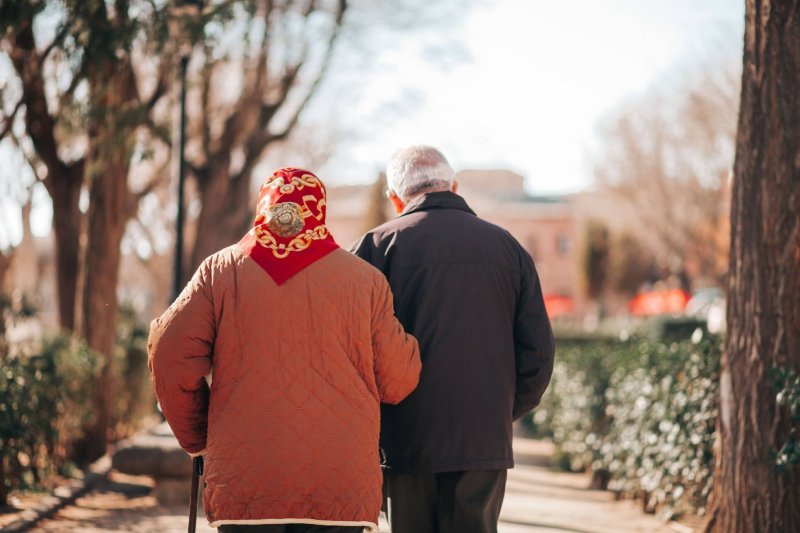
If we classified aging as a disease, would it change the way we treat it?

how to grow old and happy together
Image: Seyfettin Dincturk/Unsplash

What would change if we classified aging itself as the disease? 

David Sinclair, a geneticist at Harvard Medical School, is one of those on the front line of this movement. Medicine, he argues, should view aging not as a natural consequence of growing older, but as a condition in and of itself. Old age, in his view, is simply a pathology—and, like all pathologies, can be successfully treated. If we labeled aging differently, it would give us a far greater ability to tackle it in itself, rather than just treating the diseases that accompany it.

It is a subtle shift, but one with big implications. How disease is classified and viewed by public health groups such as the World Health Organization (WHO) helps set priorities for governments and those who control funds. Regulators, including the US Food and Drug Administration (FDA), have strict rules that guide what conditions a drug can be licensed to act on, and so what conditions it can be prescribed and sold for. Today aging isn’t on the list. Sinclair says it should be, because otherwise the massive investment needed to find ways to fend it off won’t appear.

Read full, original post: What if aging weren’t inevitable, but a curable disease?

{{ reviewsTotal }}{{ options.labels.singularReviewCountLabel }}
{{ reviewsTotal }}{{ options.labels.pluralReviewCountLabel }}
{{ options.labels.newReviewButton }}
{{ userData.canReview.message }}

Related Articles

Infographic: Global regulatory and health research agencies on whether glyphosate causes cancer

Infographic: Global regulatory and health research agencies on whether glyphosate causes cancer

Does glyphosate—the world's most heavily-used herbicide—pose serious harm to humans? Is it carcinogenic? Those issues are of both legal and ...

Most Popular

ChatGPT-Image-Jun-30-2026-01_09_47-PM
Viewpoint: As MAHA blows up over Supreme Court ruling limiting glyphosate litigation, Trump offers toothless plan to reduce pesticides in food
ChatGPT-Image-Jun-23-2026-12_19_35-PM
Ideological red flag: Led by anti-vax doctor, Tennessee is now the U.S. epicenter selling potent ivermectin shown worthless to prevent or treat Covid
Screenshot-2026-06-30-at-2.06.25-PM
PEW study: The sick state of American health information
ChatGPT-Image-Jun-25-2026-12_23_17-PM
No, Bill Gates did not secretly engineer ticks to promote veganism
ChatGPT-Image-Mar-4-2026-09_39_03-AM
Transgender female athletes and Title IX: Separating ‘policy’ from ‘legality’
Screenshot-2026-06-17-at-12.31.01-PM
Viewpoint: The dangerous influence of ‘woke’ post-modernism in science
marijuana-pot-in-hand-nveri-st-xpm-t-abq-fkifeos-s-rws-cmpx-
Facts & Fallacies podcast: Legalized weed drives drug addiction, psychosis?
Screenshot-2026-06-30-at-3.08.03-PM
From infrared sauna blankets to collagen gummies, here’s the top 10 social-media-promoted wellness shams
ChatGPT-Image-Mar-10-2026-01_39_01-PM
Viewpoint—“Miracle molecule” debunked: Why acemannan supplements don’t work
photodune farming tractor s
Viewpoint: Glyphosate may be hazardous, but it is not dangerous as used by farmers. Critics of the Supreme Court’s Roundup ruling garble hazard with risk
Screenshot-2026-06-30-at-10.43.50-AM
Viewpoint: Why are there no approved bioengineered insect-protected (Bt) apples?
ChatGPT-Image-Jun-30-2026-02_48_10-PM
Independent news review site launches free credibility and fact-vetted aggregation chatbot
ChatGPT-Image-Jun-25-2026-01_14_50-PM
Viewpoint: Disinformation grift: The wellness industry is a lucrative and mostly worthless marketplace of ‘balms, brews, and baloney’
glp menu logo outlined

Get news on human & agricultural genetics and biotechnology delivered to your inbox.