Plant geneticist Kevin Folta: Scientific American’s rewritten anti-GMO article a ‘lesser abomination’

gmo png
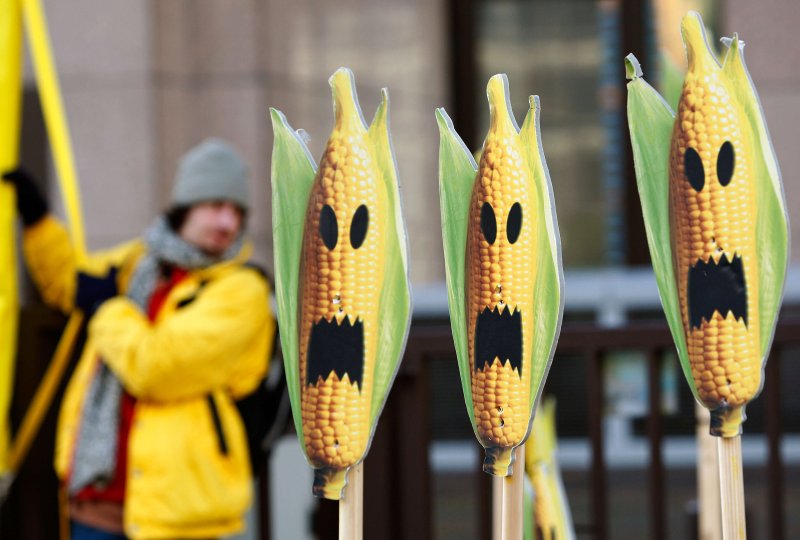
A Greenpeace activist displays signs symbolising genetically modified maize crops during a protest in front of the European Union headquarters in Brussels Image: REUTERS/Thierry Roge

The Scientific American article about “dying broccoli” and “toxic corn” drew wide criticism for its unreferenced and outright false indictment of modern agriculture, and flimsy treatment of concepts in microbiomes.  My dissection can be seen here.

I contacted the editors, and apparently others did too. I was shocked to find out that there was no peer review or expert consultation.  The editors kindly returned a conscientious and conciliatory email that suggested they made a mistake and the authors would revise.

Personally, nothing short of a full retraction was a remedy.  That first article was absolutely horrible, D.O.A. horrible. Not only did it vilify farmers, it scared people about food, and misinformed them about basic biology, and it was done under the banner of Scientific American, a trusted popular scientific brand.

Out of the frying pan…

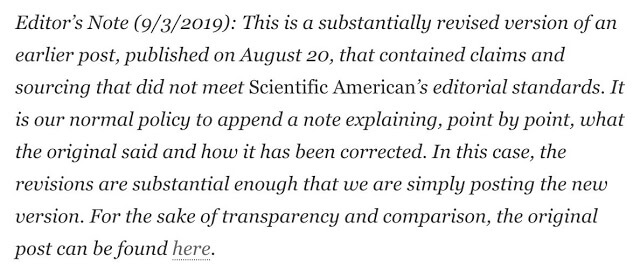
The editors published a “corrected” version.  I learned of the revision via Twitter from Dr. Elisabeth Bik (@microbiomdigest) someone that knows a thing or two about microbiomes.
 

biktwitt
Correction issued by Scientific American after the article was published.
And into a fajita skillet.
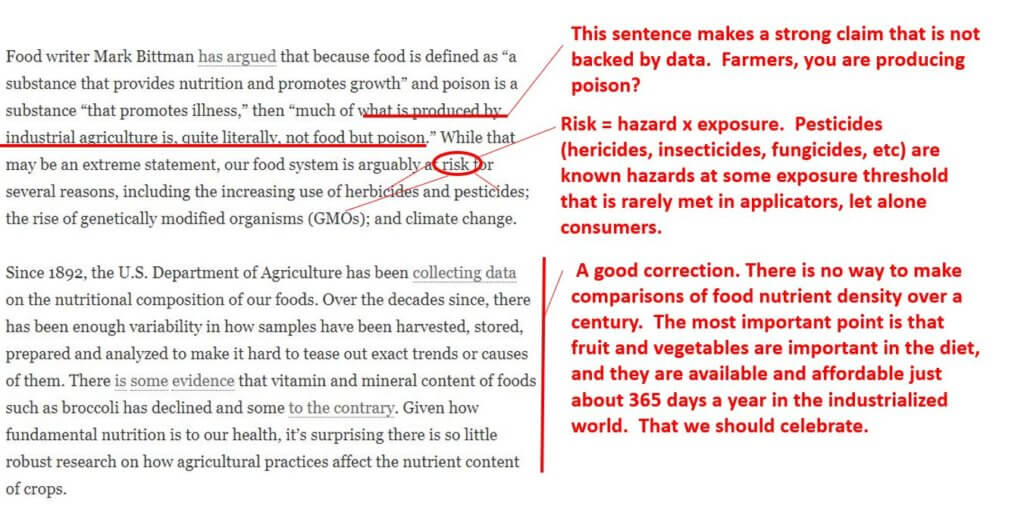
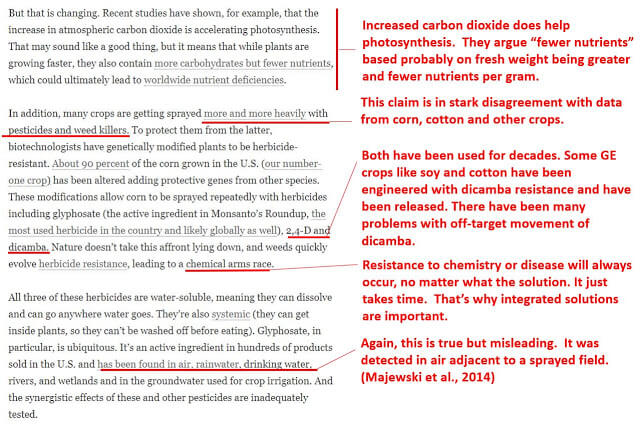
“Substantial revision” might be a slight step forward, but still is an absolute mess.  Here again is a painstaking dissection with referenced rebuttals. The revised text was longer, referenced (but with select references that supported the authors’ assertions, ignoring all other contradictory literature) and equally fear-based and misleading.
s
s
There you have it.  The editors at Scientific American clearly don’t realize how scholarly writing should be done, even if it is in a popular science venue.  As it stands, the work uses misrepresentation and cherry picking to disparage agricultural producers, conjure fear of safe and reliable chemistries/genetics, and promote a vision of agriculture that is ultimately unsustainable without removing a lot of people from the planet.

Articles like this get a day in the sun on Twitter. Anti-ag interests will bask in its words and share in their online communities.  The real atrocity is how Scientific American destroys its own credibility, abrades trust in farming, and scares people away from fresh fruits and vegetables, the most important food on the plate for long term health.

Read original article: A Lesser Abomination

{{ reviewsTotal }}{{ options.labels.singularReviewCountLabel }}
{{ reviewsTotal }}{{ options.labels.pluralReviewCountLabel }}
{{ options.labels.newReviewButton }}
{{ userData.canReview.message }}

Related Articles

Infographic: Global regulatory and health research agencies on whether glyphosate causes cancer

Infographic: Global regulatory and health research agencies on whether glyphosate causes cancer

Does glyphosate—the world's most heavily-used herbicide—pose serious harm to humans? Is it carcinogenic? Those issues are of both legal and ...

Most Popular

Screenshot 2025-07-30 at 10.48
Can gene editing eliminate Down syndrome? Scientists have done it in lab-grown cells
ChatGPT-Image-Mar-10-2026-01_39_01-PM
Viewpoint—“Miracle molecule” debunked: Why acemannan supplements don’t work
ChatGPT-Image-May-26-2026-07_51_21-AM-2
Viewpoint: There are more than 1,000 chemicals in a cup of coffee—including many substances that can cause cancer. Why isn’t it banned?
Screenshot-2026-06-04-at-12.05.08-PM
Cases of brain inflammation surge as U.S. measles pandemic approaches 2000
Screenshot 2026-05-26 at 10.15
Viewpoint: Double standard—Why does the wellness industry get a free pass while Big Healthcare is treated as morally suspect?
Screenshot-2026-05-28-at-1.36.28-PM
Viewpoint: Can mRNA research survive the Trump administration?
Picture1
Sounds we can’t hear — the hidden planetary signals behind science, fear, and misinformation
downsyndrome_compilation_MID_1
CRISPR breakthrough that can remove the chromosome responsible for Down syndrome raises ethical questions
ChatGPT Image May 26, 2026, 08_42_17 AM (1)
Viewpoint: Greenpeace and poison: How environmental advocacy groups rely on compliant (and often ignorant) journalists to spread disinformation and spark litigation

Sorry. No data so far.

glp menu logo outlined

Get news on human & agricultural genetics and biotechnology delivered to your inbox.