Viewpoint: The key to ethical human germline editing is ‘slow science’

4-30-2019 embryo x
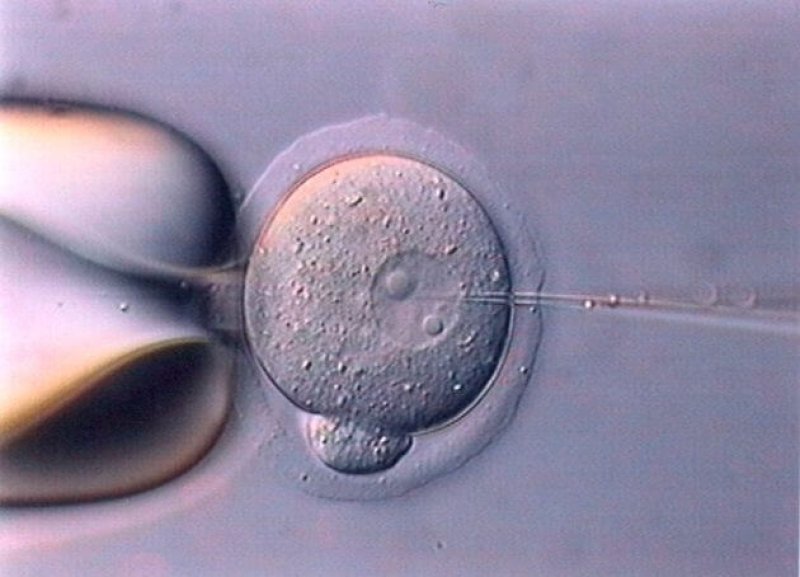
A pipette injects CRISPR-Cas9 gene-editing tools into a mouse embryo. Image: University of Utah Health Sciences

The hubris of some scientists knows no bounds. Less than a year after He Jiankui, a Chinese biophysicist, drew scorn and censure for creating gene-edited twins, Denis Rebrikov, a Russian molecular biologist, boldly announced his plan to follow in He’s genome editing footsteps.

The whether of heritable human genome editing has not been resolved, and yet some scientists continue to race ahead with the how of it, essentially ignoring the myriad calls for public consultation. To be sure, other scientists are willing to heed the call, but would prefer to limit public consultation to public education.

I don’t agree with this position. As I write in a new book, “Altered Inheritance,” we need to move the dial from public education (which typically is limited to talking at the public), to public engagement (which necessarily involves listening to the public), and then on to public empowerment (which is about shared decision-making).

To this end, we need slow science. Science needs time to think and to digest. Time is also needed to promote ethics literacy and to facilitate broad societal consensus — where the goal is unity, not unanimity.

Read full, original post: Before heritable genome editing, we need slow science and dialogue ‘within and across nations’


{{ reviewsTotal }}{{ options.labels.singularReviewCountLabel }}
{{ reviewsTotal }}{{ options.labels.pluralReviewCountLabel }}
{{ options.labels.newReviewButton }}
{{ userData.canReview.message }}

Related Articles

Infographic: Global regulatory and health research agencies on whether glyphosate causes cancer

Infographic: Global regulatory and health research agencies on whether glyphosate causes cancer

Does glyphosate—the world's most heavily-used herbicide—pose serious harm to humans? Is it carcinogenic? Those issues are of both legal and ...

Most Popular

Screenshot-PM-24
Viewpoint: The herbicide glyphosate isn’t perfect. Banning it would be far worse.
d-b
Blocked arteries, kidney stones, nausea, constipation, fatigue: Long list of health problems caused by too much vitamin D 
79d03212-2508-45d0-b427-8e9743ff6432
Viewpoint: The Casey Means hustle—Wellness woo opportunism dressed up as medical wisdom
ChatGPT-Image-Mar-10-2026-01_39_01-PM
Viewpoint—“Miracle molecule” debunked: Why acemannan supplements don’t work
ChatGPT-Image-Apr-30-2026-12_21_05-PM-2
The tech billionaires behind the immortality movement
ChatGPT-Image-Mar-27-2026-11_27_05-AM
The myths of “process”: What science says about the “dangers’ of synthetic products and ultra-processed foods
ChatGPT-Image-Apr-30-2026-05_00_48-PM
Wellness grifter physician turned wellness influencer out as surgeon general nominee

Sorry. No data so far.

glp menu logo outlined

Get news on human & agricultural genetics and biotechnology delivered to your inbox.