AI has a problem with generalization. Human brains may offer a solution.

a b a a a b a a large
Image: Ramachandra Babu/Gulf News

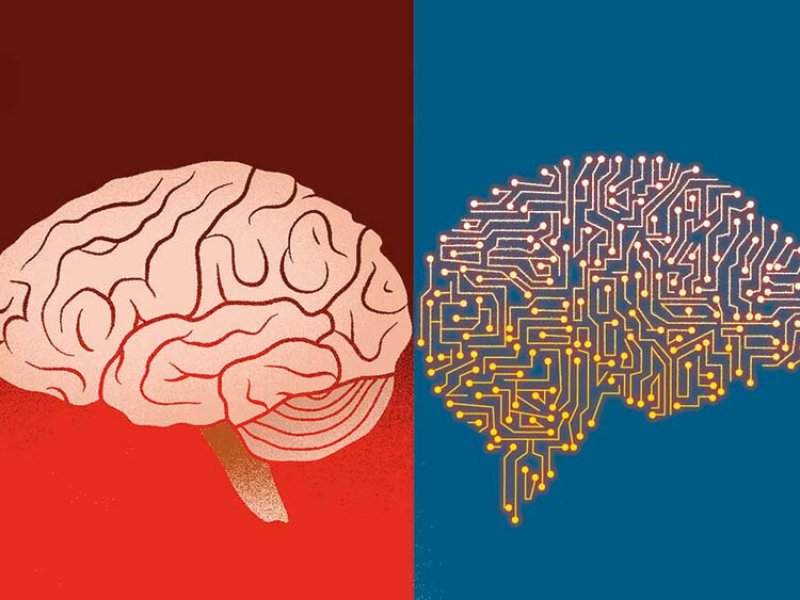
Unconstrained by evolution, AI has the potential to churn through vast amounts of data to surpass our puny, fatty central processors. Yet even as a single algorithm beats humans in a specific problem—chess, Go, Dota, medical diagnosis for breast cancer—humans kick their butts every time when it comes to a brand new task. Somehow, the innate structure of our brains, when combined with a little worldly experience, lets us easily generalize one solution to the next. State-of-the-art deep learning networks can’t.

In a new paper published in Neuron, [Dr. Andreas] Tolias and colleagues in Germany argue that more data or more layers in artificial neural networks isn’t the answer. Rather, the key is to introduce inductive biases—somewhat analogous to an evolutionary drive—that nudge algorithms towards the ability to generalize across drastic changes.

“The next generation of intelligent algorithms will not be achieved by following the current strategy of making networks larger or deeper. Perhaps counter-intuitively, it might be the exact opposite…we need to add more bias to the class of [AI] models,” the authors said.

What better source of inspiration than our own brains?

Read full, original post: Deep Learning Networks Can’t Generalize—But They’re Learning From the Brain


{{ reviewsTotal }}{{ options.labels.singularReviewCountLabel }}
{{ reviewsTotal }}{{ options.labels.pluralReviewCountLabel }}
{{ options.labels.newReviewButton }}
{{ userData.canReview.message }}

Related Articles

Infographic: Global regulatory and health research agencies on whether glyphosate causes cancer

Infographic: Global regulatory and health research agencies on whether glyphosate causes cancer

Does glyphosate—the world's most heavily-used herbicide—pose serious harm to humans? Is it carcinogenic? Those issues are of both legal and ...

Most Popular

Screenshot 2026-05-06 at 2.56
Singularity crisis ahead? Can super babies save us from rogue AI geniuses?
Screenshot-2026-03-13-at-12.14.04-PM
The FDA wants to make many popular prescription drugs OTC—a great idea. Here’s why it’s unlikely to happen
Screenshot-2026-04-20-at-2.26.27-PM
Viewpoint — Food-fear world: The latest activist scientists campaign: Cancer-causing additives
Screenshot-2026-05-01-at-11.56.24-AM
‘Science moves forward when people are willing to think differently’: Memories of DNA maverick Craig Venter
images
The never-ending GMO debate: Pros and cons
Screenshot-PM-24
Viewpoint: The herbicide glyphosate isn’t perfect. Banning it would be far worse.
Screenshot-2026-04-03-at-11.15.51-AM
Paraben panic: How a flawed study, media hype, and chemophobia convinced the public of the danger of one of the safest classes of preservatives
Screenshot-2026-04-30-at-2.19.37-PM
5 myths about summer dehydration that could damage your health — or even kill you
79d03212-2508-45d0-b427-8e9743ff6432
Viewpoint: The Casey Means hustle—Wellness woo opportunism dressed up as medical wisdom
Screenshot-2026-05-01-at-1.29.41-PM
Viewpoint: What happens when whole grains meet modern food manufacturing? Labels don’t tell the whole story.
Screenshot-2026-05-06-at-2.07.43-PM
Manufacturing a conspiracy: The timeline of how  the White House embraced the fringe claim that scientists are being mysteriously murdered
glp menu logo outlined

Get news on human & agricultural genetics and biotechnology delivered to your inbox.