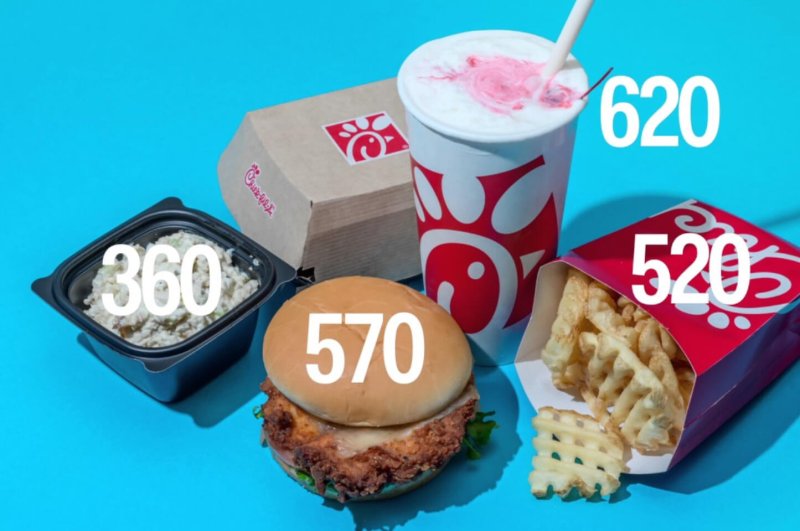
Mandatory calorie counts on fast-food menus have little impact on customer purchases, latest study finds

screenshot calories menu fast food at duckduckgo
Credit: Business Insider

As of May last year, all American restaurant chains with 20 or more outlets have been legally obliged to provide calorie counts on their menus in a bid to help people make less fattening choices. So how’s that going then?

Not so well if the latest study – the largest to date on how calorie information affects consumer purchases – is anything to go by.

The setting for the study, published in the British Medical Journal was a large franchise of a national fast-food company with three different restaurant chains located in Louisiana, Texas, and Mississippi ….

104 outlets were involved in the analysis, all of which added calorie information to their in-store and drive-thru menus in April 2017. Weekly aggregated sales data was made available to the researchers from the pre-labeling (April 2015 to April 2017) period to up until April 2018 – a year after labeling implementation.

The investigators found that calorie labeling produced an immediate decrease of 60 calories per transaction or 4% of total calories purchased (which was not due to menu reformulation). But over the following year, that 60 calorie reduction had attenuated to just 23 fewer calories for each purchase made, or just 10 fewer calories if only one rather than two years of pre-implementation data was used in crunching the stats.

Read full, original article: Calorie Counts on Menus Have Virtually No Impact On What We Eat

{{ reviewsTotal }}{{ options.labels.singularReviewCountLabel }}
{{ reviewsTotal }}{{ options.labels.pluralReviewCountLabel }}
{{ options.labels.noReviewsLabel }}
{{ options.labels.newReviewButton }}
{{ userData.canReview.message }}

Related Articles

Infographic: Global regulatory and health research agencies on whether glyphosate causes cancer

Infographic: Global regulatory and health research agencies on whether glyphosate causes cancer

Does glyphosate—the world's most heavily-used herbicide—pose serious harm to humans? Is it carcinogenic? Those issues are of both legal and ...

Most Popular

ChatGPT-Image-Mar-10-2026-01_39_01-PM
Viewpoint—“Miracle molecule” debunked: Why acemannan supplements don’t work
Screenshot 2025-09-17 at 12.41
Misinformation alert: No, glyphosate use in Canadian forests is not spurring more wildfires
Screenshot 2026-07-11 094410
Growing animal muscle and fat cells inside rice grains and calling it beef: One of numerous genetically engineered products shaking up our ecosystem
ChatGPT-Image-Jun-25-2026-12_23_17-PM
No, Bill Gates did not secretly engineer ticks to promote veganism
Screenshot-2026-07-16-at-11.32.12-AM
Viewpoint: Trump appoints climate change hoax promoter to head influential government policy project
Screenshot 2026-07-16 at 8.49
Pete Hegseth’s bizarre Viagra commercial as Trump administration endorses ‘hormone replacement therapy’
file-f-d-d-
Facts & Fallacies Podcast: Europe's AC debacle underscores fatal flaw in green activism

Sorry. No data so far.

glp menu logo outlined

Get news on human & agricultural genetics and biotechnology delivered to your inbox.