Geneticist Pamela Ronald: Non GMO food label ‘dupes’ Americans into buying $26 billion worth of mostly misleadingly-labeled products

nongmo ver video

DESPITE broad scientific consensus that genetically modified (GMO) food is safe, there has been a proliferation of product labels seeking to cash in on consumer concerns, according to University of California Institute for Food and Agricultural Literacy founding director, Professor Pamela Ronald.
e c aa f cdf d x
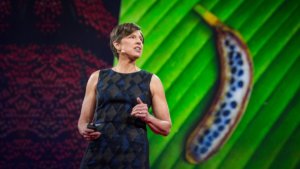
Pamela Ronald. Image: TED Talks

Professor Pamela Ronald told the TropAg conference in Brisbane there has been a proliferation of product labels seeking to cash in on consumer concerns about GMOs …. consumers were being duped by some of the GMO labeling on foods in the United States at the moment.

“A common one is ‘non-GMO project verified’ which has been applied to many products, including those that would never even be considered for genetic modification,” she said.

“That label is a nice marketing advantage because you can mark up your product as ‘non-GMO’ …. This label is on 50,000 products, most of which have no counterparts that are genetically engineered. In about eight years, it has documented US$26 billion in annual sales.

“What is very disappointing is not only are consumers paying more for something that is meaningless, but also many farmers are now moving to so-called non-GMO crops and going back to older technologies where they are spraying older and more toxic compounds.

Read full, original article: Cagey product labelling exploits consumer GMO fears

{{ reviewsTotal }}{{ options.labels.singularReviewCountLabel }}
{{ reviewsTotal }}{{ options.labels.pluralReviewCountLabel }}
{{ options.labels.noReviewsLabel }}
{{ options.labels.newReviewButton }}
{{ userData.canReview.message }}

Related Articles

Infographic: Global regulatory and health research agencies on whether glyphosate causes cancer

Infographic: Global regulatory and health research agencies on whether glyphosate causes cancer

Does glyphosate—the world's most heavily-used herbicide—pose serious harm to humans? Is it carcinogenic? Those issues are of both legal and ...

Most Popular

Picture1
Hiroshima at 81: America’s new nuclear bomb, a buried Iranian target, and a question no one wants to ask
ChatGPT-Image-Mar-10-2026-01_39_01-PM
Viewpoint—“Miracle molecule” debunked: Why acemannan supplements don’t work
ChatGPT Image Jul 29, 2026, 06_26_01 PM 2
Facts & Fallacies podcast: Organic food myths make a comeback on Instagram, with Dr. Kevin Folta
ChatGPT-Image-Jul-10-2026-12_21_03-PM
Viewpoint: Is there new evidence that the animal deworming drug ivermectin decreases the risk of Covid and cancer? Don’t waste your money.
ChatGPT-Image-Jul-10-2026-09_42_12-AM-1
Peptides, patient autonomy, and the limits of medical freedom
Screenshot-2026-07-09-at-1.09.25-PM
Anti-vaccine myths rattle health care
ChatGPT-Image-Jul-22-2026-09_13_07-AM
Viewpoint—The Strategic Litigation boom: Understanding the tightening coalition among NGOs, foundations, journalists, and tort lawyers
ChatGPT-Image-Jun-25-2026-12_23_17-PM
No, Bill Gates did not secretly engineer ticks to promote veganism
Screenshot 2026-07-22 at 1.38
Viewpoint: Are the U.S. and Europe headed towards a repudiation of agricultural biotechnology red tape?
organic scaled
Facts & Fallacies podcast: Organic food cuts pesticide exposure? A response to Dr. Rhonda Patrick

Sorry. No data so far.

glp menu logo outlined

Get news on human & agricultural genetics and biotechnology delivered to your inbox.