Rethinking Huntington’s: Disease may have origins in the womb

image img full high
Image: Timothy Archibald

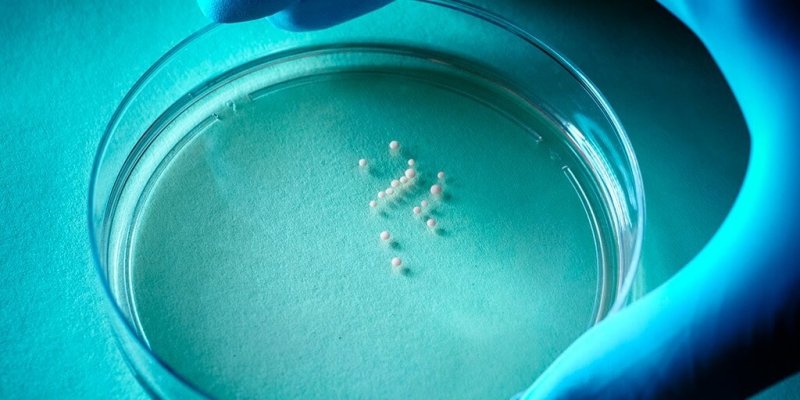
From the first days of the tiny lab-grown organs’ development, primitive “progenitor cells” romped out of their birthplaces in the deep interior and quickly turned into neurons and glia, specialized cells that do the brain’s heavy lifting.

In healthy developing human brains, progenitor cells spend a good chunk of prenatal existence simply reproducing, vastly increasing their numbers and postponing becoming other brain cells. The impatient progenitor cells, however, were in cerebral organoids — minuscule 3-D versions of the brain — created from the cells of people with Huntington’s disease in hopes of mimicking the patients’ actual brain development decades earlier.

It was new evidence that, in their understanding of this devastating genetic illness, scientists know only half the story: In addition to being a neurodegenerative disease, it is also neurodevelopmental, starting in the womb. These recent findings and other research are spurring a radical rethinking of Huntington’s, with implications for the age when any potential cure is likely to be most effective.

If so, then if scientists discover a way to repair the mutant gene or remove the aberrant molecules it makes, “the earlier you intervene the better it should be.”

Read full, original post: Research using brains-in-a-dish forces a radical rethinking of Huntington’s disease


{{ reviewsTotal }}{{ options.labels.singularReviewCountLabel }}
{{ reviewsTotal }}{{ options.labels.pluralReviewCountLabel }}
{{ options.labels.newReviewButton }}
{{ userData.canReview.message }}

Related Articles

Infographic: Global regulatory and health research agencies on whether glyphosate causes cancer

Infographic: Global regulatory and health research agencies on whether glyphosate causes cancer

Does glyphosate—the world's most heavily-used herbicide—pose serious harm to humans? Is it carcinogenic? Those issues are of both legal and ...

Most Popular

Screenshot-2026-05-01-at-1.29.41-PM
Viewpoint: What happens when whole grains meet modern food manufacturing? Labels don’t tell the whole story.
S
As vaccine rejectionism spreads, measles may be taking a more dangerous turn
ChatGPT-Image-Mar-27-2026-11_47_30-AM-2
FDA’s expedited drug reviews are hailed in some quarters but other approval practices are problematic
Screenshot 2026-05-06 at 2.56
Singularity crisis ahead? Can super babies save us from rogue AI geniuses?
Screenshot-2026-04-20-at-2.26.27-PM
Viewpoint — Food-fear world: The latest activist scientists campaign: Cancer-causing additives
Farmers can talk to plants
Farmers are a major source of misinformation—about farming
Screenshot-2026-04-30-at-2.19.37-PM
5 myths about summer dehydration that could damage your health — or even kill you
Screenshot-2026-05-06-at-2.07.43-PM
Manufacturing a conspiracy: The timeline of how  the White House embraced the fringe claim that scientists are being mysteriously murdered
Screenshot-2026-03-13-at-12.14.04-PM
The FDA wants to make many popular prescription drugs OTC—a great idea. Here’s why it’s unlikely to happen
Screenshot 2026-05-06 at 2.19
Vaccine shootout at the CDC 
Screenshot-2026-04-03-at-11.15.51-AM
Paraben panic: How a flawed study, media hype, and chemophobia convinced the public of the danger of one of the safest classes of preservatives
glp menu logo outlined

Get news on human & agricultural genetics and biotechnology delivered to your inbox.