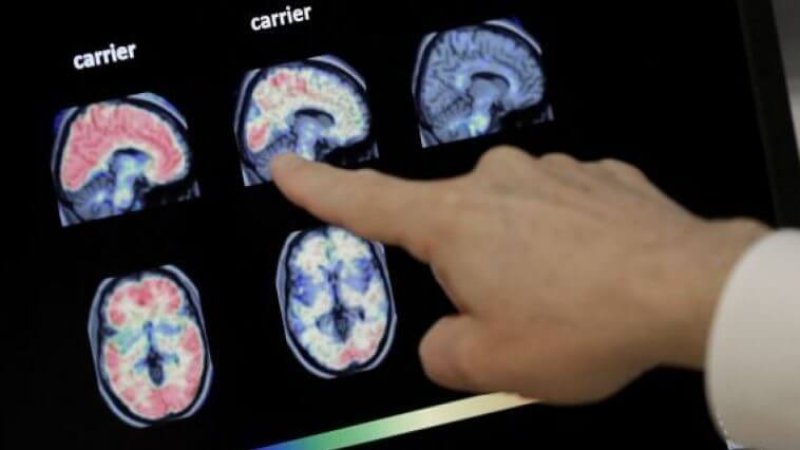
‘Chicken or the egg’? We need to rethink our understanding of Alzheimer’s progression, study suggests

1-24-2019 alzheimers ap x
Image credit: Matt York/AP

To the non-scientist, the argument of what came first, the chicken or the egg may seem a bit esoteric. Yet in biology, elucidating the timing of cellular events is essential to understanding how normal and abnormal processes arise. For instance, there has been a longstanding belief among neuroscientists, backed by scientific evidence, that beta-amyloid, a protein that can clump together and form sticky plaques in the brain, is the first sign of Alzheimer’s disease. The amyloid hypothesis, as it is often referred to, suggests an archetypal cascade in which β-amyloid in the brain initiates the acceleration of tau pathology, which in turn drives neurodegeneration and associated cognitive symptoms.

However, now a new study from investigators at the VA San Diego Healthcare System is challenging the current hypothesis, with data suggesting that subtle thinking and memory differences may come before, or happen alongside, the development of amyloid plaques.

“Our study demonstrated a method to successfully detect subtle differences in thinking and memory either before or during the phase when amyloid is accumulating at a faster rate,” [researcher Kelsey] Thomas concluded. “This could lead to noninvasive screenings that may be able to detect very early who is at risk of developing Alzheimer’s disease.”

Read full, original post: The Alzheimer’s “Chicken and Egg” Dilemma

{{ reviewsTotal }}{{ options.labels.singularReviewCountLabel }}
{{ reviewsTotal }}{{ options.labels.pluralReviewCountLabel }}
{{ options.labels.newReviewButton }}
{{ userData.canReview.message }}

Related Articles

Infographic: Global regulatory and health research agencies on whether glyphosate causes cancer

Infographic: Global regulatory and health research agencies on whether glyphosate causes cancer

Does glyphosate—the world's most heavily-used herbicide—pose serious harm to humans? Is it carcinogenic? Those issues are of both legal and ...

Most Popular

Screenshot-2026-04-22-at-12.21.32-PM
Viewpoint: Why the retracted Monsanto glyphosate study doesn’t change the science—the world’s most popular herbicide is safe 
Picture1
The FDA couldn’t find a vaccine safety crisis, so it buried its own research
ChatGPT-Image-May-1-2026-11_42_59-AM-2
Viewpoint: NAD is the wellness grifters latest evidence-lite longevity fad. At least the mice are impressed.
ChatGPT-Image-Apr-16-2026-02_56_53-PM
Financial incentives, over diagnosis, and weak oversight: Autism claims are driving up Medicare costs
global warming
‘Implausible’: Top climate scientists reject worst-case scenario—soaring temperatures and fast-rising sea levels
ChatGPT-Image-May-12-2026-11_27_01-AM-2
AI likely to improve health care, research shows—but not for blacks and ethnic minorities
ChatGPT-Image-May-7-2026-01_23_27-PM-2
Viewpoint: Will AI democratize personalized cancer treatment or fuel medical misinformation?

Sorry. No data so far.

glp menu logo outlined

Get news on human & agricultural genetics and biotechnology delivered to your inbox.