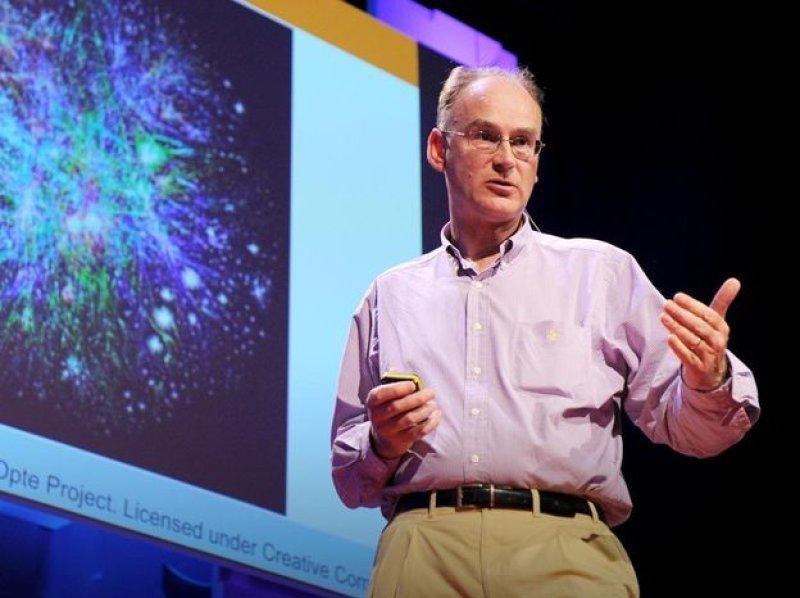
Video: House of Lords member and science writer Matt Ridely urges UK to ‘break free’ of Europe’s restrictive CRISPR crop rules

mattridley g stageshot
Matt Ridely

The UK must break away from Europe’s restrictive agricultural gene-editing rules, science writer Matt Ridley told the UK’s House of Lords on January 30. A vocal advocate for technological innovation, Ridely argued that Britain should embrace CRISPR and other new breeding techniques, or risk falling behind enterprising nations, including the US, Canada and Argentina, that have recognized the technology’s benefits.

While critics warn that gene-edited crops and animals could pose a risk to human health and the environment, Ridely countered that no data support such concerns and offered several examples of how Britain stands to gain by taking an evidence-based position on CRISPR:

There is no clearer case of a technology in which we could and should take the lead, but in which we are and will be held back if we do not break free from the EU approach. That would not be a race to the bottom but the very opposite: a race to the top.

For example, if we allowed the genome-edited blight-resistant potatoes developed at the Sainsbury Laboratory to be grown here in the UK, we would be able to greatly reduce the spraying of fungicides on potato fields, which happens up to 15 times a year, harming biodiversity and causing lots of emissions from tractors. That would be an improvement, not a regression, in environmental terms.


Original video

{{ reviewsTotal }}{{ options.labels.singularReviewCountLabel }}
{{ reviewsTotal }}{{ options.labels.pluralReviewCountLabel }}
{{ options.labels.noReviewsLabel }}
{{ options.labels.newReviewButton }}
{{ userData.canReview.message }}

Related Articles

Infographic: Global regulatory and health research agencies on whether glyphosate causes cancer

Infographic: Global regulatory and health research agencies on whether glyphosate causes cancer

Does glyphosate—the world's most heavily-used herbicide—pose serious harm to humans? Is it carcinogenic? Those issues are of both legal and ...

Most Popular

Picture1
Hiroshima at 81: America’s new nuclear bomb, a buried Iranian target, and a question no one wants to ask
ChatGPT-Image-Mar-10-2026-01_39_01-PM
Viewpoint—“Miracle molecule” debunked: Why acemannan supplements don’t work
ChatGPT Image Jul 29, 2026, 06_26_01 PM 2
Facts & Fallacies podcast: Organic food myths make a comeback on Instagram, with Dr. Kevin Folta
ChatGPT-Image-Jul-10-2026-12_21_03-PM
Viewpoint: Is there new evidence that the animal deworming drug ivermectin decreases the risk of Covid and cancer? Don’t waste your money.
ChatGPT-Image-Jul-10-2026-09_42_12-AM-1
Peptides, patient autonomy, and the limits of medical freedom
Screenshot-2026-07-09-at-1.09.25-PM
Anti-vaccine myths rattle health care
ChatGPT-Image-Jul-22-2026-09_13_07-AM
Viewpoint—The Strategic Litigation boom: Understanding the tightening coalition among NGOs, foundations, journalists, and tort lawyers
ChatGPT-Image-Jun-25-2026-12_23_17-PM
No, Bill Gates did not secretly engineer ticks to promote veganism
Screenshot 2026-07-22 at 1.38
Viewpoint: Are the U.S. and Europe headed towards a repudiation of agricultural biotechnology red tape?
organic scaled
Facts & Fallacies podcast: Organic food cuts pesticide exposure? A response to Dr. Rhonda Patrick

Sorry. No data so far.

glp menu logo outlined

Get news on human & agricultural genetics and biotechnology delivered to your inbox.