‘Serious trouble’ for the natural world. Can synthetic biology protect it by redesigning insects and saving threatened species?

asian elephant priya davidar jean philippe puyravaud mykax cac qv lu
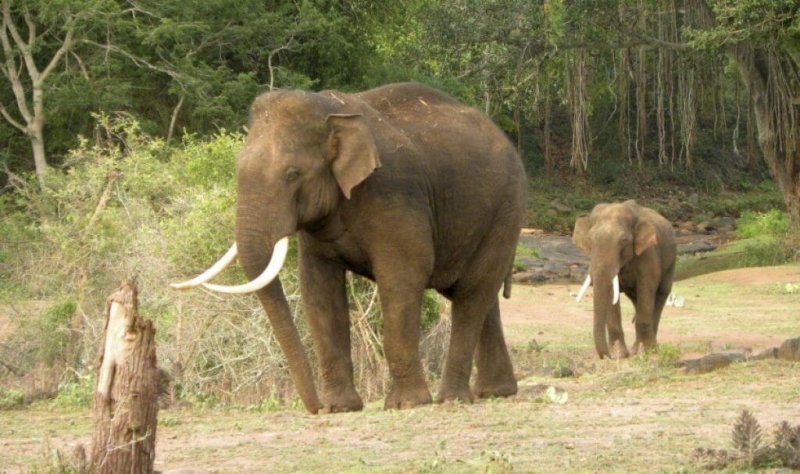
Asian elephant. Image: Priya Davidar/Jean Philippe Puyravaud

paper in the journal PLOS Pathogens described how they synthetically engineered mosquitoes to stop the spread of dengue fever, a viral tropical disease that sickens as many as 100 million people each year.

Now imagine genetically tweaking an invasive species of mosquito to save native Hawaiian birds from extinction, or transferring genes from one species of endangered chestnut tree to another to help the latter resist blight. Employing the same sort of genetic engineering used to make a plant-based burger bleed, scientists are beginning to explore the ways synthetic biology could help protect biodiversity and conserve species.

The Asian elephant (Elephas maximus) is on the IUCN Red List of Threatened Species.

A team led by George Church out of Harvard University hopes that by transferring genes in the mammoth genome to the Asian elephant it will be able to survive in the Arctic; relevant genes might include those that code for extra fat and dense hair. That would extend the animal’s range into regions that are already changing due to a warming climate.

“I think the natural world is in serious trouble,” [conservation expert Kent] Redford said. Whether synbio can be part of the answer to that problem remains a big question.


Read the original post

{{ reviewsTotal }}{{ options.labels.singularReviewCountLabel }}
{{ reviewsTotal }}{{ options.labels.pluralReviewCountLabel }}
{{ options.labels.newReviewButton }}
{{ userData.canReview.message }}

Related Articles

Infographic: Global regulatory and health research agencies on whether glyphosate causes cancer

Infographic: Global regulatory and health research agencies on whether glyphosate causes cancer

Does glyphosate—the world's most heavily-used herbicide—pose serious harm to humans? Is it carcinogenic? Those issues are of both legal and ...

Most Popular

Screenshot-2026-06-17-at-12.31.01-PM
Viewpoint: The dangerous influence of ‘woke’ post-modernism in science
ChatGPT-Image-Jun-25-2026-12_23_17-PM
No, Bill Gates did not secretly engineer ticks to promote veganism
ChatGPT-Image-Mar-10-2026-01_39_01-PM
Viewpoint—“Miracle molecule” debunked: Why acemannan supplements don’t work
Sampling_a_strawberry_32206461974
Viewpoint: Which is worse: Trace PFAS ‘forever chemicals’ on strawberries or the fear that scares people away from eating them?
marijuana-pot-in-hand-nveri-st-xpm-t-abq-fkifeos-s-rws-cmpx-
Facts & Fallacies podcast: Legalized weed drives drug addiction, psychosis?
NYPICHPDPICT000011561063
Viewpoint: From magnetizing your head to taking useless supplements, the wellness craze has morphed into an obsession of the affluent
covid-vaccine
Blocked by Kennedy’s CDC, validated by peer-reviewed scientists: Suppressed COVID vaccine study published in JAMA finds 50% risk cut
ChatGPT-Image-Jun-30-2026-11_55_58-AM
Viewpoint—Junk science: How predatory mass tort lawyers twist facts, scare the public about phantom chemical risks, and cash in on billion-dollar settlements
photodune farming tractor s
Viewpoint: Glyphosate may be hazardous, but it is not dangerous as used by farmers. Critics of the Supreme Court’s Roundup ruling garble hazard with risk
ChatGPT-Image-Jun-25-2026-01_14_50-PM
Viewpoint: Disinformation grift: The wellness industry is a lucrative and mostly worthless marketplace of ‘balms, brews, and baloney’
Podolay_1_transplantacia_srdca_1968
From printers to pigs: The precarious future of organ transplants
ChatGPT-Image-Mar-4-2026-09_39_03-AM
Transgender female athletes and Title IX: Separating ‘policy’ from ‘legality’
Screenshot-2026-06-25-at-4.08.41-PM
Even in blue states, hospitals have continued to drop gender-affirming care for youths
glp menu logo outlined

Get news on human & agricultural genetics and biotechnology delivered to your inbox.