CRISPR technology opens door to vertical farming of dozens of crops, from strawberries and cucumbers to mango and almond trees

vertical farming x

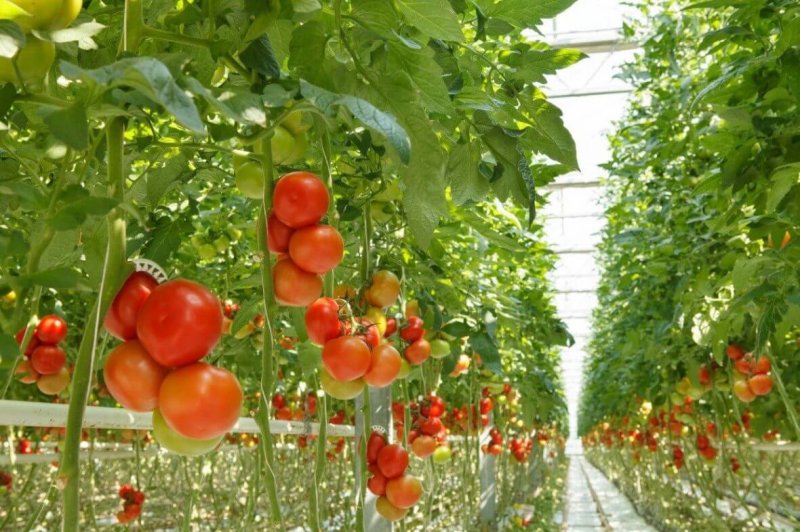
Do you want it locally grown, water-saving and pesticide-free? Urban agriculture might suit you, with a little help from gene editing. Zachary Lippman’s team has already succeeded with Solanaceae fruit crops, optimizing tomatoes and ground-cherries for indoor production (see their paper in Nature Biotechnology).

By targeting three genes (SlER, SPG5, and SP), they made the plants display compact growth habit and early yield. The tomatoes produced were slightly smaller than the wild type, but each plant bore more fruit, and they tasted good.

Commenting the paper in the news and views section, Cathryn O’ Sullivan and colleagues foresee a whole CRISPR menu coming from urban agriculture in the future. It is unlikely that wheat or rice will ever be grown indoors, but urban farms will be interested in producing any plant that has high value and is eaten fresh.

First of all fruits and vegetables that grow on bushes or vines, such as tomato, strawberry, raspberry, blueberry, cucumber, capsicum, grapes, kiwifruit. Specialist crops such as hops, vanilla, saffron, coffee, and also medicinal or cosmetic crops may come next.

They think that one day even small trees (chocolate, mango, almonds) may be grown indoors. However, “for indoor farming to be broadly adopted, the capital and operating costs of climate-controlled farms must be reduced, or they will benefit only the wealthiest communities.”


Read the original article

{{ reviewsTotal }}{{ options.labels.singularReviewCountLabel }}
{{ reviewsTotal }}{{ options.labels.pluralReviewCountLabel }}
{{ options.labels.newReviewButton }}
{{ userData.canReview.message }}

Related Articles

Infographic: Global regulatory and health research agencies on whether glyphosate causes cancer

Infographic: Global regulatory and health research agencies on whether glyphosate causes cancer

Does glyphosate—the world's most heavily-used herbicide—pose serious harm to humans? Is it carcinogenic? Those issues are of both legal and ...

Most Popular

Screenshot 2025-07-30 at 10.48
Can gene editing eliminate Down syndrome? Scientists have done it in lab-grown cells
ChatGPT Image May 26, 2026, 08_42_17 AM (1)
Viewpoint: Greenpeace and poison: How environmental advocacy groups rely on compliant (and often ignorant) journalists to spread disinformation and spark litigation
Screenshot-2026-05-28-at-1.36.28-PM
Viewpoint: Can mRNA research survive the Trump administration?
ChatGPT Image May 26, 2026, 08_21_36 AM
Limiting gender affirming interventions: Trump administration targets Texas even though it already bans youth access
Screenshot-2026-06-03-at-1.24.46-PM
Challenging anti-GMO disinformation: Why genetically-tweaked crops offer bushels of benefits
ChatGPT-Image-May-26-2026-07_51_21-AM-2
Viewpoint: There are more than 1,000 chemicals in a cup of coffee—including many substances that can cause cancer. Why isn’t it banned?
ChatGPT-Image-Jun-2-2026-03_04_17-PM
Viewpoint: Why the hyper-promoted doping ‘enhanced games’ pseudo Olympics flopped
tick-DNA
GLP podcast: Spread meat allergy with gene-edited ticks? Bioethicists pose vile ‘thought experiment’
ChatGPT-Image-Jun-2-2026-11_39_58-AM
Viewpoint: Who is RFK, Jr.’s newly-appointed CDC senior counselor, Sara Brenner — Vaccine skeptic and self-proclaimed “MAHA mom”
ChatGPT-Image-Jun-3-2026-12_33_40-PM-2-1
Viewpoint—The end of ‘ivory tower science’: What does that even mean, and what comes next
ChatGPT-Image-Mar-10-2026-01_39_01-PM
Viewpoint—“Miracle molecule” debunked: Why acemannan supplements don’t work
Picture1
Sounds we can’t hear — the hidden planetary signals behind science, fear, and misinformation
Screenshot 2025-11-18 at 3.45
Viewpoint—GMOs and sustainability: Why buying organic foods is the least environmentally-sensitive food choice—without offering any health benefits
glp menu logo outlined

Get news on human & agricultural genetics and biotechnology delivered to your inbox.