Do you want to live or die? ‘Mind reading’ could help patients with severe brain injuries answer the question

screenshot mind readers the scientists setting coma victims free

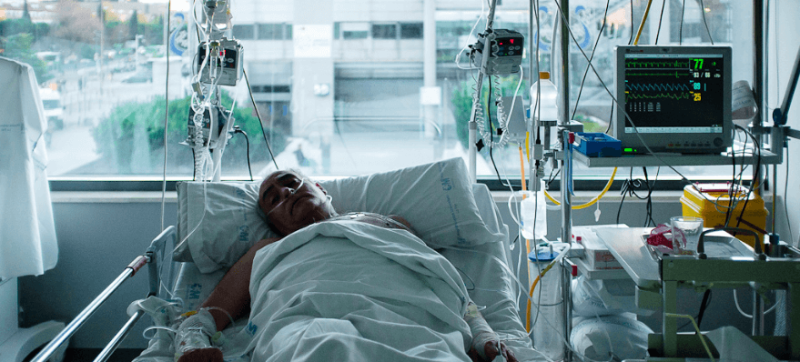
When a person sustains a severe brain injury that leaves them unable to communicate, their families and doctors often have to make life-or-death decisions about their care for them. Now brain scanners are being tested in intensive care to see if mind-reading can enable some patients to have their say… .

At the moment, doctors ask the families of people who have a poor prognosis and cannot communicate if they think their relative would want to continue life-sustaining treatments such as being on a ventilator. “Life would be so much easier if you could just ask the person,” says Adrian Owen at the University of Western Ontario in Canada.

Owen’s team previously developed a brain-scanning approach for a much smaller group of people – those in states between consciousness and being in a coma, for example those in a vegetative state.

..

Owen is now using the same technique on people who are in intensive care in the first few days after sustaining a severe brain injury.

His team has so far used brain scanning on about 20 such people in intensive care to try to communicate with them. Owen won’t yet reveal how many responded to questions, nor whether he asked them if they wanted to live or die.


Read original post here

{{ reviewsTotal }}{{ options.labels.singularReviewCountLabel }}
{{ reviewsTotal }}{{ options.labels.pluralReviewCountLabel }}
{{ options.labels.noReviewsLabel }}
{{ options.labels.newReviewButton }}
{{ userData.canReview.message }}

Related Articles

Infographic: Global regulatory and health research agencies on whether glyphosate causes cancer

Infographic: Global regulatory and health research agencies on whether glyphosate causes cancer

Does glyphosate—the world's most heavily-used herbicide—pose serious harm to humans? Is it carcinogenic? Those issues are of both legal and ...

Most Popular

ChatGPT-Image-Mar-10-2026-01_39_01-PM
Viewpoint—“Miracle molecule” debunked: Why acemannan supplements don’t work
Picture1
Hiroshima at 81: America’s new nuclear bomb, a buried Iranian target, and a question no one wants to ask
ChatGPT Image Jul 29, 2026, 06_26_01 PM 2
Facts & Fallacies podcast: Organic food myths make a comeback on Instagram, with Dr. Kevin Folta
ChatGPT-Image-Jul-10-2026-12_21_03-PM
Viewpoint: Is there new evidence that the animal deworming drug ivermectin decreases the risk of Covid and cancer? Don’t waste your money.
ChatGPT-Image-Jul-10-2026-09_42_12-AM-1
Peptides, patient autonomy, and the limits of medical freedom
Screenshot-2026-07-09-at-1.09.25-PM
Anti-vaccine myths rattle health care
Screenshot-2026-07-31-at-10.10.55-AM
Viewpoint: ‘Misinformation' about the effects of offshore wind turbines on marine life could derail offshore wind farm projects 
ChatGPT-Image-Jul-22-2026-09_13_07-AM
Viewpoint—The Strategic Litigation boom: Understanding the tightening coalition among NGOs, foundations, journalists, and tort lawyers
Screenshot 2026-07-22 at 1.38
Viewpoint: Are the U.S. and Europe headed towards a repudiation of agricultural biotechnology red tape?
ChatGPT-Image-Jun-25-2026-12_23_17-PM
No, Bill Gates did not secretly engineer ticks to promote veganism
organic scaled
Facts & Fallacies podcast: Organic food cuts pesticide exposure? A response to Dr. Rhonda Patrick
glp menu logo outlined

Get news on human & agricultural genetics and biotechnology delivered to your inbox.