
New study shows CRISPR can be applied to produce biofortified rice

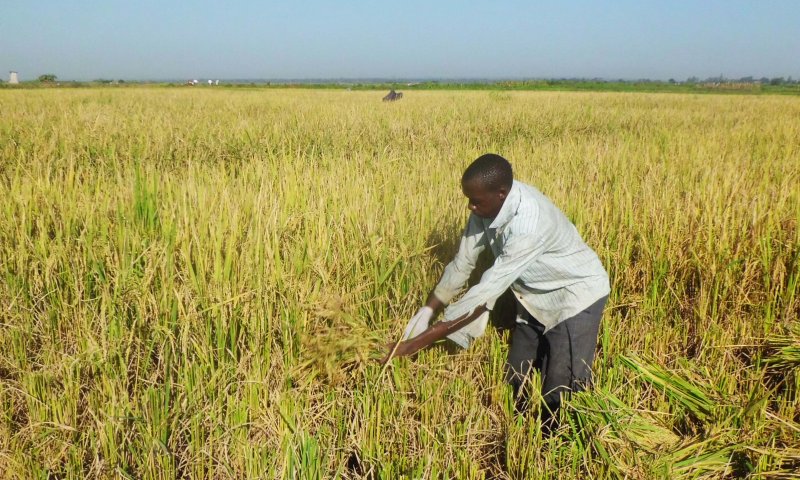
rice harvesting
Credit: Lominda Afedraru
A team of California plant scientists has taken a CRISPR-Cas9 approach to develop more nutritious varieties of rice.

Their research, published today in Nature Communications, demonstrated that CRISPR-Cas9 can be successfully used to biofortify rice with carotenoid, a precursor to the essential nutrient vitamin A. Previous research has demonstrated that biofortification of rice can help prevent blindness, weakened immune systems and other health problems associated with vitamin A deficiency, which is especially prevalent among children in developing nations.

The study was led by Prof. Pamela Ronald and Oliver Dong, a post-doctoral fellow in the Ronald laboratory at the University of California, Davis, and members of the Innovative Genomics Institute (IGI) in Berkeley. Other collaborators included scientists from the Department of Energy Joint Genome Institute and the Joint Bioenergy Institute, both in Northern California.

The research team used CRISPR-Cas9 to insert marker-free DNA fragments, or cassettes, into the rice genome at two targeted locations. Though other CRISPR researchers had previously achieved targeted insertions in plants, they used relatively small fragments of DNA, which restricted the amount of genetic information that could be introduced into the genome. The Ronald team inserted a 5.2 kb cassette that was more than twice the size of previous similar targeted insertions, resulting in carotenoid-enriched rice with a golden-colored grain.

Previous biofortification work in rice relied on conventional agrobacterium- or particle bombardment-based plant transformation, which integrates transgenes at random locations in the plant genome. This can disrupt gene function, sometimes resulting in reduced yield.

In this new approach, Ronald and her team identified genomic “safe harbors” that could accommodate insertion of the carotenoid cassette without disrupting desirable agronomic traits. They also demonstrated the lack of off-target mutations in the carotenoid- enriched plants, as evidenced by whole-genome sequencing.

The results suggest that CRISPR-Cas9 genome editing offers a promising strategy for making genetic improvements in rice — a staple food for more than half the world’s population — and other crops. The study also suggests that targeted gene insertion could facilitate stacking multiple genes with desired traits in a specific location in the genome — a process that is currently challenging using conventional plant breeding.

This article originally ran at the Cornell Alliance for Science and has been republished here with permission. Follow the Alliance for Science on Twitter @ScienceAlly. Follow Joan Conrow @joanconrow


Related Articles

Infographic: Global regulatory and health research agencies on whether glyphosate causes cancer

Infographic: Global regulatory and health research agencies on whether glyphosate causes cancer

Does glyphosate—the world's most heavily-used herbicide—pose serious harm to humans? Is it carcinogenic? Those issues are of both legal and ...

Most Popular

ChatGPT-Image-Mar-10-2026-01_39_01-PM
Viewpoint—“Miracle molecule” debunked: Why acemannan supplements don’t work
Screenshot-2026-10-07-at-1.03.15-PM
Anti-vaxxers’ double whammy: Exaggerated vaccine fears have fueled measles outbreaks and preventable deaths—and left survivors more vulnerable to other infections for years
Crossed-Out-Calendar-with-Milk-Carton
Viewpoint: The shocking consequences after a year of Robert F. Kennedy Jr.'s distortions, deceptions, and flat-out falsehoods
Frosted Blueberries Under Magnification
MAHA moms divided over RFK Jr.’s food‑safety efforts, as recall alerts grow and outbreaks spread
Pride and Patriotism in the Breeze
Retreat from identity labels: Does the sharply declining number of young teens identifying as gay and bisexual reflect an ideological shift?
Screenshot-2026-10-08-at-10.41.33-AM
Viewpoint: Wellness patches: Most vitamin supplements are useless and sometimes even dangerous, but this craze is even worse
Screenshot-2026-10-13-at-10.35.49-AM
Challenging health misinformation? People are more likely to believe AI when it responds with empathy
Golden Wheat Under a Starry Sky
Viewpoint: ‘Bureaucratic and economic obstacles’ to agricultural biotechnology: Europe creeps into the 21st century, but blocks remain
Screenshot-2026-10-12-at-10.44.38-AM
Widely condemned as unethical, hepatitis B vaccine study funded by RFK Jr’s CDC gets a final greenlight
Screenshot-2026-09-22-at-12.26.15-PM
‘Forever chemical’ concerns: Separating hysteria from reasonable concern in the debate over PFAS danger
Cross and Syringe Standoff
Viewpoint: Hijacking Jesus: How anti-vaccine fanatics are exploiting religious exemptions and killing children
Prescription Capsules Scattered on Twenty-Dollar Bills
Facts & Fallacies podcast: America's health care system is broken. A doctor explains how to fix it, Part 2
Deepfake Democracy Media Mosaic
31 states have passed a patchwork of laws to limit election deepfake commercials. They’re not working very well.
glp menu logo outlined

Get news on human & agricultural genetics and biotechnology delivered to your inbox.





















