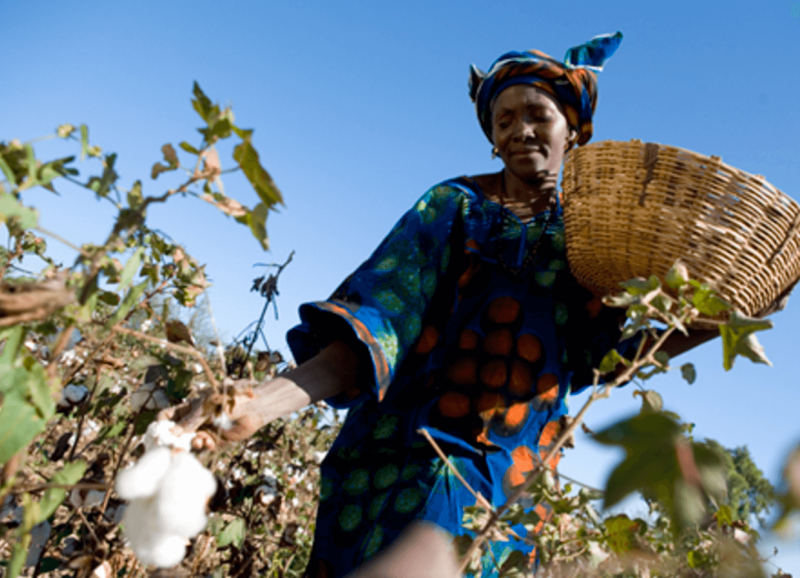
The farmers will begin cultivating the seeds, which are drought-tolerant and improved with a Bt gene to provide inherent resistance to insect pests, in commercial demonstration plots across Kenya this month. The aim is to showcase the technology and its stewardship practices, said Rajeev Arora, chairperson of the Bt Cotton Task Force.
The farmers, with the help of county government technical support, will be demonstrating the correct use of the technology to other farmers, Arora said. The goal is to build capacity of at least 40,000 farmers in Bt cotton, he added, noting that training trainers will help to spread the information.
The Kenyan government, which previously had a GMO ban, has opened up to the technology after being exposed to accurate information about crops developed through the science of biotechnology and assessing their contribution to improving farmers’ productivity, according to Arora.
Peter Munya, the new Cabinet Secretary for Agriculture, Livestock and Fisheries, created the task force to spearhead the commercialization of Bt cotton and revitalization of Kenya’s textile industry in response to the Dec. 19, 2019 approval of the crop by President Uhuru Kenyatta and his Cabinet.
The government’s “Big 4” agenda identified the cotton, textile and apparel value chain as a priority manufacturing sector economic driver projected to contribute eight to 15 percent to the Gross Domestic Product (GDP), Arora noted. The apparel contribution cannot be overemphasized, he said.
“We hope to engage 40,000 to 200,000 farmers in commercial planting by 2022,” he said. “Our demand now is close to 50,000 bales [of cotton] and we hope to reach 200,000 bales by next year.”
Bt cotton is expected to enhance cotton production by reducing crop losses to insects and engaging farmers in arid and semi-arid areas where they are not currently growing crops.

Part of the overall production strategy is to strengthen local cooperatives and empower ginners to increase capacity and establish new facilities, Arora explained. The textile manufacturing industry is currently exporting goods totaling some US$500 million and aims to reach US$1 billion by 2022.
An earlier report said the government plans to create over 50,000 textile industry jobs — primarily for women and youth — through the introduction of Bt cotton.
Following the Cabinet’s decision to approve the commercialization of Bt cotton, the National Biosafety Authority (NBA) was authorized to allow the environmental release of Bt cotton and introduce it to the market, according to Professor Dorington Ogoyi, chief executive officer of the NBA.
The NBA approved Bt cotton for commercial use on Dec. 28, 2019, which means farmers can cultivate the crop under certain stipulations, Ogoyi explained. For instance, Kenyan law requires that all GMOs have to be labeled.
“The Environmental Impact Assessment (EIA) put out by the National Environment Management Authority (NEMA) was applicable when there was a ban on GMOs; however, since the ban has been lifted, we do not need to repeat the EIA,” Arora added.
This article originally ran at the Cornell Alliance for Science and has been republished here with permission. Follow the Alliance for Science on Twitter @ScienceAlly.