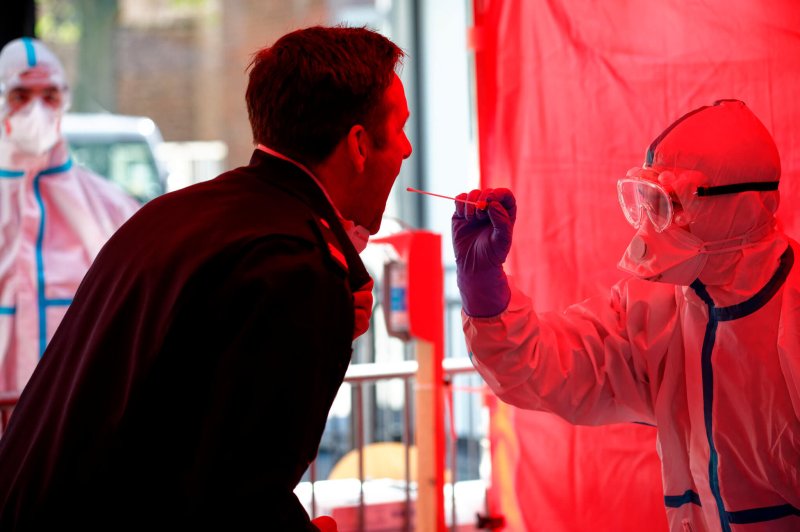
How long are you infectious? COVID-19 patients struggle to find an answer

merlin d f ab b e ef f d a e superjumbo

Reyhan Harmanci is feeling better. After cycling through an illness she thinks was COVID-19, with headache, fever, and nausea, her symptoms started to subside. …

Harmanci says she’s still struggling to figure out when it’s safe for her to leave the house without infecting other people.

Right now, the Centers for Disease Control and Prevention (CDC) says that people can stop isolating if they’ve been fever-free for 72 hours, their other symptoms have improved, and it’s been at least seven days since they first felt sick. The limited information available about how patients recover seems to support those guidelines, says James Hudspeth, the COVID response inpatient floor lead at Boston Medical Center.

But patients like Harmanci are still facing conflicting advice, in part because there’s still no clear data showing just how long people who get COVID-19 are contagious.

In some cases, people might be able to get tested after their symptoms improve to get a better sense of if they’ve cleared their infection — the CDC has a second set of guidelines saying that they can leave isolation if they have two negative tests in a row, 24 hours apart. … But it’s still challenging for most people to get tested to confirm they’re sick, and there aren’t enough tests to make it standard practice after recovery.


Read the original post

{{ reviewsTotal }}{{ options.labels.singularReviewCountLabel }}
{{ reviewsTotal }}{{ options.labels.pluralReviewCountLabel }}
{{ options.labels.noReviewsLabel }}
{{ options.labels.newReviewButton }}
{{ userData.canReview.message }}

Related Articles

Infographic: Global regulatory and health research agencies on whether glyphosate causes cancer

Infographic: Global regulatory and health research agencies on whether glyphosate causes cancer

Does glyphosate—the world's most heavily-used herbicide—pose serious harm to humans? Is it carcinogenic? Those issues are of both legal and ...

Most Popular

ChatGPT-Image-Mar-10-2026-01_39_01-PM
Viewpoint—“Miracle molecule” debunked: Why acemannan supplements don’t work
Screenshot 2025-09-17 at 12.41
Misinformation alert: No, glyphosate use in Canadian forests is not spurring more wildfires
Screenshot 2026-07-11 094410
Growing animal muscle and fat cells inside rice grains and calling it beef: One of numerous genetically engineered products shaking up our ecosystem
ChatGPT-Image-Jul-9-2026-02_39_22-PM
Viewpoint: Polyphenols or NAD+ supplements to combat aging: No, Gwenyth Paltrow and followers, don’t waste your money.
file-f-d-d-
Facts & Fallacies Podcast: Europe's AC debacle underscores fatal flaw in green activism
ChatGPT-Image-Jul-8-2026-12_32_48-PM
Viewpoint: SCOTUS strikes a blow against junk science in Bayer glyphosate case. Will it deter mass tort litigators?
ChatGPT-Image-Jul-7-2026-01_57_55-PM
Viewpoint: Europe’s rejection of air conditioning is the poster child for misunderstanding how to mitigate the impact of climate change
ChatGPT-Image-Jun-25-2026-12_23_17-PM
No, Bill Gates did not secretly engineer ticks to promote veganism
afb-a-b
As the EU loosens restrictions on agricultural gene editing, it remains years behind the rest of the world on equally-safe GMO foods
ChatGPT-Image-Jul-1-2026-03_33_49-PM
‘Alternative’ cancer treatments that could kill you
Screenshot 2026-07-16 at 8.49
Pete Hegseth’s bizarre Viagra commercial as Trump administration endorses ‘hormone replacement therapy’

Sorry. No data so far.

glp menu logo outlined

Get news on human & agricultural genetics and biotechnology delivered to your inbox.