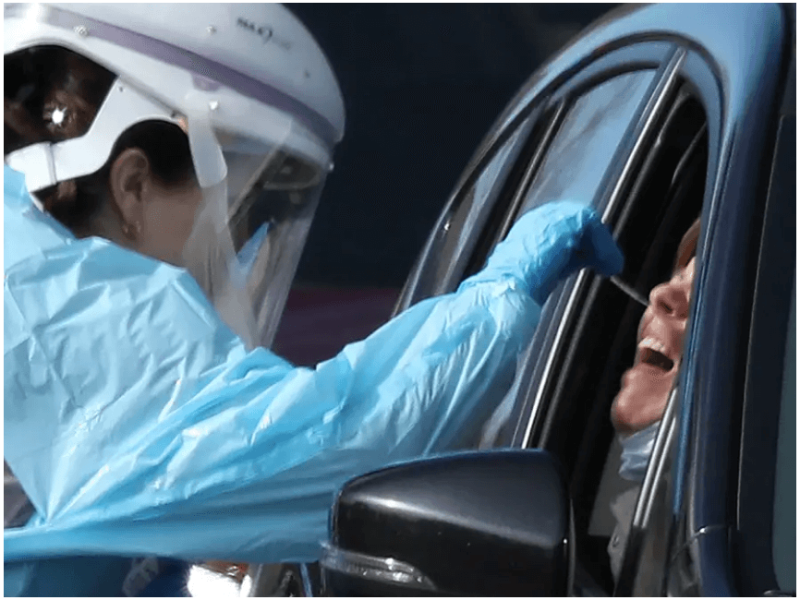

On a Jan. 15 conference call, a leading scientist at the federal Centers for Disease Control and Prevention assured local and state public health officials from across the nation that there would soon be a test to detect a mysterious virus spreading from China. …
Three weeks later … one of the first CDC test kits arrived in a Federal Express package at a public health laboratory on the east side of Manhattan. …
For hours, lab technicians struggled to verify that the test worked. Each time, it fell short, producing untrustworthy results.
…
In their private communications, scientists at academic, hospital and public health labs — one layer removed from federal agency operations — expressed dismay at the failure to move more quickly and frustration at bureaucratic demands that delayed their attempts to develop alternatives to the CDC test.


…
On March 12, [Anthony] Fauci, who runs the National Institute of Allergy and Infectious Diseases, told lawmakers the problem was not simply the failure of the CDC test. The coronavirus testing debacle had exposed deep structural problems in the nation’s public health system, he said.
“Yeah, it is a failing, let’s admit it,” he said. “The idea of anybody getting it easily the way people in other countries are doing it, we’re not set up for that. Do I think we should be? Yes, but we’re not.”