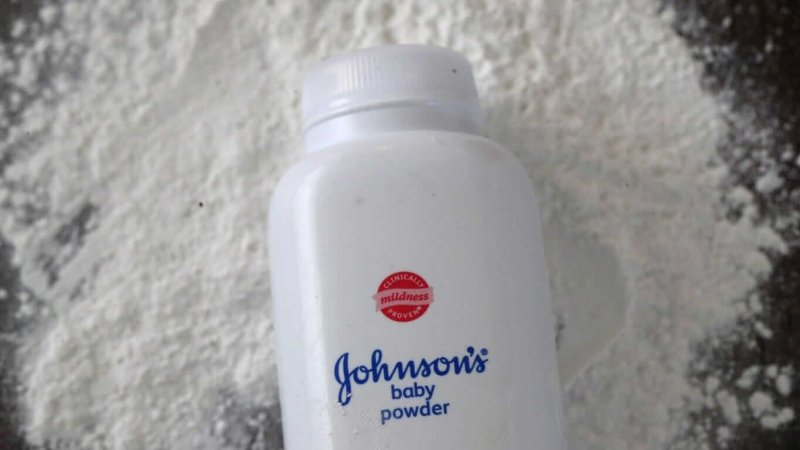
Johnson & Johnson has announced that it will stop selling talcum baby powder in the United States and Canada. Why? Because of predatory trial lawyers who enrich themselves by lying about science.
Talcum powder is absorptive, so it’s mainly used to help keep otherwise moist body parts dry. (You can use your imagination here, but this SNL skit provides a hint.) For years, there have been rumblings that talcum powder is linked to ovarian cancer. But just like the fictitious link between hexavalent chromium in drinking water and cancer popularized by the movie Erin Brockovich, the link between talcum powder and cancer is basically anecdotal.
A new review published in January 2020 by JAMA Oncology concluded that “there was not a statistically significant association between use of powder in the genital area and incident ovarian cancer.” Though the report cautions that there still could be a tiny causal effect that is too small to be detected, the sample size was large (more than 250,000 women observed over a total of 3.8 million person-years). This indicates that the conclusion of no causal effect is probably correct.
The UK’s National Health Service (NHS) touted the results on its website, proclaiming, “‘No evidence’ that talcum powder causes ovarian cancer new review finds.” But for reasons that I will never understand, American websites remain wishy-washy. The American Cancer Society, for instance, says that the evidence is “less clear.”
That is a travesty. Trial lawyers looking to make a buck (or, in this case, billions of bucks) use scientific uncertainty to score jackpot lawsuits. In situations like this, the scientific community must speak loudly and clearly: “No. Baby powder does not cause cancer. End of story.”
But American health officials seem reluctant to do this (maybe because they’re also afraid of getting sued?). Whatever the reason, I previously concluded that “health authorities in the United Kingdom are much more willing to tell people the cold, hard truth, as compared to their American counterparts.” Baby powder is simply the latest example (alongside vaping, “three-parent” embryos, and alternative medicine).



Once again, it’s sort of pathetic that we have to rely on British scientists and medical doctors to defend American companies. What’s the point of organizations like the FDA if they sit on the sideline while American companies are subjected to blatant highway robbery by unscrupulous lawyers?
As usual, the lawyers win. They always win. And because Johnson & Johnson will continue selling baby powder in the UK and everywhere else, the rest of the world wins. But science, common sense, and American consumers lose.
Dr. Alex Berezow is a PhD microbiologist, science writer, and public speaker who specializes in the debunking of junk science for the American Council on Science and Health. He is also an Analyst at Geopolitical Futures and a featured speaker for The Insight Bureau. Formerly, he was the founding editor of RealClearScience. Follow him on Twitter @AlexBerezow
A version of this article was originally published at the American Council on Science and Health and has been republished here with permission. The American Council on Science and Health can be found on Twitter @ACSHorg