Contact tracing promises to curb the spread of COVID-19 in New York–if privacy fears can be overcome

merlin cce be e d b a b c e a a superjumbo
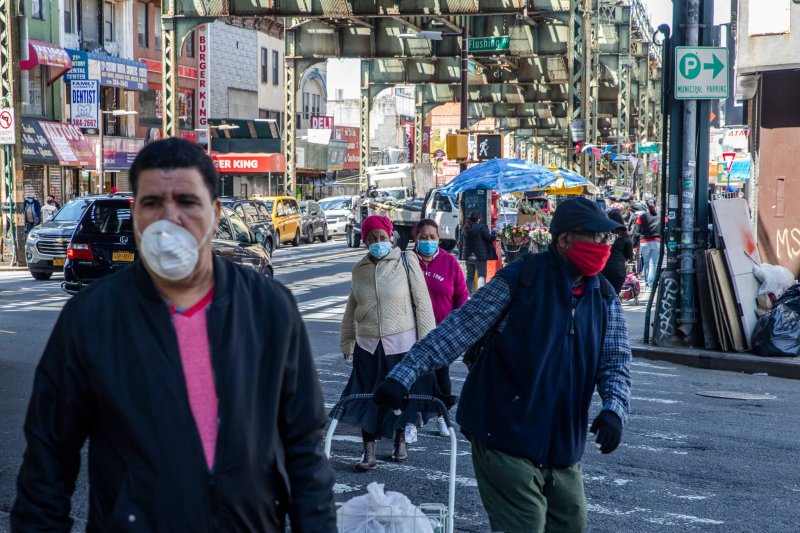
Credit: Brittainy Newman/The New York Times

Hundreds of thousands of New Yorkers will be asked to disclose personal information this month as part of the city’s herculean Covid-19 tracing effort — but suspicions over how the government will use that information are threatening the city’s best chance to crawl out of its coronavirus lockdown.

Contact tracing requires handing over intimate personal data — including home addresses, names of friends and relations — to strangers, many of whom were only recently trained and hired to collect the information. The city expects to have 3,700 contact tracers mobilized this month, and as many as 10,000 when the effort reaches its capacity.

But in this majority-minority city, government distrust was already exacerbated due to the Trump administration’s hard-line stance against immigrants. After a week of chaotic protests against the police following the killing of George Floyd, suspicion between residents and government authorities has only grown, community leaders say.

“They are reinventing the wheel,” said Allie Bohm, policy counsel for New York Civil Liberties Union. “It’s not even that they haven’t explained how data are going to be protected. They haven’t thought through the privacy regime and what privacy protections we should have in place, and that’s scarier.”


Read the original post

{{ reviewsTotal }}{{ options.labels.singularReviewCountLabel }}
{{ reviewsTotal }}{{ options.labels.pluralReviewCountLabel }}
{{ options.labels.newReviewButton }}
{{ userData.canReview.message }}

Related Articles

Infographic: Global regulatory and health research agencies on whether glyphosate causes cancer

Infographic: Global regulatory and health research agencies on whether glyphosate causes cancer

Does glyphosate—the world's most heavily-used herbicide—pose serious harm to humans? Is it carcinogenic? Those issues are of both legal and ...

Most Popular

Screenshot 2026-05-26 at 10.15
Viewpoint: Double standard—Why does the wellness industry get a free pass while Big Healthcare is treated as morally suspect?
Screenshot 2025-07-30 at 10.48
Can gene editing eliminate Down syndrome? Scientists have done it in lab-grown cells
ChatGPT-Image-Mar-10-2026-01_39_01-PM
Viewpoint—“Miracle molecule” debunked: Why acemannan supplements don’t work
ChatGPT-Image-Jun-4-2026-01_27_58-PM
Viewpoint—N.A.D.+: Why Gwenyth Paltrow’s heralded anti-aging supplement doesn’t work
tick-DNA
GLP podcast: Spread meat allergy with gene-edited ticks? Bioethicists pose vile ‘thought experiment’
Screenshot-2026-06-03-at-1.24.46-PM
Challenging anti-GMO disinformation: Why genetically-tweaked crops offer bushels of benefits
downsyndrome_compilation_MID_1
CRISPR breakthrough that can remove the chromosome responsible for Down syndrome raises ethical questions
ChatGPT-Image-Jun-4-2026-11_49_36-AM-2
‘You don’t understand Tolkien’: Skeptic Pope trolls tech giants about the exaggerated, risk-less benefits of AI
ChatGPT-Image-May-26-2026-07_51_21-AM-2
Viewpoint: There are more than 1,000 chemicals in a cup of coffee—including many substances that can cause cancer. Why isn’t it banned?
Screenshot-2026-06-04-at-12.05.08-PM
Cases of brain inflammation surge as U.S. measles pandemic approaches 2000

Sorry. No data so far.

glp menu logo outlined

Get news on human & agricultural genetics and biotechnology delivered to your inbox.