GMO cotton that makes its own colors could eliminate need for chemical textile dyes

x xlarge
Credit: ABC Landline, Tim Lee
[Colored cotton plants] are the product of CSIRO plant breeders dedicated to producing better, sustainable natural fibers that will hopefully one day lead to wrinkle-free, naturally dyed, stretchy cotton to outperform synthetic fabrics.

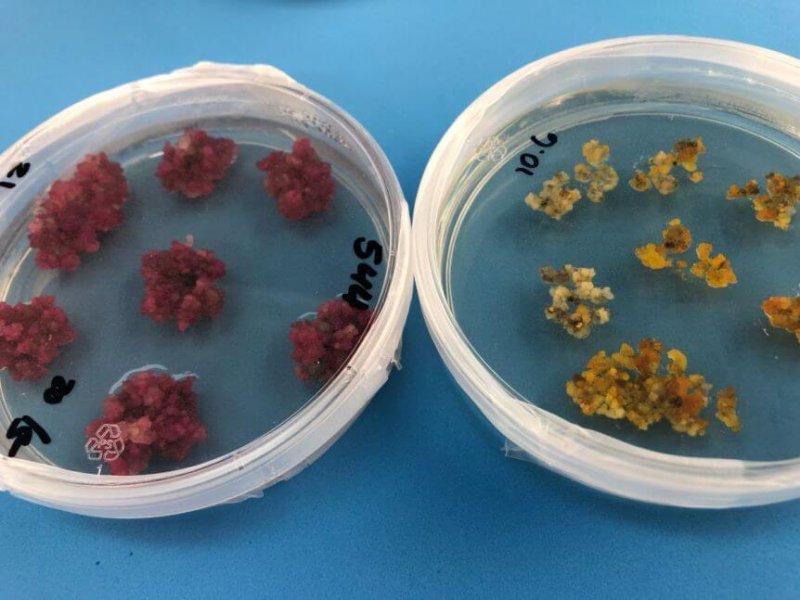
Colleen MacMillan leads the team of scientists who have cracked cotton’s molecular color code, adding genes to make the plants produce a color.

“Having the cotton produce its own color is a game changer,” Dr MacMillan said.

“We’ve seen some really beautiful bright yellows, sort of golden-orangey colors, through to some really deep purple,” fellow scientist Filomena Pettolino said.

It will be several months before the colorful plant tissue they have created grows into flowering cotton plants; only then will the scientists be absolutely certain of their success.

Another positive sign is that colored cotton genes, inserted into green tobacco plants, have shown up as colored splotches on the leaves. If the leaves of the biotech (genetically modified) cotton are colored, the all-important fiber will be as well.

Australia’s cotton industry, worth about $2 billion annually, will be a major beneficiary.

While cotton is renewable, recyclable and biodegradable, it still needs to be dyed, and the use of sometimes harmful chemical dyes is considered a blot on the industry’s environmental copybook.


Read the original post

{{ reviewsTotal }}{{ options.labels.singularReviewCountLabel }}
{{ reviewsTotal }}{{ options.labels.pluralReviewCountLabel }}
{{ options.labels.newReviewButton }}
{{ userData.canReview.message }}

Related Articles

Infographic: Global regulatory and health research agencies on whether glyphosate causes cancer

Infographic: Global regulatory and health research agencies on whether glyphosate causes cancer

Does glyphosate—the world's most heavily-used herbicide—pose serious harm to humans? Is it carcinogenic? Those issues are of both legal and ...

Most Popular

Screenshot-2026-06-05-at-2.12.30-PM
Some plants can poison you. So how did humans figure out what is safe to eat?
Organic-Produce
Viewpoint: Why you should ignore organic food advocates’ advice to avoid ‘pesticide soaked’ conventional fruits and vegetables
Credit: ACSH
Viewpoint: Who and what’s to blame for the surge in vaccine-preventable diseases?
ChatGPT-Image-Jun-5-2026-01_17_48-PM
GLP-1 weight-loss drugs may reshape our desires and emotions
ChatGPT-Image-Mar-10-2026-01_39_01-PM
Viewpoint—“Miracle molecule” debunked: Why acemannan supplements don’t work
Screenshot 2026-06-05 at 12.14
‘Nicotine-free generation’: Should the U.S. emulate Britain and ban all nicotine products, from cigarettes to vapes?
Screenshot-2026-06-04-at-12.05.08-PM
Cases of brain inflammation surge as U.S. measles pandemic approaches 2000
edb7f6d7-2370-418f-9578-74e29678e35c
Facts & Fallacies Podcast: Nicotine vaping—public health miracle, or risk to children? Professor Cliff Douglas
Screenshot 2026-05-26 at 10.15
Viewpoint: Double standard—Why does the wellness industry get a free pass while Big Healthcare is treated as morally suspect?
ChatGPT-Image-Jun-4-2026-11_49_36-AM-2
‘You don’t understand Tolkien’: Skeptic Pope trolls tech giants about the exaggerated, risk-less benefits of AI
ChatGPT-Image-May-26-2026-07_51_21-AM-2
Viewpoint: There are more than 1,000 chemicals in a cup of coffee—including many substances that can cause cancer. Why isn’t it banned?
Screenshot-2026-06-05-at-11.12.44-AM
‘Protecting religious liberty and parental authority’: Challenging expert guidance, Trump signs off on Kennedy’s gutting of childhood vaccine schedule
glp menu logo outlined

Get news on human & agricultural genetics and biotechnology delivered to your inbox.