FDA won’t approve a coronavirus vaccine unless there is ‘clearly demonstrated proof’ it’s effective

coronavirus therapy research
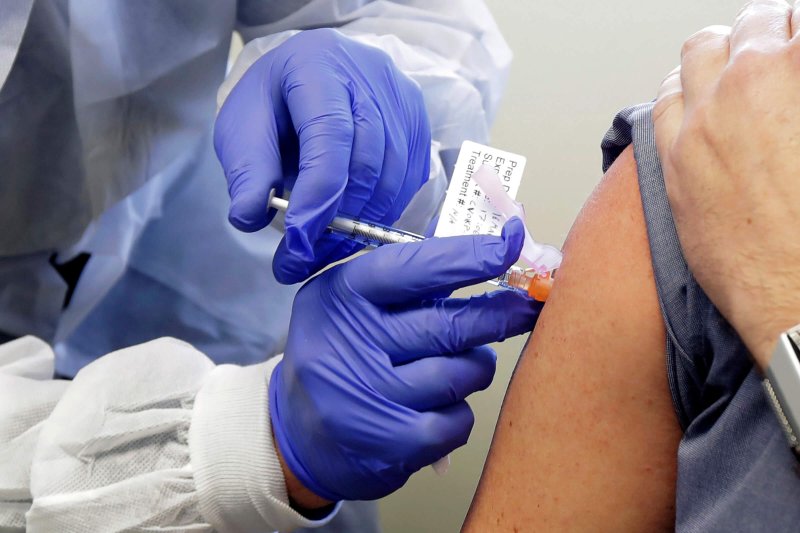
Credit: Ted S. Warren/AP
[A coronavirus vaccine must] be at least 50% more effective than a placebo in preventing the disease [to be FDA approved.]

That 50% benchmark is used routinely for flu vaccines. The FDA said it wouldn’t approve—or give emergency-use authorization—to any coronavirus vaccine unless the maker had clearly demonstrated proof of its safety and effectiveness in a clinical study.

Guidances are a method the FDA uses to state its policies to an industry, in this case vaccine makers. A virus vaccine could be granted approval two ways—either by full approval or emergency authorization. Full FDA approval would require a vaccine company to amass trial data and submit all the details to an advisory committee of outside experts, a process that typically takes months. An emergency authorization could happen more quickly but would still require the vaccine maker to show through a clinical study that the vaccine produced lower levels of disease, according to the guidance.

Government and industry officials have said the FDA’s standards for full approval would require at least 30,000 people in a clinical trial. But since coronavirus infections are surging in many parts of the U.S.—including in Arizona, Florida and Texas—it might be relatively easy for companies and doctors to sign up patients eager to participate in a vaccine study that could protect them.


Read the original post

{{ reviewsTotal }}{{ options.labels.singularReviewCountLabel }}
{{ reviewsTotal }}{{ options.labels.pluralReviewCountLabel }}
{{ options.labels.noReviewsLabel }}
{{ options.labels.newReviewButton }}
{{ userData.canReview.message }}

Related Articles

Infographic: Global regulatory and health research agencies on whether glyphosate causes cancer

Infographic: Global regulatory and health research agencies on whether glyphosate causes cancer

Does glyphosate—the world's most heavily-used herbicide—pose serious harm to humans? Is it carcinogenic? Those issues are of both legal and ...

Most Popular

Picture1
Hiroshima at 81: America’s new nuclear bomb, a buried Iranian target, and a question no one wants to ask
ChatGPT Image Jul 29, 2026, 05_50_04 PM
Fear, science, and the law: If talc powder is unlikely to cause cancer and J&J was winning in court, why did it pay more than $5.5 billion to settle?
ChatGPT Image Jul 29, 2026, 10_14_27 PM
After muzzling RFK, Jr. over autism-vaccine conspiracy theories, Trump defies aides to push scares again
ChatGPT Image Jul 29, 2026, 06_26_01 PM 2
Facts & Fallacies podcast: Organic food myths make a comeback on Instagram, with Dr. Kevin Folta
Screenshot 2026-07-29 at 1.03
Two food fads that have some merit: Chia seeds in almost everything and protein added to water
ChatGPT-Image-Mar-10-2026-01_39_01-PM
Viewpoint—“Miracle molecule” debunked: Why acemannan supplements don’t work
ChatGPT Image Jul 29, 2026, 10_31_48 PM
Bowing to Congressional pressure, Kennedy reverses himself and releases $600 million that helps developing countries buy and distribute vaccines
Screenshot-2026-07-09-at-1.09.25-PM
Anti-vaccine myths rattle health care
Screenshot 2026-07-28 at 3.22
Hidden hunger: Climate change is speeding up the decline of important nutrients in our food
Screenshot 2026-07-28 at 3.43
Fat cat? GLP-1 weight loss drugs for animals are on the horizon
Screenshot 2026-07-22 at 1.38
Viewpoint: Are the U.S. and Europe headed towards a repudiation of agricultural biotechnology red tape?
organic scaled
Facts & Fallacies podcast: Organic food cuts pesticide exposure? A response to Dr. Rhonda Patrick
ChatGPT-Image-Jul-10-2026-09_42_12-AM-1
Peptides, patient autonomy, and the limits of medical freedom
glp menu logo outlined

Get news on human & agricultural genetics and biotechnology delivered to your inbox.