‘It’s not our job’: How Trump and Jared Kusnher created the COVID supply chaos that persists today

im
Credit: Justin Lane/EPA/Shutterstock

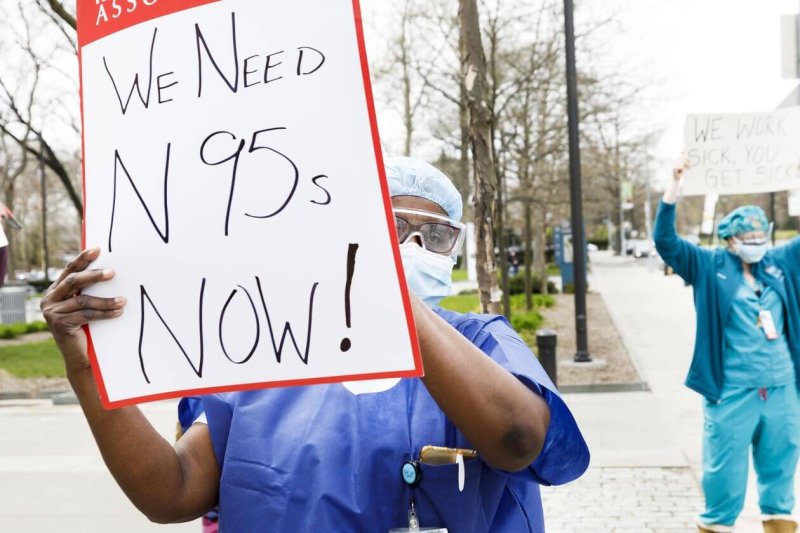
The Trump administration has been criticized for minimizing the threat of the virus and offering mixed messaging on mask-wearing and other ways to reduce the risk of infection, among other things. For medical providers on the front lines of the crisis, the administration’s most consequential move was to put the burden on states to figure things out for themselves.

It isn’t possible to know whether a more centralized federal response to the coronavirus pandemic would have worked better.

In a meeting in mid-March about the shortage of supplies, recalled one senior White House official, Jared Kushner, the president’s son-in-law and adviser told staffers: “We’re an organization with 56 clients,” referring to U.S. states and territories. “It’s not our job to secure supplies for them. It’s our job to help them.”

Instead, the federal government’s approach turned hospital systems and state governments into rivals.

Medical providers begged and scavenged for supplies. One doctor, worried his shipment of masks and gowns would be seized by another state, divided the supplies between two trucks to make sure at least some would get through.

Follow the latest news and policy debates on sustainable agriculture, biomedicine, and other ‘disruptive’ innovations. Subscribe to our newsletter.

“It was every man for himself,” Dr. [Andrew] Artenstein said. “I had a lot of people in the throes of taking care of really sick patients, who were afraid for their safety and their families’ safety.”


Read the original post

{{ reviewsTotal }}{{ options.labels.singularReviewCountLabel }}
{{ reviewsTotal }}{{ options.labels.pluralReviewCountLabel }}
{{ options.labels.newReviewButton }}
{{ userData.canReview.message }}

Related Articles

Infographic: Global regulatory and health research agencies on whether glyphosate causes cancer

Infographic: Global regulatory and health research agencies on whether glyphosate causes cancer

Does glyphosate—the world's most heavily-used herbicide—pose serious harm to humans? Is it carcinogenic? Those issues are of both legal and ...

Most Popular

Screenshot-2026-06-15-at-1.55.27-PM
America's trust in Trump-Kennedy's CDC health recommendations is plunging
ChatGPT-Image-Jun-23-2026-03_12_23-PM
Is cellular reprogramming junk science? Nearly 20 patients are getting eye injections in the first FDA-cleared cellular trial
ChatGPT-Image-Jun-24-2026-11_36_47-AM
Why the human genome is less a script than a puzzle
ChatGPT-Image-Jun-17-2026-10_52_43-AM
Anguished parents, doctors in tears: Utah’s long measles outbreak takes a toll
Screenshot 2026-06-25 at 10.55
Leading OB-GYN group challenges RFK, Jr. gutting of maternal vaccine schedule
ChatGPT-Image-Jun-25-2026-12_23_17-PM
No, Bill Gates did not secretly engineer ticks to promote veganism
ChatGPT-Image-Mar-10-2026-01_39_01-PM
Viewpoint—“Miracle molecule” debunked: Why acemannan supplements don’t work
Screenshot-2026-06-22-at-9.04.46-PM
Kennedy's nutrition prescription for medical schools: Real problem, bad cure
Screenshot-2026-06-25-at-1.48.40-PM
Glyphosate affirmed as safe: Supreme Court rejects lawsuit claiming Roundup herbicide causes cancer, upholding EPA determination
Screenshot-2026-06-24-at-2.57.41-PM
Viewpoint: Trump’s Reflecting Pool algae fiasco points to a bigger culprit: Climate change
Screenshot-2026-06-24-at-2.40.46-PM
Hegseth reversal: As Air Force flu outbreak continues to surge, military reinstitutes mandatory vaccines for recruits
glp menu logo outlined

Get news on human & agricultural genetics and biotechnology delivered to your inbox.