Mexican biotech expert says his country’s proposed glyphosate weed killer ban ‘based on lies’

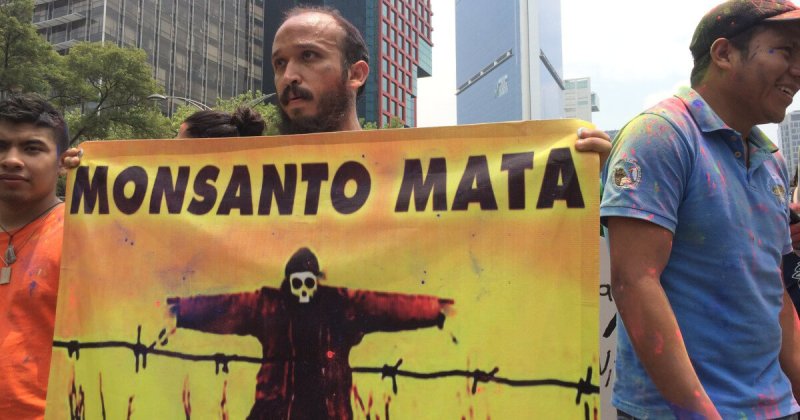
monsanto mata x
Man holds up sign that says "Monsanto kills." Credit Organic Consumers Association
[A] researcher and specialist in Molecular and Cellular Biotechnology in Plants, José Miguel Mulet, considered the arguments of supposed ecologists who seek to ban the use of glyphosate to protect field crops ridiculous, since he established that they are the result of a story based on lies to generate an “information epidemic” in the collective imagination. And he pointed out: There is no scientific evidence in the world that this herbicide affects human health.

“Launching fake news to mount a lie is very easy; it is always more profitable to be an alarmist than to transmit real information,” said the scientific disseminator who regretted that consumers are not receiving truthful information about glyphosate, because” the food from the countryside is safe.”

Follow the latest news and policy debates on sustainable agriculture, biomedicine, and other ‘disruptive’ innovations. Subscribe to our newsletter.

He indicated that within the same IARC evaluation, which has been used by groups antagonistic to herbicides, in Category 1 plutonium, alcoholic beverages, tobacco, ham and processed meats are found as carcinogenic safe. In that sense, the specialist said he was surprised because the groups that claim to be caring for and defending human health say absolutely nothing about it.

“Has anyone ever thought of banning hamburgers or ham, which are really classified as carcinogenic by that agency?”

[Editor’s note: This story was published in Spanish has been translated and edited for clarity.]

Read the original post

{{ reviewsTotal }}{{ options.labels.singularReviewCountLabel }}
{{ reviewsTotal }}{{ options.labels.pluralReviewCountLabel }}
{{ options.labels.newReviewButton }}
{{ userData.canReview.message }}

Related Articles

Infographic: Global regulatory and health research agencies on whether glyphosate causes cancer

Infographic: Global regulatory and health research agencies on whether glyphosate causes cancer

Does glyphosate—the world's most heavily-used herbicide—pose serious harm to humans? Is it carcinogenic? Those issues are of both legal and ...

Most Popular

Picture1
The FDA couldn’t find a vaccine safety crisis, so it buried its own research
Screenshot-2026-05-19-at-11.23.34-AM
West-originated vaccine disinformation sparks murders of health care workers across Africa
ChatGPT-Image-Apr-16-2026-02_56_53-PM
Financial incentives, over diagnosis, and weak oversight: Autism claims are driving up Medicare costs
Screenshot-2026-04-22-at-12.21.32-PM
Viewpoint: Why the retracted Monsanto glyphosate study doesn’t change the science—the world’s most popular herbicide is safe 
Screenshot-2026-05-08-at-11.55.47-AM
Anti-vax activists falsely blame COVID vaccines for the rising U.S. cancer rate among younger people.
ChatGPT-Image-May-7-2026-12_32_36-PM
Viewpoint: The state of U.S. vaccine policy? Dismal nationally, but some states are stepping up.
ChatGPT-Image-May-12-2026-11_27_01-AM-2
AI likely to improve health care, research shows—but not for blacks and ethnic minorities
modi visit sikkim
Viewpoint: Indian PM wants farmers to switch to 50% organic. It would take at least 10 years, likely won’t work, and isn’t more sustainable
Screenshot-2026-05-18-at-12.57.12-PM
Viewpoint—‘Technology is pulling us apart’: Environmental, political, and economic
Screenshot-2026-04-13-at-1.39.26-PM
Viewpoint: ‘Safer for children?’ Stonyfield yogurt under fire for deceptive organic marketing
glp menu logo outlined

Get news on human & agricultural genetics and biotechnology delivered to your inbox.