Are positive antibody tests a reliable ‘all clear’? Dating safely during a pandemic

Credit: Joshua Seong

As cases surge again, many wonder whether it is safe to even consider meeting new people in any social context—let alone potential sexual partners.

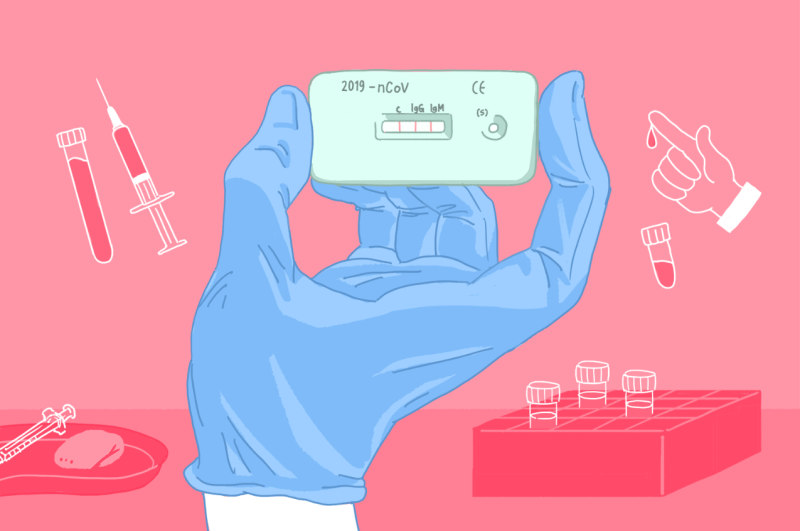
Some online daters have adapted to the new normal and proudly declare on their profiles that they are “COVID-antibody-positive,” apparently implying they have already had the virus and are now in the clear to freely comingle. The COVID-19 pandemic is still solidly entrenched around the globe, with no immediately available vaccine or cure. Does an antibody-positive test result translate to a pandemic dating hall pass?

Follow the latest news and policy debates on sustainable agriculture, biomedicine, and other ‘disruptive’ innovations. Subscribe to our newsletter.

“The data is clear that we don’t know what is clear,” says Peter Chin-Hong,an infectious disease specialist and a professor of medicine at the University of California, San Francisco. Even though antibody tests help determine whether someone has previously been infected with the virus, that information may not be helpful in the dating realm.

“There are a variety of tests, so just stating you’re ‘antibody-positive’ doesn’t provide evidence that equips someone to discern whether the test is [Food and Drug Administration–validated] or specific to COVID. And we don’t know how long antibodies from natural infections last. We’re already starting to see reinfections emerge. Even if someone got a positive test result X time ago, that doesn’t mean they’re currently protected. It’s not a passport to sexual freedom.”


Read the original post

{{ reviewsTotal }}{{ options.labels.singularReviewCountLabel }}
{{ reviewsTotal }}{{ options.labels.pluralReviewCountLabel }}
{{ options.labels.noReviewsLabel }}
{{ options.labels.newReviewButton }}
{{ userData.canReview.message }}

Related Articles

Infographic: Global regulatory and health research agencies on whether glyphosate causes cancer

Infographic: Global regulatory and health research agencies on whether glyphosate causes cancer

Does glyphosate—the world's most heavily-used herbicide—pose serious harm to humans? Is it carcinogenic? Those issues are of both legal and ...

Most Popular

Picture1
Hiroshima at 81: America’s new nuclear bomb, a buried Iranian target, and a question no one wants to ask
ChatGPT-Image-Mar-10-2026-01_39_01-PM
Viewpoint—“Miracle molecule” debunked: Why acemannan supplements don’t work
ChatGPT Image Jul 29, 2026, 06_26_01 PM 2
Facts & Fallacies podcast: Organic food myths make a comeback on Instagram, with Dr. Kevin Folta
ChatGPT-Image-Jul-10-2026-12_21_03-PM
Viewpoint: Is there new evidence that the animal deworming drug ivermectin decreases the risk of Covid and cancer? Don’t waste your money.
ChatGPT-Image-Jul-10-2026-09_42_12-AM-1
Peptides, patient autonomy, and the limits of medical freedom
Screenshot-2026-07-09-at-1.09.25-PM
Anti-vaccine myths rattle health care
ChatGPT-Image-Jun-25-2026-12_23_17-PM
No, Bill Gates did not secretly engineer ticks to promote veganism
ChatGPT-Image-Jul-22-2026-09_13_07-AM
Viewpoint—The Strategic Litigation boom: Understanding the tightening coalition among NGOs, foundations, journalists, and tort lawyers
Screenshot 2026-07-22 at 1.38
Viewpoint: Are the U.S. and Europe headed towards a repudiation of agricultural biotechnology red tape?
organic scaled
Facts & Fallacies podcast: Organic food cuts pesticide exposure? A response to Dr. Rhonda Patrick

Sorry. No data so far.

glp menu logo outlined

Get news on human & agricultural genetics and biotechnology delivered to your inbox.