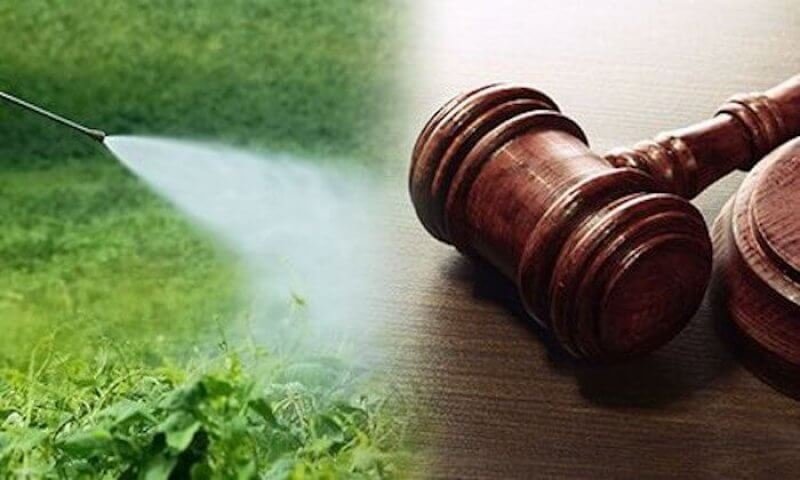
Law firms that led glyphosate-cancer litigation against Bayer want a ‘bigger slice’ of the record-breaking settlement

Plaintiffs’ firms that led the legal campaign against Bayer AG are fighting over $800 million in fees from the Roundup weedkiller litigation, arguing that they deserve a bigger slice of one of the largest-ever corporate settlements than firms that joined later.

The high-stakes dispute is coming to the fore eight months after Roundup’s maker, Bayer, announced that it would pay up to $9.6 billion to resolve 125,000 cancer claims brought by dozens of law firms. The fee fight underscores increasing tension between law firms that do the in-court work necessary to win cases and those that advertise to sign up scores of clients.

Follow the latest news and policy debates on sustainable agriculture, biomedicine, and other ‘disruptive’ innovations. Subscribe to our newsletter.

The leadership firms, led by Andrus Wagstaff PC, Weitz & Luxenberg PC and the Miller Firm, argue that they invested at least $20 million and years of time to build a case linking Roundup to cancer. They described the common-benefit fund as a sort of “tax” on law firms that waited until the litigation was successful before getting involved.

Several law firms have objected, saying the court doesn’t have the power to create the common fund—estimated at $800 million. They say the leadership team is trying to double-dip, speculating that their confidential deals with Bayer are already more lucrative than those that other firms received.

“They’ve already been adequately compensated multiple times over,” [said lawyer] Melissa Ephron.

Read the original post

{{ reviewsTotal }}{{ options.labels.singularReviewCountLabel }}
{{ reviewsTotal }}{{ options.labels.pluralReviewCountLabel }}
{{ options.labels.newReviewButton }}
{{ userData.canReview.message }}

Related Articles

Infographic: Global regulatory and health research agencies on whether glyphosate causes cancer

Infographic: Global regulatory and health research agencies on whether glyphosate causes cancer

Does glyphosate—the world's most heavily-used herbicide—pose serious harm to humans? Is it carcinogenic? Those issues are of both legal and ...

Most Popular

Picture1
The Orange Bowl without oranges: Can CRISPR save Florida citrus?
global warming
‘Implausible’: Top climate scientists reject worst-case scenario—soaring temperatures and fast-rising sea levels
ChatGPT Image May 26, 2026, 12_06_53 PM
Fake Ebola cure promoters already cashing in as disinformation videos flood social media
vax-misinformation-main
Facts & Fallacies Podcast: Limit free speech to blunt social media misinfo?
Screenshot 2026-05-22 at 11.31
‘Realistic and durable’: EPA proposes loosening restrictions on some PFAS ‘forever chemicals.’
ChatGPT-Image-May-1-2026-11_42_59-AM-2
Viewpoint: NAD is the wellness grifters latest evidence-lite longevity fad. At least the mice are impressed.
Screenshot-2026-04-22-at-12.21.32-PM
Viewpoint: Why the retracted Monsanto glyphosate study doesn’t change the science—the world’s most popular herbicide is safe 
ChatGPT Image May 24, 2026, 03_16_36 PM
Here come the biohackers' Enhanced Games—The Olympics for athletes doping up on steroids, hormones and peptides. What’s wrong with that?
Screenshot-2026-05-21-at-12.15.17-PM
UK gene-editing milestone: Livestock barley that increases ruminant value and reduces methane emissions is first-approved CRISPR crop
Picture1
The FDA couldn’t find a vaccine safety crisis, so it buried its own research
Screenshot-2026-05-22-at-11.59.38-AM
Is surrogacy modern-day slavery? What to know about Florida Republican effort to pass severe restrictions.
glp menu logo outlined

Get news on human & agricultural genetics and biotechnology delivered to your inbox.