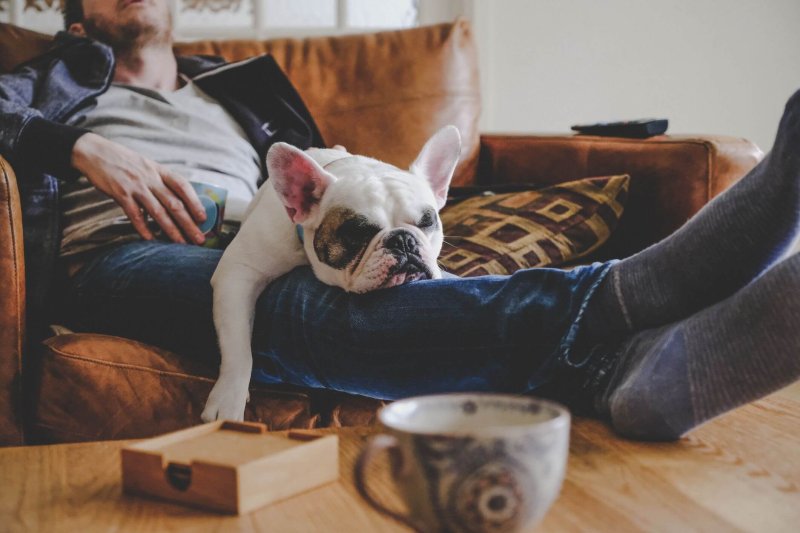
Are humans wired by evolution to be couch potatoes? This evolutionary biologist believes so

Credit: Getty Images

A professor at Harvard and a keen marathoner – sometimes barefoot – [Daniel Liberman’s] life’s work in evolutionary biology makes him the ideal companion for a journey through the history of exercise, rest and health – and why a desk job might not be as bad for you as you think.

[Daniel Liberman:] The problem is that we tell people that if they don’t exercise, there’s something wrong with them. But it’s not a natural instinct. We have to choose to do it. 

Follow the latest news and policy debates on sustainable agriculture, biomedicine, and other ‘disruptive’ innovations. Subscribe to our newsletter.

The first step is for us to start to think differently about exercise – to understand why our bodies evolved to be physically active, but also how and why we evolved to be inactive. We’re told that somehow if we don’t take the stairs, there’s something deficient about us. But it’s completely normal, so we have to figure out ways to overcome that.

Physical inactivity is a fundamental adaptation: we evolved to save energy and that’s something we don’t really discuss. We have all these myths about our ancestors being incredibly fit people. The evidence says they weren’t. They did as much as we did. They’re not particularly strong, they’re not particularly fast, they’re not particularly virtuous. They had no choice to be hunter-gatherers. But they only worked a few hours a day. 

Read the original post

{{ reviewsTotal }}{{ options.labels.singularReviewCountLabel }}
{{ reviewsTotal }}{{ options.labels.pluralReviewCountLabel }}
{{ options.labels.newReviewButton }}
{{ userData.canReview.message }}

Related Articles

Infographic: Global regulatory and health research agencies on whether glyphosate causes cancer

Infographic: Global regulatory and health research agencies on whether glyphosate causes cancer

Does glyphosate—the world's most heavily-used herbicide—pose serious harm to humans? Is it carcinogenic? Those issues are of both legal and ...

Most Popular

Screenshot-2026-04-23-at-11.00.36-AM
Regulators' dilemma: Thalidomide, Metformin, and the cost of getting drug approvals wrong
Picture1-5
Science Disinformation Gap: The transatlantic battle over social media and censorship
ChatGPT-Image-May-12-2026-08_39_41-PM
GLP podcast: Big Pharma, Big Ag, Big Food—health harming industries or life-saving innovators?
Screenshot-2026-05-12-at-9.58.31-PM
'He seems fine': Marty Makary out as FDA commissioner
ChatGPT Image May 10, 2026, 08_16_59 PM 2
Overmedicalization? RFK Jr.’s antidepressant crackdown raises conflict questions over his fee stake in Wisner Baum, the tort firm built on suing drug makers
Screenshot-2026-05-12-at-10.05.11-AM
Pro-vaccine “hero” vs. an anti-vax “villain”: ‘Bad Vaxx’ video stirs MAHA backlash
ChatGPT-Image-Apr-13-2026-02_20_22-PM
Viewpoint: Misinformation infodemic? Why assessing evidence is so challenging 
Screenshot-2026-05-01-at-1.29.41-PM
Viewpoint: What happens when whole grains meet modern food manufacturing? Labels don’t tell the whole story.
Picture1-1
Cooling the planet with balloons: Could a geoengineering gamble slow global warming?
images
The never-ending GMO debate: Pros and cons
S
As vaccine rejectionism spreads, measles may be taking a more dangerous turn
Screenshot-2026-05-11-104424
Hantavirus outbreak research: Trump administration shut down study last year on rodent-to-human transmission
glp menu logo outlined

Get news on human & agricultural genetics and biotechnology delivered to your inbox.