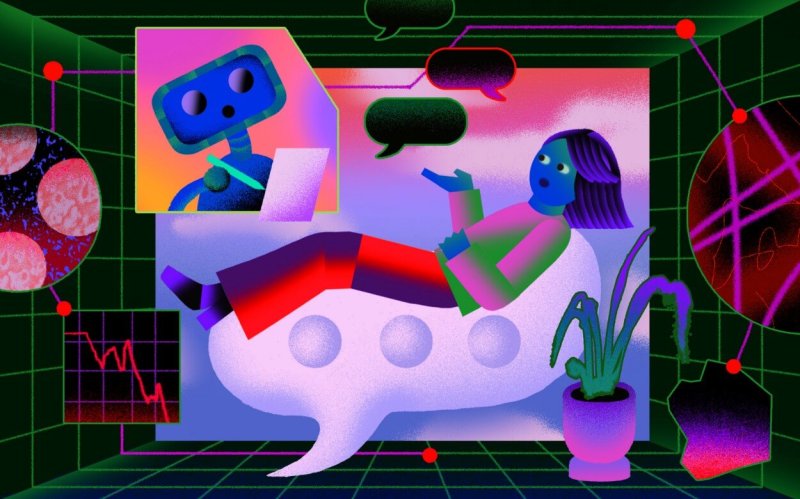
Can AI robots replace human therapists?

Credit: Ariel Davis
Credit: Ariel Davis

Websites, smartphone apps and social-media sites are dispensing mental-health advice, often using artificial intelligence. Meanwhile, clinicians and researchers are looking to AI to help define mental illness more objectively, identify high-risk people and ensure quality of care.

Some experts believe AI can make treatment more accessible and affordable. There has long been a severe shortage of mental-health professionals, and since the Covid pandemic, the need for support is greater than ever. For instance, users can have conversations with AI-powered chatbots, allowing them to get help anytime, anywhere, often for less money than traditional therapy.

The algorithms underpinning these endeavors learn by combing through large amounts of data generated from social-media posts, smartphone data, electronic health records, therapy-session transcripts, brain scans and other sources to identify patterns that are difficult for humans to discern.

Follow the latest news and policy debates on sustainable agriculture, biomedicine, and other ‘disruptive’ innovations. Subscribe to our newsletter.

Despite the promise, there are some big concerns. The efficacy of some products is questionable, a problem only made worse by the fact that private companies don’t always share information about how their AI works. Problems about accuracy raise concerns about amplifying bad advice to people who may be vulnerable or incapable of critical thinking, as well as fears of perpetuating racial or cultural biases. Concerns also persist about private information being shared in unexpected ways or with unintended parties.


Read the original post

{{ reviewsTotal }}{{ options.labels.singularReviewCountLabel }}
{{ reviewsTotal }}{{ options.labels.pluralReviewCountLabel }}
{{ options.labels.newReviewButton }}
{{ userData.canReview.message }}

Related Articles

Infographic: Global regulatory and health research agencies on whether glyphosate causes cancer

Infographic: Global regulatory and health research agencies on whether glyphosate causes cancer

Does glyphosate—the world's most heavily-used herbicide—pose serious harm to humans? Is it carcinogenic? Those issues are of both legal and ...

Most Popular

d-b
Blocked arteries, kidney stones, nausea, constipation, fatigue: Long list of health problems caused by too much vitamin D 
Screenshot-PM-24
Viewpoint: The herbicide glyphosate isn’t perfect. Banning it would be far worse.
79d03212-2508-45d0-b427-8e9743ff6432
Viewpoint: The Casey Means hustle—Wellness woo opportunism dressed up as medical wisdom
ChatGPT-Image-Mar-10-2026-01_39_01-PM
Viewpoint—“Miracle molecule” debunked: Why acemannan supplements don’t work
ChatGPT-Image-Mar-27-2026-11_27_05-AM
The myths of “process”: What science says about the “dangers’ of synthetic products and ultra-processed foods
ChatGPT-Image-Apr-30-2026-12_21_05-PM-2
The tech billionaires behind the immortality movement
ChatGPT-Image-Apr-30-2026-05_00_48-PM
Wellness grifter physician turned wellness influencer out as surgeon general nominee

Sorry. No data so far.

glp menu logo outlined

Get news on human & agricultural genetics and biotechnology delivered to your inbox.