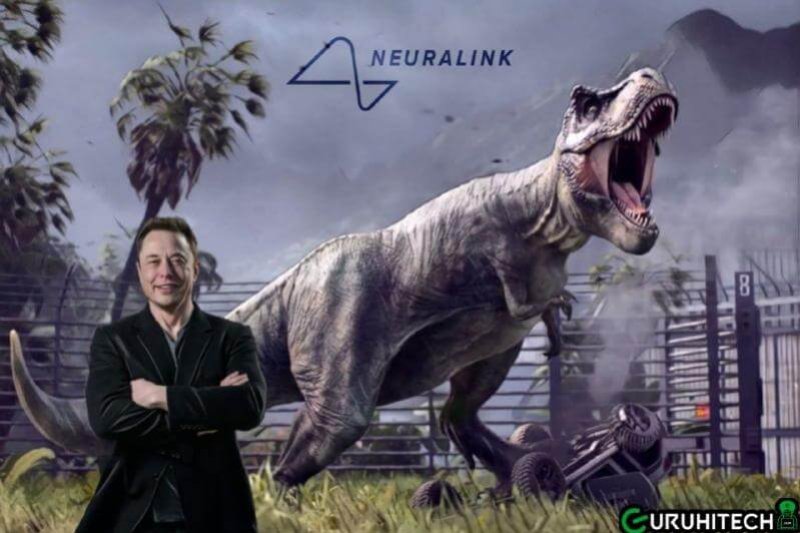
Jurassic Park in real life? We have the technology to create ‘super exotic novel species,’ Neuralink co-founder claims

Credit: GuruHiTech
Credit: GuruHiTech

Neuralink co-founder Max Hodak, who started the brain-computer interface company with Elon Musk, has claimed that humans have the technology to recreate Jurassic Park.

“We could probably build jurassic park if we wanted to. wouldn’t be genetically authentic dinosaurs but [shrug]”, Hodak tweeted. “Maybe 15 years of breeding + engineering to get super exotic novel species”.

It is unclear who Hodak is referring to when he says “we”. Neuralink has demonstrated a chip implanted into the brain of a pig and a monkey, but does not appear to have made any announcements with regards to animal cloning.

The challenge in creating genetically authentic dinosaurs is due to the fact that soft material which would contain DNA is hard to preserve.

Follow the latest news and policy debates on sustainable agriculture, biomedicine, and other ‘disruptive’ innovations. Subscribe to our newsletter.

“A genome is the complete set of DNA of a living thing. Without the full genome, it would be impossible to tell which parts of the DNA have been found and therefore impossible to fill the gaps to build a whole animal,” [dinosaur researcher Dr. Susie] Maidment said.

“But if you did have the whole genome and you were going to fill the holes in fragments, then you definitely wouldn’t do it with frogs, because frogs are amphibians. If you were going to do it, you’d use bird DNA, because birds are dinosaurs.”


Read the original post

{{ reviewsTotal }}{{ options.labels.singularReviewCountLabel }}
{{ reviewsTotal }}{{ options.labels.pluralReviewCountLabel }}
{{ options.labels.noReviewsLabel }}
{{ options.labels.newReviewButton }}
{{ userData.canReview.message }}

Related Articles

Infographic: Global regulatory and health research agencies on whether glyphosate causes cancer

Infographic: Global regulatory and health research agencies on whether glyphosate causes cancer

Does glyphosate—the world's most heavily-used herbicide—pose serious harm to humans? Is it carcinogenic? Those issues are of both legal and ...

Most Popular

ChatGPT-Image-Mar-10-2026-01_39_01-PM
Viewpoint—“Miracle molecule” debunked: Why acemannan supplements don’t work
Picture1
Hiroshima at 81: America’s new nuclear bomb, a buried Iranian target, and a question no one wants to ask
Screenshot-2026-07-09-at-1.09.25-PM
Anti-vaccine myths rattle health care
ChatGPT Image Jul 29, 2026, 06_26_01 PM 2
Facts & Fallacies podcast: Organic food myths make a comeback on Instagram, with Dr. Kevin Folta
ChatGPT-Image-Jul-10-2026-12_21_03-PM
Viewpoint: Is there new evidence that the animal deworming drug ivermectin decreases the risk of Covid and cancer? Don’t waste your money.
ChatGPT-Image-Jul-10-2026-09_42_12-AM-1
Peptides, patient autonomy, and the limits of medical freedom
ChatGPT-Image-Jun-25-2026-12_23_17-PM
No, Bill Gates did not secretly engineer ticks to promote veganism
leeteam
How Kennedy and his family could pocket millions from Merck’s $50 million vaccine injury settlement that he oversaw
ChatGPT-Image-Jul-22-2026-09_13_07-AM
Viewpoint—The Strategic Litigation boom: Understanding the tightening coalition among NGOs, foundations, journalists, and tort lawyers
organic scaled
Facts & Fallacies podcast: Organic food cuts pesticide exposure? A response to Dr. Rhonda Patrick

Sorry. No data so far.

glp menu logo outlined

Get news on human & agricultural genetics and biotechnology delivered to your inbox.