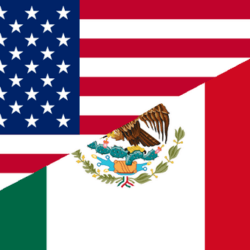
Can the Biden Administration challenge Mexico’s decision to ban glyphosate weedkiller and GMO corn?

Credit: Western Producer

Mexico may be one of the U.S.’s top agricultural trading partners, but this relationship has plenty of problems. Consider the decree that Mexico’s president, Andres Manuel Lopez Obrador, issued on December 30, 2020, banning genetically engineered corn and glyphosate, a popular herbicide. It further undermines agricultural trade between the two nations.

This action occurred despite the United States-Mexico-Canada Agreement (USMCA) going into force on July 1, 2020 (not that it wouldn’t have been a problem before). The new agreement was supposed to modernize its predecessor, the North American Free Trade Agreement. For example, the USMCA has a section focused on agricultural biotechnology, in which the countries “confirm the importance of encouraging agricultural innovation and facilitating trade in products of agricultural biotechnology.”

This ban is extremely problematic for American farmers because Mexico is the top export market for U.S. corn, over 90 percent of which is genetically engineered.

Follow the latest news and policy debates on sustainable agriculture, biomedicine, and other ‘disruptive’ innovations. Subscribe to our newsletter.

So, what should be done?

The Biden administration should be proactive in addressing the bans. Before the entry into force of the USMCA and the recent bans, former USTR Robert Lighthizer wrote to Mexico’s Secretary of Economy urging the resolution of biotech and glyphosate issues that had already previously existed.

The Biden administration should build upon these initial efforts, especially in light of Mexico’s bans.


Read the original post

Related Articles

Infographic: Global regulatory and health research agencies on whether glyphosate causes cancer

Infographic: Global regulatory and health research agencies on whether glyphosate causes cancer

Does glyphosate—the world's most heavily-used herbicide—pose serious harm to humans? Is it carcinogenic? Those issues are of both legal and ...

Most Popular

ChatGPT-Image-Sep-17-2026-12_28_43-PM
Vitamin D, omega-3 fish oil and glucosamine supplements could cause brain damage 
ChatGPT-Image-Mar-10-2026-01_39_01-PM
Viewpoint—“Miracle molecule” debunked: Why acemannan supplements don’t work
Screenshot-2026-09-16-at-12.07.47-PM
The heated debate over trans athletes in the WNBA
Screenshot-2026-09-10-at-12.20.19-PM
'Jet fuel didn't melt the steel': 9/11 conspiracy theories debunked
ChatGPT-Image-Sep-9-2026-02_48_24-PM
Viewpoint: Trump-RFK Jr. report on “Gender Ideology & Left-wing Ideology’ targets LGBTQ community—and science
ChatGPT-Image-Sep-17-2026-10_17_15-AM
Viewpoint: Why are the less intelligent more likely to be conservative—and smarter people more socially liberal?
Screenshot-2026-08-12-at-11.31.46-AM
AI is helping develop new vaccines
Screenshot-2026-09-11-at-2.26.23-PM
Newly approved GMO chestnut trees planted across from the White House are stirring debate
ChatGPT-Image-Sep-15-2026-12_15_00-PM
Viewpoint: Women, depression and empathy: Explaining the gender gap in views about child-murderer Lindsay Clancy
ChatGPT-Image-Sep-15-2026-11_36_23-AM
Doomsday cult? Why we should be suspicious of end-of-the-world claims
Screenshot 2026-09-11 at 12.39
Child-monitoring apps: When the cure is worse than the harm—and how the technology could be tweaked
Screenshot-2026-09-10-at-11.50.46-AM
Did COVID vaccines kill 2,500 service members? RFK Jr. hires an investigator who compares vaccine promoters to Nazi doctors
glp menu logo outlined

Get news on human & agricultural genetics and biotechnology delivered to your inbox.