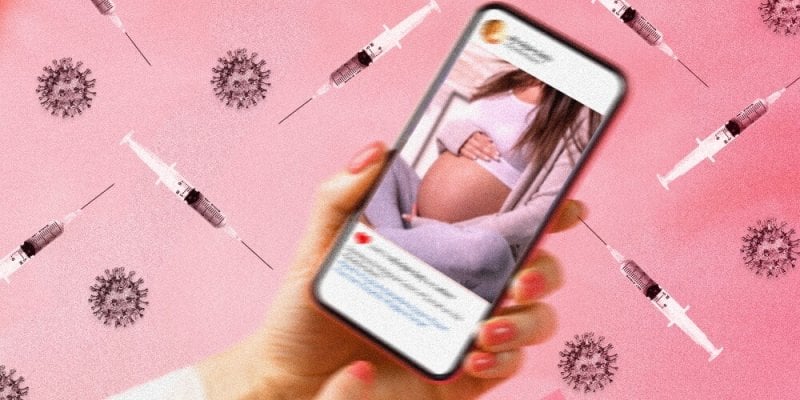
Latest anti-vaccine memes linking COVID shots to infertility go viral. Here’s how that happened

Credit: Anjali Nair/NBC News/Getty Images

Persistent myths like vaccine shedding are becoming more extreme on social media. The latest misinformation claims are that even being near vaccinated people is dangerous and that it can cause adverse side effects for women.

People… are taking the warnings so seriously that they are starting to take action, asking that people who have been vaccinated stay out of stores and even canceling appointments with clients who have been vaccinated because of fear that being around vaccinated people can lead to menstrual irregularities, fertility issues or even miscarriages. A private school in Miami barred teachers who have been vaccinated from coming into contact with students and threatened the employment of teachers who had been vaccinated.

Among the reasons misinformation is spreading so rapidly is that its believers use unverifiable firsthand accounts, often shared on under-moderated social media features like Instagram stories and Facebook comment sections, where personal narratives that have long fueled the anti-vaccination movement spread even as some of the largest social media companies have struggled to curtail vaccine misinformation.

Follow the latest news and policy debates on sustainable agriculture, biomedicine, and other ‘disruptive’ innovations. Subscribe to our newsletter.

“You can’t fact-check someone’s personal experience. With Instagram stories, people share their testimony, and the first round of it feels so intimate and immediate,” said [researcher] Jennifer Nilsen.


Read the original post

{{ reviewsTotal }}{{ options.labels.singularReviewCountLabel }}
{{ reviewsTotal }}{{ options.labels.pluralReviewCountLabel }}
{{ options.labels.newReviewButton }}
{{ userData.canReview.message }}

Related Articles

Infographic: Global regulatory and health research agencies on whether glyphosate causes cancer

Infographic: Global regulatory and health research agencies on whether glyphosate causes cancer

Does glyphosate—the world's most heavily-used herbicide—pose serious harm to humans? Is it carcinogenic? Those issues are of both legal and ...

Most Popular

ChatGPT-Image-May-7-2026-12_16_37-PM-2
Viewpoint: Are cancer rates ‘skyrocketing’ as RFK, Jr. and MAHA claims? The evidence says mostly the opposite
Screenshot-2026-04-13-at-1.39.26-PM
Viewpoint: ‘Safer for children?’ Stonyfield yogurt under fire for deceptive organic marketing
Screenshot-2026-04-22-at-10.46.29-AM
Viewpoint: How to counter science disinformation? Science journalist offers 12 practical tips
Picture1-14
When superbugs threaten vulnerable children: Can AI help solve antibiotic resistance?
Screenshot-2026-04-23-at-11.00.36-AM
Regulators' dilemma: Thalidomide, Metformin, and the cost of getting drug approvals wrong
Picture1-1
Cooling the planet with balloons: Could a geoengineering gamble slow global warming?
ChatGPT-Image-May-12-2026-08_39_41-PM
GLP podcast: Big Pharma, Big Ag, Big Food—health harming industries or life-saving innovators?
bigstock opioids on chalkboard with rol
GLP podcast: 'Safe injection sites': enabling drug addiction or saving lives?

Sorry. No data so far.

glp menu logo outlined

Get news on human & agricultural genetics and biotechnology delivered to your inbox.