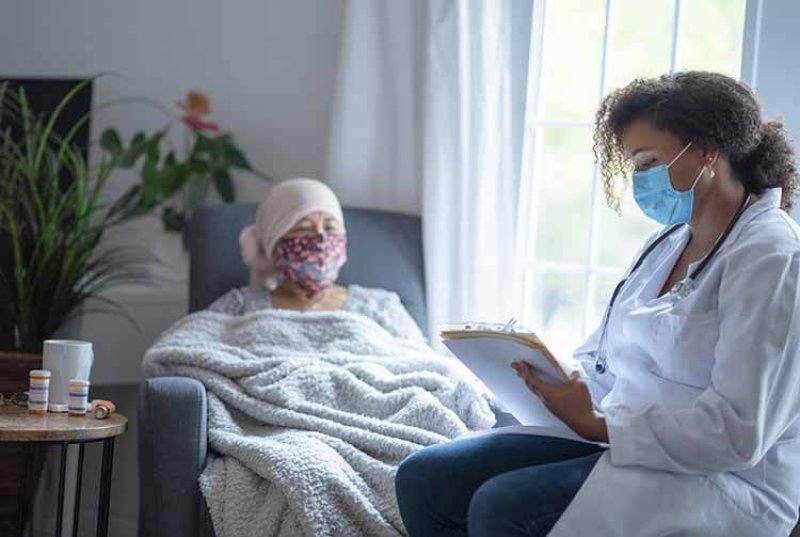
Immunocompromised and wary about getting a COVID vaccine? Here’s what experts say

cancer patient with mask resized
Credit: Getty Images

None of the large-scale vaccine trials included people who are immunocompromised, though every indication is that vaccines are safe in this group. Organizations representing experts in cancer, organ transplantation and autoimmune diseases all support vaccination for their patients.

Anthony Fauci, head of the National Institute of Allergy and Infectious Diseases, said [March 14] that there are still questions about vaccines and the immunocompromised.

It’s remains unclear, he said at a news conference, whether people who are immunocompromised make a comparable immune response to those without these conditions, whether the protection from vaccines will last as long in them and whether they will be able to transmit the disease after vaccination. 

There’s no question people who are immunocompromised are at higher risk for bad outcomes if they do get COVID-19, he said. 

Follow the latest news and policy debates on sustainable agriculture, biomedicine, and other ‘disruptive’ innovations. Subscribe to our newsletter.

People with compromised immune systems are also more likely to spread the virus to others, several experts said, and may be more likely to foster the variants that threaten to make the disease more dangerous and vaccines less effective.

That’s why it’s particularly important for the immunocompromised to get vaccinated.

“We have an amazing opportunity to prevent people from getting ill,” said Dr. Lewis Teperman, director of transplantation at Northwell Health, a large care provider in New York.


Read the original post

{{ reviewsTotal }}{{ options.labels.singularReviewCountLabel }}
{{ reviewsTotal }}{{ options.labels.pluralReviewCountLabel }}
{{ options.labels.newReviewButton }}
{{ userData.canReview.message }}

Related Articles

Infographic: Global regulatory and health research agencies on whether glyphosate causes cancer

Infographic: Global regulatory and health research agencies on whether glyphosate causes cancer

Does glyphosate—the world's most heavily-used herbicide—pose serious harm to humans? Is it carcinogenic? Those issues are of both legal and ...

Most Popular

wuhan institute of virology main entrance
​​COVID lab leak? Making a case that the Wuhan market origins theory is wrong
Screenshot-2026-06-17-at-9.44.03-AM
Viewpoint: Embryos are becoming the newest battleground of love, loss, and legal uncertainty
Screenshot-2026-06-18-at-11.41.51-AM
Viewpoint—Protecting baloney science: Far right senators move to protect the phony homeopathy industry
ChatGPT-Image-Mar-10-2026-01_39_01-PM
Viewpoint—“Miracle molecule” debunked: Why acemannan supplements don’t work
Screenshot-2026-06-17-at-11.57.12-AM
Viewpoint: Raw milk and the myth of safety—ProPublica exposes the growing anti-homogenization movement
ChatGPT-Image-Jun-9-2026-01_11_37-PM
Turmeric supplements: More risks than benefits
Screenshot-2026-06-18-at-2.52.05-PM
Activist organization accuses Trump of protecting methane-generating stripper wells to benefit billionaire and donor Jeffrey Hildebrand 
Screenshot-2026-06-16-at-10.02.22-PM
Viewpoint: ‘Industrial food’ primer—Challenging the dangerous delusions of the alternative food movement
ChatGPT-Image-Jun-16-2026-10_01_45-AM-2
Viewpoint—Recursive self-improvement: AI leader Anthropic calls for AI slowdown
ChatGPT-Image-Jun-18-2026-02_32_04-PM
Can illegal social media content be stopped before it goes viral? UK is going to try.
ChatGPT-Image-Jun-4-2026-03_07_27-PM
AAP v. Kennedy: While a court challenge grinds on, RFK Jr. quietly advances his anti-vaccine conspiracy agenda
glp menu logo outlined

Get news on human & agricultural genetics and biotechnology delivered to your inbox.