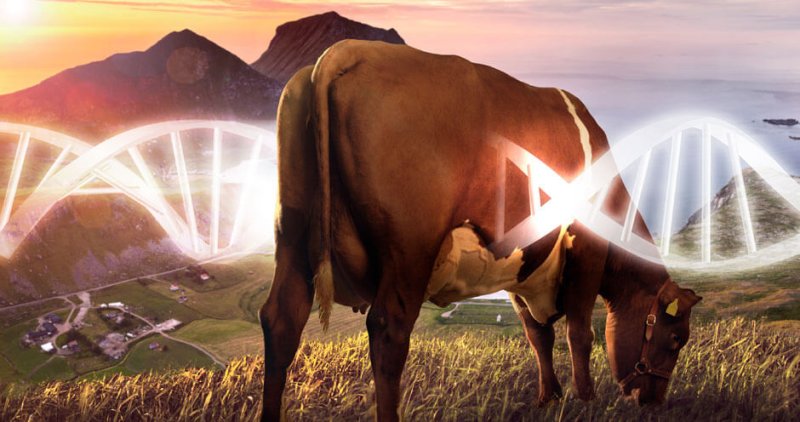
2 in 5 dairy farmers believe cows should not be genetically engineered to reduce disease susceptibility. What might change their minds?

Credit: Norwegian Red

[E]ven before the consumer sees a product on the grocery shelf… farmers’ decisions can make or break a technology’s chance of making it to stores. 

Our recent study surveyed over 500 American dairy farmers on their willingness to adopt gene-edited genetics in their herds. We asked farmers about a Johne’s disease resistance application in particular and found, overall, that farmers weren’t ready or willing to adopt gene-edited genetics. This resistance was motivated by a variety of factors. In our sample, 42% of farmers believed that animals shouldn’t be genetically engineered or gene-edited, regardless of the application.

Follow the latest news and policy debates on sustainable agriculture, biomedicine, and other ‘disruptive’ innovations. Subscribe to our newsletter.

At the top of the list is a concern that consumers won’t accept dairy products from gene-edited cows, a top concern shared by 63.4% of farmers in our study. Other key concerns shared by about a third of farmers are a potential loss of market access for milk from gene-edited cows from wary consumers, a reduction in milk price, and the perception that gene-edited genetics are simply unnatural. For the companies hoping to get this technology on the market, these concerns represent the main hurdles that they’ll need to address to get the technology past the first gatekeepers of the market.


Read the original post

{{ reviewsTotal }}{{ options.labels.singularReviewCountLabel }}
{{ reviewsTotal }}{{ options.labels.pluralReviewCountLabel }}
{{ options.labels.newReviewButton }}
{{ userData.canReview.message }}

Related Articles

Infographic: Global regulatory and health research agencies on whether glyphosate causes cancer

Infographic: Global regulatory and health research agencies on whether glyphosate causes cancer

Does glyphosate—the world's most heavily-used herbicide—pose serious harm to humans? Is it carcinogenic? Those issues are of both legal and ...

Most Popular

ChatGPT-Image-Jun-17-2026-10_52_43-AM
Anguished parents, doctors in tears: Utah’s long measles outbreak takes a toll
Screenshot-2026-06-15-at-1.55.27-PM
America's trust in Trump-Kennedy's CDC health recommendations is plunging
ChatGPT-Image-Jun-24-2026-11_36_47-AM
Why the human genome is less a script than a puzzle
ChatGPT-Image-Jun-23-2026-03_12_23-PM
Is cellular reprogramming junk science? Nearly 20 patients are getting eye injections in the first FDA-cleared cellular trial
Screenshot 2026-06-25 at 10.55
Leading OB-GYN group challenges RFK, Jr. gutting of maternal vaccine schedule
Screenshot-2026-06-22-at-9.04.46-PM
Kennedy's nutrition prescription for medical schools: Real problem, bad cure
ChatGPT-Image-Mar-10-2026-01_39_01-PM
Viewpoint—“Miracle molecule” debunked: Why acemannan supplements don’t work
Screenshot-2026-06-24-at-2.57.41-PM
Viewpoint: Trump’s Reflecting Pool algae fiasco points to a bigger culprit: Climate change
Screenshot-2026-06-25-at-1.48.40-PM
Glyphosate affirmed as safe: Supreme Court rejects lawsuit claiming Roundup herbicide causes cancer, upholding EPA determination
ChatGPT-Image-Jun-25-2026-12_23_17-PM
No, Bill Gates did not secretly engineer ticks to promote veganism
Screenshot-2026-06-24-at-2.40.46-PM
Hegseth reversal: As Air Force flu outbreak continues to surge, military reinstitutes mandatory vaccines for recruits
ChatGPT-Image-Jun-22-2026-01_30_11-PM
Facts & Fallacies podcast: Psychedelics for PTSD? Examining RFK, Jr's claims about ibogaine
glp menu logo outlined

Get news on human & agricultural genetics and biotechnology delivered to your inbox.