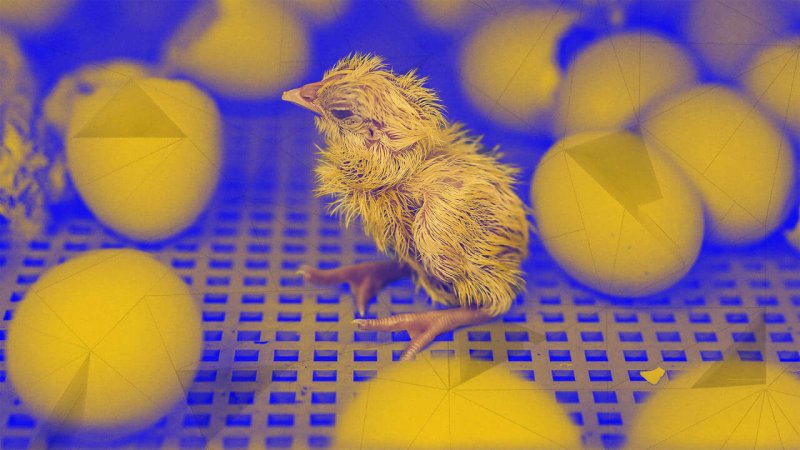
Billions of baby male chicks are slaughtered every year because they can’t lay eggs. Here’s how CRISPR gene editing could prevent them from being culled after birth

Credit: EggXYt
Credit: EggXYt

The problem: Chick culling is the practice of killing small, day-old male chicks with a variety of fairly gruesome methods. Billions of chicks are killed this way each year — about 300 million in the U.S. alone. As the eggs hatch, specialized “sexers” sort the chicks by hand — the females survive, while the male birds are culled.

The challenge: Despite being an age-old practice, the industry is changing. France and Germany have pledged to ban culling by 2022.

In the United States, the United Egg Producers vowed in 2016 to stop culling male chicks as soon as it was economically feasible, reports Fast Company. But the group also stated in 2020 that no viable alternative existed.

Follow the latest news and policy debates on sustainable agriculture, biomedicine, and other ‘disruptive’ innovations. Subscribe to our newsletter.

A powerful new solution: The team at EggXYt uses CRISPR to edit the genes of chickens so that a biomarker appears on the male chromosome… Once engineered, they can slip the eggs through a scanned — sort of like an airport security belt — and under the scanner, the biomarker glows. The eggs can be sorted automatically by sex without cracking the shell. The process could save time and money, since sexers will sort out the male eggs before placing them in the incubator.


Read the original post

{{ reviewsTotal }}{{ options.labels.singularReviewCountLabel }}
{{ reviewsTotal }}{{ options.labels.pluralReviewCountLabel }}
{{ options.labels.newReviewButton }}
{{ userData.canReview.message }}

Related Articles

Infographic: Global regulatory and health research agencies on whether glyphosate causes cancer

Infographic: Global regulatory and health research agencies on whether glyphosate causes cancer

Does glyphosate—the world's most heavily-used herbicide—pose serious harm to humans? Is it carcinogenic? Those issues are of both legal and ...

Most Popular

Screenshot-2026-04-22-at-12.21.32-PM
Viewpoint: Why the retracted Monsanto glyphosate study doesn’t change the science—the world’s most popular herbicide is safe 
ChatGPT-Image-Apr-16-2026-02_56_53-PM
Financial incentives, over diagnosis, and weak oversight: Autism claims are driving up Medicare costs
Picture1
The FDA couldn’t find a vaccine safety crisis, so it buried its own research
global warming
‘Implausible’: Top climate scientists reject worst-case scenario—soaring temperatures and fast-rising sea levels
ChatGPT-Image-May-1-2026-11_42_59-AM-2
Viewpoint: NAD is the wellness grifters latest evidence-lite longevity fad. At least the mice are impressed.

Sorry. No data so far.

glp menu logo outlined

Get news on human & agricultural genetics and biotechnology delivered to your inbox.