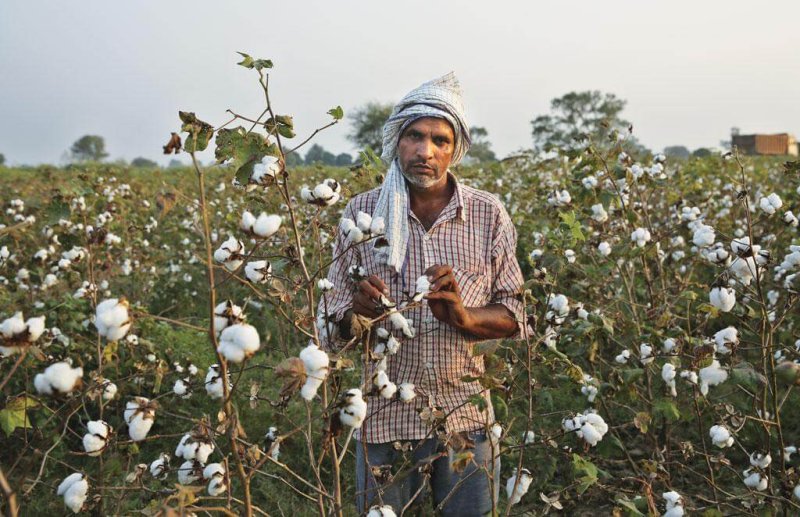
‘Despite the challenges of misinformation, the technology has enjoyed the confidence of farmers, researchers and policymakers’: Bt insect-resistant cotton celebrates 20 years of increased productivity

Credit: Global Research

In the year 2022, Bt cotton will complete two decades of cultivation in India. Despite the challenges of misinformation, the technology has enjoyed the confidence of farmers, researchers and policymakers.

The extent of achievement can be drawn from the fact that about 11.7 million hectares (93.6 percent) of total 12.5 million hectares under cotton cultivation in 2019-20 was planted with Bt cotton seeds.

There is no doubt that Bt cotton has not only benefited the farmers, but also the textile industry, oil industry and boosted our economy. According to the Directorate of Economics and Statistics, Ministry of Agriculture, Government of India, over the last decade, cotton yields in the country increased by more than 300%; pesticide consumption reduced by ~ 50%; acreage increased by 150% and production increased by 400%. This technological advancement enabled over 7 million farmers earn an additional farm income of USD 16.69 billion. 

Follow the latest news and policy debates on sustainable agriculture, biomedicine, and other ‘disruptive’ innovations. Subscribe to our newsletter.

India’s farmers face numerous uncertainties and crop management challenges, which affect farm yields and incomes and knowledge of cultivation and correct agronomic practices make a significant impact. What is required today is an increase in extension efforts, to help increase knowledge of good agricultural practices amongst India’s agrarian communities.


Read the original post

{{ reviewsTotal }}{{ options.labels.singularReviewCountLabel }}
{{ reviewsTotal }}{{ options.labels.pluralReviewCountLabel }}
{{ options.labels.newReviewButton }}
{{ userData.canReview.message }}

Related Articles

Infographic: Global regulatory and health research agencies on whether glyphosate causes cancer

Infographic: Global regulatory and health research agencies on whether glyphosate causes cancer

Does glyphosate—the world's most heavily-used herbicide—pose serious harm to humans? Is it carcinogenic? Those issues are of both legal and ...

Most Popular

Screenshot 2025-07-30 at 10.48
Can gene editing eliminate Down syndrome? Scientists have done it in lab-grown cells
ChatGPT Image May 26, 2026, 08_42_17 AM (1)
Viewpoint: Greenpeace and poison: How environmental advocacy groups rely on compliant (and often ignorant) journalists to spread disinformation and spark litigation
Screenshot-2026-05-28-at-1.36.28-PM
Viewpoint: Can mRNA research survive the Trump administration?
ChatGPT Image May 26, 2026, 08_21_36 AM
Limiting gender affirming interventions: Trump administration targets Texas even though it already bans youth access
Screenshot-2026-06-03-at-1.24.46-PM
Challenging anti-GMO disinformation: Why genetically-tweaked crops offer bushels of benefits
ChatGPT-Image-May-26-2026-07_51_21-AM-2
Viewpoint: There are more than 1,000 chemicals in a cup of coffee—including many substances that can cause cancer. Why isn’t it banned?
ChatGPT-Image-Jun-2-2026-03_04_17-PM
Viewpoint: Why the hyper-promoted doping ‘enhanced games’ pseudo Olympics flopped
tick-DNA
GLP podcast: Spread meat allergy with gene-edited ticks? Bioethicists pose vile ‘thought experiment’
ChatGPT-Image-Jun-2-2026-11_39_58-AM
Viewpoint: Who is RFK, Jr.’s newly-appointed CDC senior counselor, Sara Brenner — Vaccine skeptic and self-proclaimed “MAHA mom”
ChatGPT-Image-Jun-3-2026-12_33_40-PM-2-1
Viewpoint—The end of ‘ivory tower science’: What does that even mean, and what comes next
ChatGPT-Image-Mar-10-2026-01_39_01-PM
Viewpoint—“Miracle molecule” debunked: Why acemannan supplements don’t work
Picture1
Sounds we can’t hear — the hidden planetary signals behind science, fear, and misinformation
glp menu logo outlined

Get news on human & agricultural genetics and biotechnology delivered to your inbox.