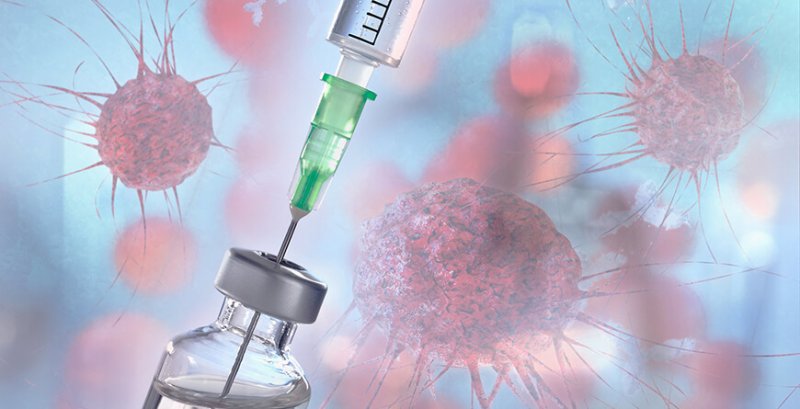
After decades of stumbles and mis-starts, a cure for many cancers is finally on the horizon: Injecting patients with a genetically engineered virus

Credit: Arizona State University

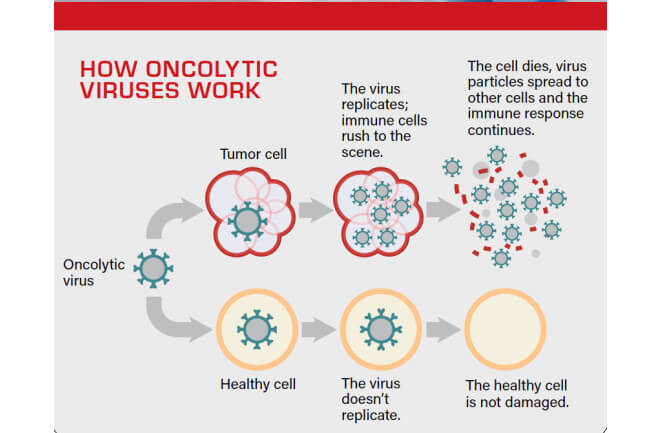
Infecting a cancer patient with a virus — a procedure that once would have raised eyebrows, if not malpractice lawsuits — might soon be routine. It’s taken more than a century of work, and a few hairraising experimental trials along the way, but a viral cure for cancer could be emerging.

Cancer cells possess a few traits that viruses tend to like, including rapid reproduction and a high level of metabolic activity, [neuroscientist Samuel] Rabkin says. This can make a tumor cell an ideal home for a virus, until the virus destroys it and moves on to another cell.

Follow the latest news and policy debates on sustainable agriculture, biomedicine, and other ‘disruptive’ innovations. Subscribe to our newsletter.

T-VEC, for example, has a genetic modification that allows it to express a compound that the body uses to stimulate the immune system. Like sharks to blood, immune cells mobilize at a whiff of these molecules. Engineering an oncolytic virus might guarantee it gets noticed, ensuring a strong immune response against the tumor.

Ultimately, the goal is to make it so that a patient’s body is capable of recognizing and fighting cancers it has seen before, resulting in a kind of immunity to cancer. 
Credit: Jay Smith

Read the original post

{{ reviewsTotal }}{{ options.labels.singularReviewCountLabel }}
{{ reviewsTotal }}{{ options.labels.pluralReviewCountLabel }}
{{ options.labels.newReviewButton }}
{{ userData.canReview.message }}

Related Articles

Infographic: Global regulatory and health research agencies on whether glyphosate causes cancer

Infographic: Global regulatory and health research agencies on whether glyphosate causes cancer

Does glyphosate—the world's most heavily-used herbicide—pose serious harm to humans? Is it carcinogenic? Those issues are of both legal and ...

Most Popular

ChatGPT-Image-Apr-20-2026-11_17_18-AM-2
10,000 scientists gone: Trump’s cuts create an unprecedented brain drain
Screenshot-2026-04-22-at-4.10.32-PM
Viewpoint — ‘Completely unethical’: RFK, Jr.’s medical ignorance deprives melanoma cancer-sufferers of a life-saving therapy
ChatGPT-Image-Apr-22-2026-04_31_20-PM
‘Irresponsible decision’? On mandatory military flu shots, Hegseth chooses ‘freedom’ over health
ChatGPT-Image-Apr-20-2026-12_28_36-PM
Vaccine skepticism is a growing global problem
Screenshot-2026-04-15-at-1.22.58-PM
Anti-biotechnology activists smear hybrid wheat breakthrough that could surge yields in poorer countries
ChatGPT-Image-Apr-17-2026-03_30_52-PM
Food labels, decoded: What they really mean
images
The never-ending GMO debate: Pros and cons
ChatGPT-Image-Mar-2-2026-03_22_54-PM
Why ‘support supplements’ for GLP-1 users are mostly a waste of money
ChatGPT-Image-Mar-11-2026-11_58_46-AM
The Trump administration has run out more than 4,000 National Institutes of Health employees. Here are the consequences
Screenshot-2026-04-22-at-1.14.34-PM
Latest fevered, right-wing conspiracy: Fox, New York Post, and kooky GOP legislators push ‘Dead Scientists’ scare
Screenshot-2026-04-12-135256
Bixonimania: The fake disease scam that AI swallowed whole
glp menu logo outlined

Get news on human & agricultural genetics and biotechnology delivered to your inbox.