Could gene editing and gene drives alter bats to prevent future pandemics?

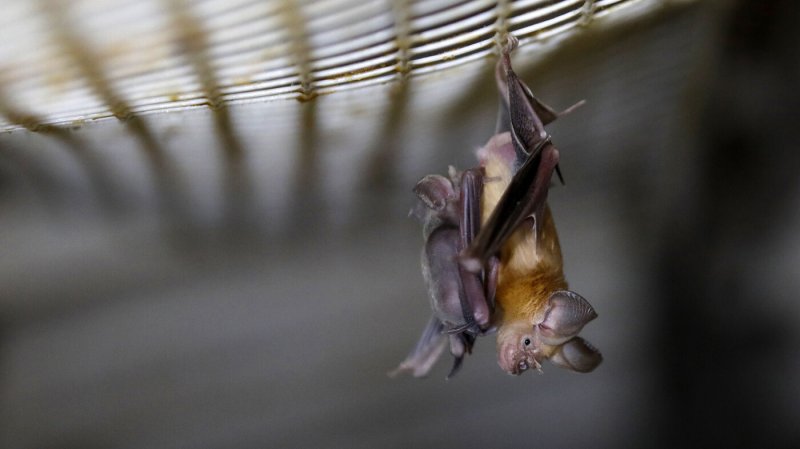
Credit: Menahem Kahana/AFP/Getty Images

Amid the devastating Covid-19 pandemic, two researchers are proposing a drastic way to stop future pandemics: using a technology called a gene drive to rewrite the DNA of bats to prevent them from becoming infected with coronaviruses.

The scientists aim to block spillover events, in which viruses jump from infected bats to humans — one suspected source of the coronavirus that causes Covid. Spillover events are thought to have sparked other coronavirus outbreaks as well, including SARS-1 in the early 2000s and Middle East respiratory syndrome (MERS).

This appears to be the first time that scientists have proposed using the still-nascent gene drive technology to stop outbreaks by rendering bats immune to coronaviruses, though other teams are investigating its use to stop mosquitoes and mice from spreading malaria and Lyme disease.


Mis- and disinformation are distorting science and public policy. Subscribe to our Daily and Weekly Digests for incisive coverage of ‘disruptive’ innovations in AI, agricultural biotechnology, food, chemicals, nuclear energy, vaccines, and other disruptive innovations.

“With a very high probability, we are going to see this over and over again,” argues entrepreneur and computational geneticist Yaniv Erlich… “Maybe our kids will not benefit, maybe our grandchildren will benefit, but if this approach works, we could deploy the same strategy against many types of viruses,” Erlich told STAT.


Read the original post

Related Articles

Infographic: Global regulatory and health research agencies on whether glyphosate causes cancer

Infographic: Global regulatory and health research agencies on whether glyphosate causes cancer

Does glyphosate—the world's most heavily-used herbicide—pose serious harm to humans? Is it carcinogenic? Those issues are of both legal and ...

Most Popular

ChatGPT-Image-Mar-10-2026-01_39_01-PM
Viewpoint—“Miracle molecule” debunked: Why acemannan supplements don’t work
Screenshot-2026-09-28-at-11.26.17-AM
Viewpoint: Wellness movement activists reposition nicotine from a killer addictive drug into a cure-all for brain ills
Screenshot-2026-10-02-at-9.11.36-AM
The genetics of personality
strand of dna genetics
No, GMO foods do not “damage genes, natural disposition and hormones, or decrease physical health and intelligence”
Radioactive-Americana-Collage-2
The kooky logic behind the raft of spurious cancer claims from Harvard’s T.H. Chan School of Public Health
Screenshot-2026-10-02-at-8.56.38-AM
Trump finalizes Medicare drug price cuts, drawing Big Pharma’s fury and a legal challenge
Screenshot-2026-10-01-at-10.52.08-AM
Non-browning CRISPR gene-edited bananas move one step closer to British markets
Screenshot-2026-10-02-at-11.12.24-AM
‘Why do we keep falling for this stuff?’ America’s love affair with snake oil salesmen and scams
Screenshot-2026-09-22-at-10.54.12-AM
‘They misunderstand science’: Research attempting to tie autism to changes in the gut microbiome comes under fire
AI-Force-Leadership-Portrait
Jay Clayton controversy: The divisive history of Trump’s newly-appointed AI czar
ChatGPT-Image-Sep-21-2026-11_21_39-AM
Viewpoint: Food cults: Online ‘nutrition communities’ can pose unique dangers
glp menu logo outlined

Get news on human & agricultural genetics and biotechnology delivered to your inbox.