From steaks to salmon, here’s the future of 3D-printed food

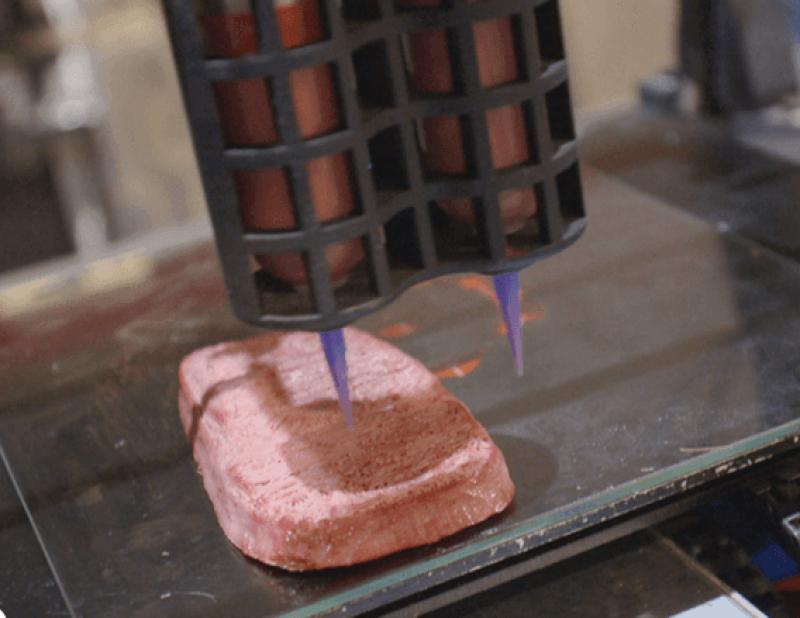
NovaMeat’s 3D printed vegan steak. Credit: NovaMeat

Using edible ingredients in the form of purees or pastes, a 3D printer pushes materials through a precisely moving nozzle to build a meal according to the desired design, one layer at a time.

Whether it’s to address health issue, the environment, food waste, or the growing demand for meat alternatives, there’s been a scramble of new startups in 3D printing food in the past few years attracting multi-million dollar backing and rave reviews in the press.

Barcelona company Novameat, for example, created the a 3D printed plant-based beefsteak, garnering praise as one of the most realistic alternative meats thanks to founder Giuseppe Scionti’s expertise in bioengineering and tissue regeneration.

Vienna-based Revo Foods raised $1.5 million for market entry with their plant-based pea protein and citrus fiber seafood alternative Salmon With Attitude, aiming to combat overfishing and decrease the consumption of toxic waste materials that often turn up in seafood like mercury and PCBs.

Follow the latest news and policy debates on sustainable agriculture, biomedicine, and other ‘disruptive’ innovations. Subscribe to our newsletter.

Upprinting Food in Amsterdam is fighting food waste by turning rejected or unused ingredients into 3D printable purees that they then extrude into desirable shapes, dehydrate for crunch and extended shelf life, and sell to high-end restaurants.

Read the original post

{{ reviewsTotal }}{{ options.labels.singularReviewCountLabel }}
{{ reviewsTotal }}{{ options.labels.pluralReviewCountLabel }}
{{ options.labels.newReviewButton }}
{{ userData.canReview.message }}

Related Articles

Infographic: Global regulatory and health research agencies on whether glyphosate causes cancer

Infographic: Global regulatory and health research agencies on whether glyphosate causes cancer

Does glyphosate—the world's most heavily-used herbicide—pose serious harm to humans? Is it carcinogenic? Those issues are of both legal and ...

Most Popular

ChatGPT Image May 10, 2026, 08_16_59 PM 2
Overmedicalization? RFK Jr.’s antidepressant crackdown raises conflict questions over his fee stake in Wisner Baum, the tort firm built on suing drug makers
Picture1-5
Science Disinformation Gap: The transatlantic battle over social media and censorship
Picture1-1
Cooling the planet with balloons: Could a geoengineering gamble slow global warming?
ChatGPT-Image-Apr-13-2026-02_20_22-PM
Viewpoint: Misinformation infodemic? Why assessing evidence is so challenging 
Screenshot-2026-05-11-104424
Hantavirus outbreak research: Trump administration shut down study last year on rodent-to-human transmission
Picture1-14
When superbugs threaten vulnerable children: Can AI help solve antibiotic resistance?
S
As vaccine rejectionism spreads, measles may be taking a more dangerous turn
Screenshot-2026-05-08-at-3.40.33-PM
Seeds of power: China turns to genetic engineering to become global superpower
Screenshot-2026-05-01-at-1.29.41-PM
Viewpoint: What happens when whole grains meet modern food manufacturing? Labels don’t tell the whole story.
Screenshot 2026-05-11 at 11.30
Despite politicized disinformation, Midwest AI data centers are fueling a solar energy boom
Screenshot-2026-05-08-at-11.55.47-AM
Anti-vax activists falsely blame COVID vaccines for the rising U.S. cancer rate among younger people.
Screenshot-2026-04-20-at-2.26.27-PM
Viewpoint — Food-fear world: The latest activist scientists campaign: Cancer-causing additives
glp menu logo outlined

Get news on human & agricultural genetics and biotechnology delivered to your inbox.