Will you come to regret not getting your child vaccinated? Ben Franklin did — his son died of smallpox

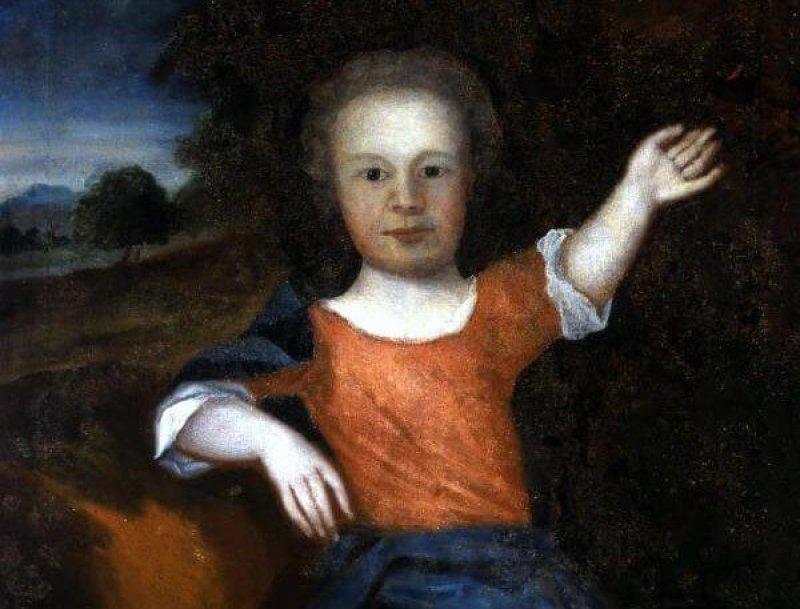
Painting of Benjamin Franklin's four-year-old son, Francis "Franky" by Charles Henry Granger. Credit: Shine 365

Five weeks had passed since the death of Benjamin Franklin’s son, and rumors were swirling. Four-year-old Francis “Franky” Franklin had died after being inoculated for smallpox, the rumor went, and now his pro-inoculation father was trying to hide it.

The gossip reached such a point that on Dec. 30, 1736, the grieving father, then 30, confronted it in the pages of his newspaper, the Pennsylvania Gazette.

“Inasmuch as some People are, by that [rumor] … deter’d from having that Operation perform’d on their Children,” he wrote, “I do hereby sincerely declare, that he was not inoculated, but receiv’d the Distemper in the common Way of Infection.”

Follow the latest news and policy debates on sustainable agriculture, biomedicine, and other ‘disruptive’ innovations. Subscribe to our newsletter.

“I intended to have my Child inoculated,” he explained, “as soon as he should have recovered sufficient Strength from a Flux [diarrhea] with which he had been long afflicted.”


More than five decades later, in his autobiography published posthumously, he said he had “long regretted bitterly, and still regret” that he had chosen to wait.

Nearly three centuries later, Franklin’s story has new resonance as a fourth wave of the coronavirus pandemic grips the country, driven by the highly contagious delta variant and disproportionately affecting unvaccinated Americans, including children younger than 12.


Read the original post

{{ reviewsTotal }}{{ options.labels.singularReviewCountLabel }}
{{ reviewsTotal }}{{ options.labels.pluralReviewCountLabel }}
{{ options.labels.newReviewButton }}
{{ userData.canReview.message }}

Related Articles

Infographic: Global regulatory and health research agencies on whether glyphosate causes cancer

Infographic: Global regulatory and health research agencies on whether glyphosate causes cancer

Does glyphosate—the world's most heavily-used herbicide—pose serious harm to humans? Is it carcinogenic? Those issues are of both legal and ...

Most Popular

Screenshot-PM-24
Viewpoint: The herbicide glyphosate isn’t perfect. Banning it would be far worse.
d-b
Blocked arteries, kidney stones, nausea, constipation, fatigue: Long list of health problems caused by too much vitamin D 
79d03212-2508-45d0-b427-8e9743ff6432
Viewpoint: The Casey Means hustle—Wellness woo opportunism dressed up as medical wisdom
ChatGPT-Image-Mar-27-2026-11_27_05-AM
The myths of “process”: What science says about the “dangers’ of synthetic products and ultra-processed foods
ChatGPT-Image-Apr-30-2026-12_21_05-PM-2
The tech billionaires behind the immortality movement
ChatGPT-Image-Mar-3-2026-01_17_14-PM
MAHA wellness influencers deride proven anxiety medications, tout lifestyle fixes
ChatGPT-Image-Mar-10-2026-01_39_01-PM
Viewpoint—“Miracle molecule” debunked: Why acemannan supplements don’t work

Sorry. No data so far.

glp menu logo outlined

Get news on human & agricultural genetics and biotechnology delivered to your inbox.