DNA in space: First CRISPR gene-editing study by astronauts opens door to future experimentation

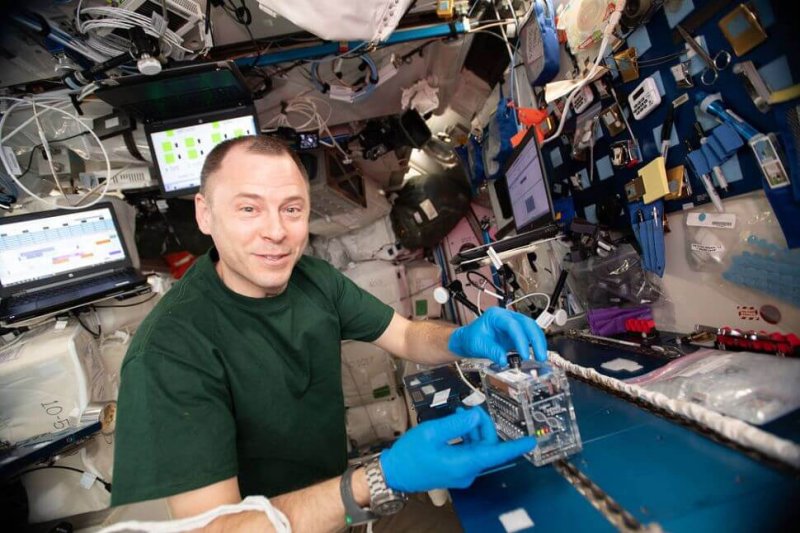
NASA astronaut Nick Hague using the miniPCR hardware to explore how space radiation damages DNA. Credit: NASA

The first CRISPR experiment to take place in space shows that DNA can repair itself in microgravity. 

As part of the “Genes In Space-6” experiment, astronauts on board the International Space Station (ISS) created breaks in the DNA of a common yeast, and then analyzed how it repaired itself. 

Mis- and disinformation are distorting science and public policy. Subscribe to our Daily and Weekly Digests for incisive coverage of ‘disruptive’ innovations in AI, agricultural biotechnology, food, chemicals, nuclear energy, vaccines, and other disruptive innovations.

Having this technology available on the ISS means that scientists can analyze DNA that sustained damage while in space, rather than relying on samples being sent up to the station that have been cut on Earth. While the principles of CRISPR in space are the same, they need to be tailored toward the conditions in space, researchers said.
“We cannot take exactly what we have on Earth and simply put it in space, because we have to keep the crew and all the environmental life systems on board safe,” study lead author Sarah Rommel, also a microbiologist at JSC, said in the same statement.

“For example, we made our own custom kits for the whole process, looking at how to use the least amount of the safest materials and still get the best science.”


This is an excerpt. Read the original post here. 

Related Articles

Infographic: Global regulatory and health research agencies on whether glyphosate causes cancer

Infographic: Global regulatory and health research agencies on whether glyphosate causes cancer

Does glyphosate—the world's most heavily-used herbicide—pose serious harm to humans? Is it carcinogenic? Those issues are of both legal and ...

Most Popular

ChatGPT-Image-Sep-23-2026-02_36_39-PM
Viewpoint: After firing the entire National Science Board, Trump reshapes funding initiatives. Here’s the good and the bad.
ChatGPT-Image-Mar-10-2026-01_39_01-PM
Viewpoint—“Miracle molecule” debunked: Why acemannan supplements don’t work
ChatGPT-Image-Sep-10-2026-10_36_07-AM
Viewpoint: Even lousy scientific articles can shield authors when they hype dubious health claims and products
sorghum farmers in kenya FARMERS TREND
Here are all the ways CRISPR gene editing is transforming Africa’s staple crops—and there’s a lot more innovation to come
ChatGPT-Image-Sep-30-2026-01_38_36-PM
Viewpoint: Died “with measles” vs. died “from measles”: RFK, Jr.’s dangerously subversive word games
ChatGPT-Image-Sep-30-2026-01_25_34-PM
Blood tests for Alzheimer’s? The latest grifter, social media scam.
glp menu logo outlined

Get news on human & agricultural genetics and biotechnology delivered to your inbox.