With its vast potential to alleviate food insecurity and improve the livelihoods of vulnerable populations, gene editing as an agricultural production tool complements the vision of zero hunger and climate action espoused in the United Nations Sustainable Development Goals (SDGS).
The 2021 UN Food Systems Summit, [on] September 23 at the UN General Assembly in New York, aims to provide a platform for ambitious new actions, innovative solutions and plans to transform food systems and leverage these shifts to deliver progress across all of the SDGs.
Recent research identified gene editing as a progressive biotechnology tool that has revolutionized crop improvement in terms of increasing production amid the rapid climatic shifts that are rendering older farming systems untenable.
But in order to reap the full potential of gene editing in providing resilient crops for a rapidly changing world, the study authors prescribe greater efforts and investment not only in the technical aspects of the technology, but also in fostering social support among the communities involved.
“With the help of genomics, molecular markers that are linked to important agronomic traits can be identified, thus helping to improve crop varieties in terms of quality production, stress tolerance and disease resistance,” note the authors of Global Warming and Climate Change, who published the first peer-reviewed chapter of their book online. “All these technologies will help to make the world more food secure.”

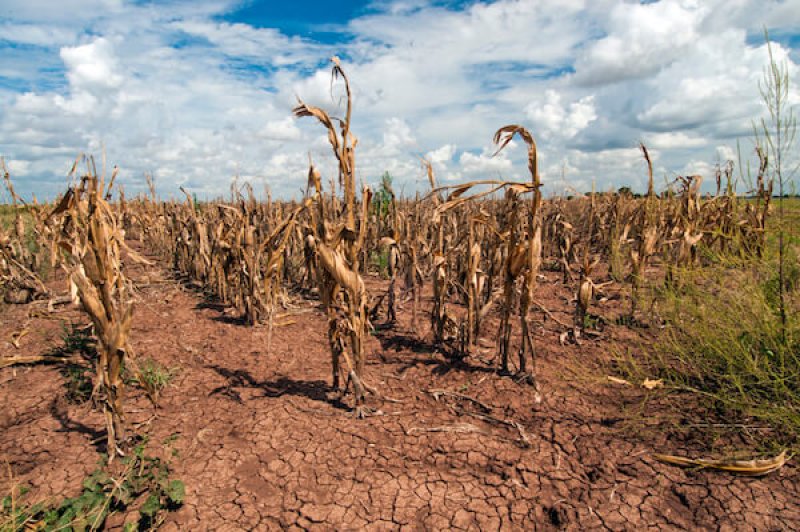
Climate change is projected to have a detrimental effect on agricultural conditions as well as soil nutrients, plant diseases and pests, with the impacts being particularly felt in underdeveloped countries. These adversities necessitate climate-resilient crop varieties with broad-spectrum and long-term tolerance to both biotic and abiotic stresses.
“Over the next decade it is predicted that billions of people, particularly from underdeveloped countries, may encounter water as well as food scarcity, accompanied with a high risk to life and health due to climate changes,” the authors write. “Developing countries are more prone to the changing climatic conditions as these countries lack social, financial as well as technological resources, which are required to face climate change.”
Already, the adverse impacts of climate change have been felt in agricultural production across many parts of the world.
The report cites India, where production of rice decreased by 23 percent between 2001 and 2002 due to water scarcity. In Indonesia, about 1.344 million tonnes of rice has been lost due to flooding. Worse is expected, including a considerable decrease in maize production in southern Africa and an up to 10 percent decrease in staple crops in south Asia — all attributed to changes in climate.
Aside from the caprices of climate, existing systems may not be up to speed to meet the rising demands for food, a challenge further aggravated by rapid population growth, particularly among vulnerable communities.
The authors note that after more than a half-century of success in ensuring food security, the “Green Revolution” is reaching its biological limits, as reflected in the ongoing stagnancy in yield increases over the past few decades.

“By 2050, it is expected that another 2.4 billion people be added to the population of developing countries of the world,” notes the report. “It is estimated that globally by 2050, the agriculture sector must expand by 60 percent to meet the increasing demand due to continuously increasing human population, and it can only be possible by increasing crop productivity under climate change.”
This raises the need for more definitive methods and tools that can bolster the overall food basket in an effective and sustainable way.
After successfully deploying gene editing to modify simple traits, scientists have embarked on more ambitious ventures in a quest for more robust crops that can meet the challenges and demands of the day. Genome editing is valued for its accuracy and the flexibility it offers scientists to alter specific parts of the genome to achieve the desired effect.
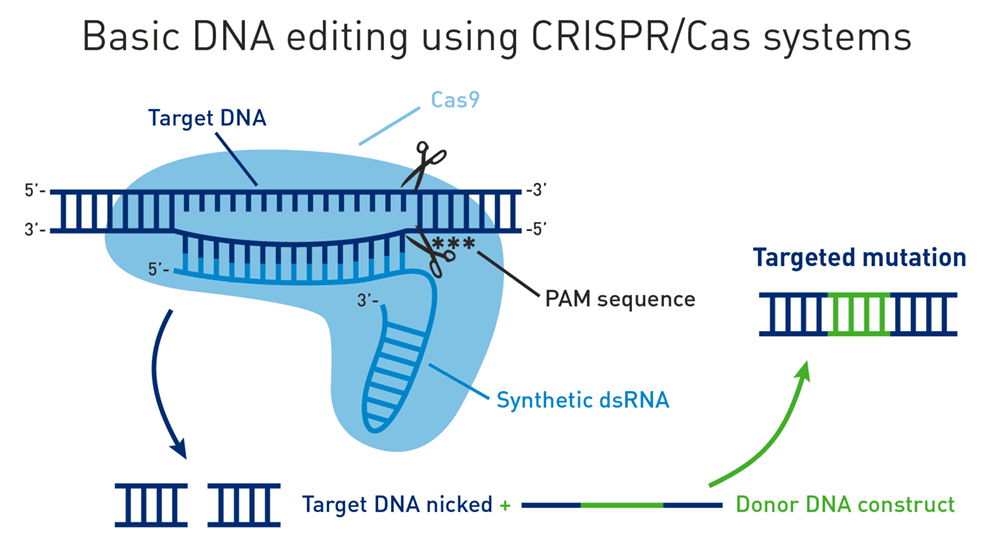
Traditional crop improvement through genetic recombination or random mutagenesis, on the other hand, is a time-consuming process that cannot keep up with rising crop demand, the authors assert.
“Genome editing techniques, including…CRISPR/Cas, allow for selective alteration of almost any crop genome sequence to generate novel variation and speed up breeding efforts,” they say.
Even though farmer varieties and landraces are well adapted to current conditions and may have been successfully used as sources for adaptive genes in crop improvement in their local production environments, they may lose this adaptation in the changing climatic conditions, the authors warn.
And it may not be a practical solution to introduce more suitable crop varieties from elsewhere, leaving the development of new varieties the only viable solution.
An effective adaptation strategy will need to be tailored to cater to the site-specific effects of climate change, in some cases varying even within a particular country, the authors say.
Overall, they anticipate a gradual transition away from conventional breeding and toward selective genome editing cycles in crop improvement.
Dr. Joseph Maina is a Senior Lecturer in the Department of Earth and Environmental Sciences at Macquarie University. Joseph’s ultimate goals are to understand and predict the impacts of environmental variability and change on social and ecological systems at local and global scales to support spatial planning & management.
A version of this article was originally posted at the Cornell Alliance for Science and is reposted here with permission. The Cornell Alliance for Science can be found on Twitter @ScienceAlly