Organic food health time bomb? Potentially carcinogenic and confirmed irritant organic pesticide copper sulfate used to grow wine grapes, potatoes and tomatoes found in ‘almost entire French population and in particular children’

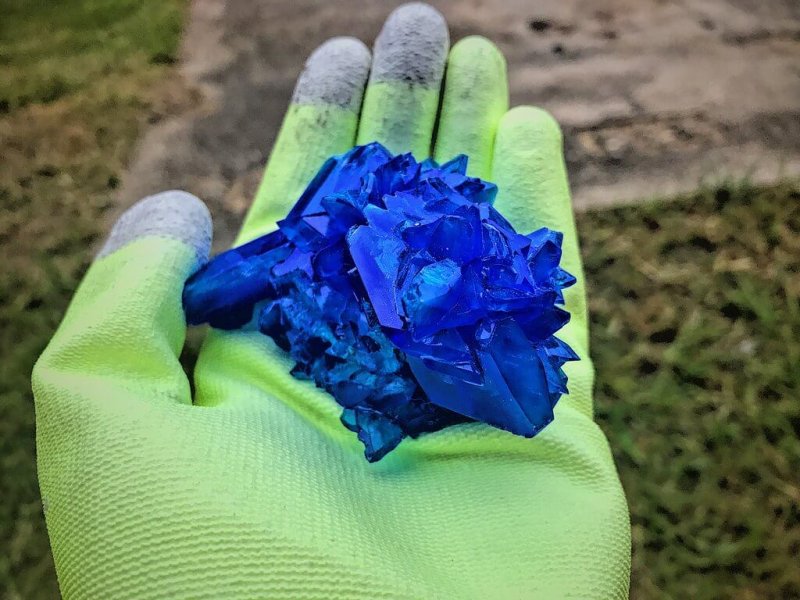
Copper sulfate. Credit: Johnna Crider

The Esteban study of Public Health France of the French population revealed the presence of copper in almost the entire French population, and in particular in children who consume organic products, and the use of copper has exploded in 2021.

The exceptional climatic conditions of this year caused a rapid spread of mildew over a large part of the French vineyard, on potato crops in the North of France as well as on field tomato crops.

Follow the latest news and policy debates on sustainable agriculture, biomedicine, and other ‘disruptive’ innovations. Subscribe to our newsletter.

Nevertheless, the specifications of organic farming prohibit all synthetic products, and copper-based solutions are today the one and only treatment product against mildew. We can therefore understand the motivations of the ministry of Rue de Varenne, who are anxious to preserve a sector struggling with such difficulties.

This is what explains why, in its Esteban study, conducted between April 2014 and March 2016 on a sample of 1104 children and 2503 adults, aged 6 to 74 years, Public Health France (SpF) notes that “more copper is found in consumers of organically grown foods, especially children.”

“Urinary copper concentrations are increased by 8% in those consuming more than 4 times a week vegetables from organic farming compared to those never or rarely consuming them,” reports SpF.

However, for a long time, the toxicity of copper-based solutions, such as the Bordeaux mixture, was the subject of a taboo, the organic lobby having succeeded in eclipsing any debate on this subject.

[Editor’s note: This article was originally published in French and has been translated and edited for clarity.]


This is an excerpt. Read the original post here.

{{ reviewsTotal }}{{ options.labels.singularReviewCountLabel }}
{{ reviewsTotal }}{{ options.labels.pluralReviewCountLabel }}
{{ options.labels.newReviewButton }}
{{ userData.canReview.message }}

Related Articles

Infographic: Global regulatory and health research agencies on whether glyphosate causes cancer

Infographic: Global regulatory and health research agencies on whether glyphosate causes cancer

Does glyphosate—the world's most heavily-used herbicide—pose serious harm to humans? Is it carcinogenic? Those issues are of both legal and ...

Most Popular

Picture1-5
Science Disinformation Gap: The transatlantic battle over social media and censorship
ChatGPT Image May 10, 2026, 08_16_59 PM 2
Overmedicalization? RFK Jr.’s antidepressant crackdown raises conflict questions over his fee stake in Wisner Baum, the tort firm built on suing drug makers
Picture1-1
Cooling the planet with balloons: Could a geoengineering gamble slow global warming?
Screenshot-2026-05-11-104424
Hantavirus outbreak research: Trump administration shut down study last year on rodent-to-human transmission
Picture1-14
When superbugs threaten vulnerable children: Can AI help solve antibiotic resistance?
Screenshot 2026-05-11 at 11.30
Despite politicized disinformation, Midwest AI data centers are fueling a solar energy boom
ChatGPT-Image-Apr-13-2026-02_20_22-PM
Viewpoint: Misinformation infodemic? Why assessing evidence is so challenging 
S
As vaccine rejectionism spreads, measles may be taking a more dangerous turn
Screenshot-2026-05-08-at-11.55.47-AM
Anti-vax activists falsely blame COVID vaccines for the rising U.S. cancer rate among younger people.
Screenshot-2026-05-01-at-1.29.41-PM
Viewpoint: What happens when whole grains meet modern food manufacturing? Labels don’t tell the whole story.
Screenshot-2026-05-08-at-3.40.33-PM
Seeds of power: China turns to genetic engineering to become global superpower
Screenshot-2026-04-20-at-2.26.27-PM
Viewpoint — Food-fear world: The latest activist scientists campaign: Cancer-causing additives
glp menu logo outlined

Get news on human & agricultural genetics and biotechnology delivered to your inbox.