Viewpoint: Public Affairs professor advocates for agroecology systems, claiming technology-centric agricultural programs promoted by Gates Foundation has failed in Africa

Credit: Nicolas Villaume

Agroecology applies ecology and social science to the creation and management of sustainable food systems and involves 10 or more interconnected principles, ranging from the maintenance of soil health and biodiversity to the increase of gender and intergenerational equity. 

Follow the latest news and policy debates on sustainable agriculture, biomedicine, and other ‘disruptive’ innovations. Subscribe to our newsletter.

Yet when policy makers attend a United Nations Food Systems Summit in the fall of 2021, the solutions on the table for world hunger will exclude agroecology. The summit’s sponsors include the Gates Foundation, whose preferred solution is a set of technologies modeled on the Green Revolution. Despite a great deal of evidence that the Gates’ Alliance for a Green Revolution in Africa has failed, one of its leading acolytes from Rwanda will chair the U.N. Summit. 

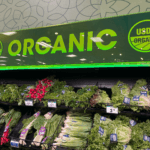
Under chemical agriculture, farmers grow a single crop. They buy fertilizers, pesticides, herbicides and access to water, and if necessary, they rent pollinators to maximize the yield. They use the revenue from selling the harvest to pay their bills and debts. 

In agroecology, farmers find ways not to exterminate pests but to reach an ecological equilibrium. They accept a little crop loss while providing habitats for predators and introducing other forms of biological control to obtain a much more robust and resilient ecosystem.


This is an excerpt. Read the original post here.

{{ reviewsTotal }}{{ options.labels.singularReviewCountLabel }}
{{ reviewsTotal }}{{ options.labels.pluralReviewCountLabel }}
{{ options.labels.noReviewsLabel }}
{{ options.labels.newReviewButton }}
{{ userData.canReview.message }}

Related Articles

Infographic: Global regulatory and health research agencies on whether glyphosate causes cancer

Infographic: Global regulatory and health research agencies on whether glyphosate causes cancer

Does glyphosate—the world's most heavily-used herbicide—pose serious harm to humans? Is it carcinogenic? Those issues are of both legal and ...

Most Popular

ChatGPT-Image-Mar-10-2026-01_39_01-PM
Viewpoint—“Miracle molecule” debunked: Why acemannan supplements don’t work
organic scaled
Facts & Fallacies podcast: Organic food cuts pesticide exposure? A response to Dr. Rhonda Patrick
kratom
Viewpoint: Kratom ‘supplement’ crisis: DEA sits on its hands while patient addictions to this ineffective drug  rise
close up arabica coffee farmer s hands picking beans plant his farm colombia
Viewpoint: Why do so many ‘mainstream’ and ‘respected’ media outlets exaggerate climate change threats?
Screenshot 2026-07-22 at 10.25
Science brain drain escalates as Trump purge extends to USDA
How to Include More Strawberries in Your Diet
Strawberries are berries—and 35 other surprising food and drink myths
ChatGPT-Image-Jul-22-2026-09_13_07-AM
Viewpoint—The Strategic Litigation boom: Understanding the tightening coalition among NGOs, foundations, journalists, and tort lawyers
diversity
We are entering a new era of personalized medicine—if you’re white
Screenshot-2026-07-01-at-2.49.48-PM
Dr. TikTok and male fertility: Viral claims tout GLP-1 drugs as fertility boosters. What does the science say?
ChatGPT-Image-May-22-2026-10_26_09-AM
Trump-RFK, Jr. National Science Board firings: Accountability vs. partisan meddling
Screenshot-2026-07-07-at-12.55.44-PM
Viewpoint: Yes, we can adapt to a changing climate without devastating the environment and the economy
using genetics to reverse aging
Is the longevity obsession a new form of ageism?
ChatGPT-Image-Jun-25-2026-02_53_56-PM
Embryo gene editing is on the horizon, stirring mixed emotions
glp menu logo outlined

Get news on human & agricultural genetics and biotechnology delivered to your inbox.